PRIVCY ACT
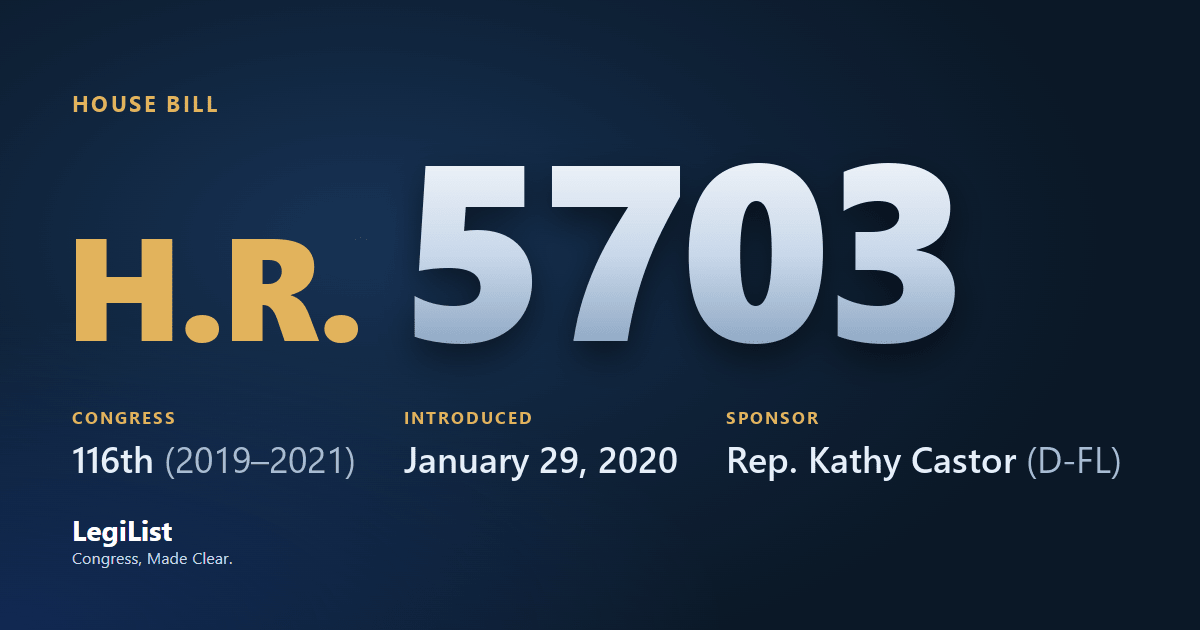
Latest action · Jan 29, 2020 Referred to the House Committee on Energy and Commerce.
Progress
Where this bill reached, and when. A stage with no date was not reached; one that failed a vote and later carried shows the date it carried.
- IntroducedJan 29, 2020
- Passed HouseNot reached
- Passed SenateNot reached
- To the PresidentNot reached
- Became lawNot reached
Summary
Protecting the Information of our Vulnerable Children and Youth Act or the PRIVCY ACT
This bill modifies and expands the requirements for commercial entities with respect to information collected from young consumers under the age of 18 and children under the age of 13. Specifically, it applies the requirements for processing information reasonably linkable to a young consumer or child to any entity within the jurisdiction of the Federal Trade Commission, including nonprofit organizations.
Additionally, the bill modifies the requirements for such processed information with respect to
- obtaining verifiable consent to process such information and the applicable exceptions;
- developing a publicly available privacy policy with respect to such information;
- consumers' access to, and requests to delete, such information; and
- securing such information and periodically testing such security measures.
Among other things, it also adds provisions
- requiring the deletion of processed information that is no longer reasonably necessary to retain for the purpose for which it was processed,
- prohibiting targeted marketing to a specific young consumer or child based on processed information or using processed information in a manner inconsistent with the reasonable expectation of such consumers, and
- limiting the disclosure of processed information to third parties without a written agreement with the third party specifying and limiting the purposes for which the third party may process the information and requiring the third party to provide specified security and privacy protections.
Cosponsors 5
Members who signed on, in the order they did. Signatures ran from Feb 5, 2020 to Feb 10, 2020.
| Seat | Cosponsor | Signed on | |
|---|---|---|---|
| D-NJ | Bonnie Watson Coleman | Feb 5, 2020 | |
| D-NY | Paul Tonko | Feb 5, 2020 | |
| D-MI | Debbie Dingell | Feb 7, 2020 | |
| D-IL | Raja Krishnamoorthi | Feb 10, 2020 | |
| D-MA | Seth Moulton | Feb 10, 2020 |
Committees 1
Where it was sent and what each committee and subcommittee did with it, in order.
| Chamber | Committee | What it did |
|---|---|---|
| House | Energy and Commerce Committee | Referred Jan 29, 2020 |
Actions 2
Everything that happened, newest first.
- Jan 29, 2020Introduced in House
- Jan 29, 2020Referred to the House Committee on Energy and Commerce.
Research
What has been written about this bill: committee reports, cost estimates, the sponsor’s authority statement, printed hearings and the Congressional Research Service’s work.
Constitutional authority
The sponsor’s statement, as printed in the Congressional Record, vol. 166, no. 19, January 29, 2020, page H713.
Titles 3
Every title it has carried, official and short, at each stage.
- Official Title as Introduced
- To amend the Children's Online Privacy Protection Act of 1998 to update and expand the coverage of such Act, and for other purposes.
- Short Title(s) as Introduced
- PRIVCY ACT
- Protecting the Information of our Vulnerable Children and Youth Act
Subjects
Assigned by the Library of Congress. Policy area: Commerce.
Text 1
Each version as it was printed, newest first.
- Jan 29, 2020Introduced in House
Support LegiList
This page is free, carries no paywall, and is built and maintained by one person. If the record here is useful to you, a few dollars keeps it going.
Everything here is as published by Congress: the summary is the Congressional Research Service's, the action wording is the clerks', and the subjects are the Library of Congress's. How far it got is read from the actions themselves, taking the most recent one of each kind, so a bill that failed a vote and later passed is shown as having passed. Records come from this bill on Congress.gov and govinfo.gov; cost estimates are the Congressional Budget Office's, and the hearings are the printed hearings GovInfo publishes, which can appear months after the hearing.