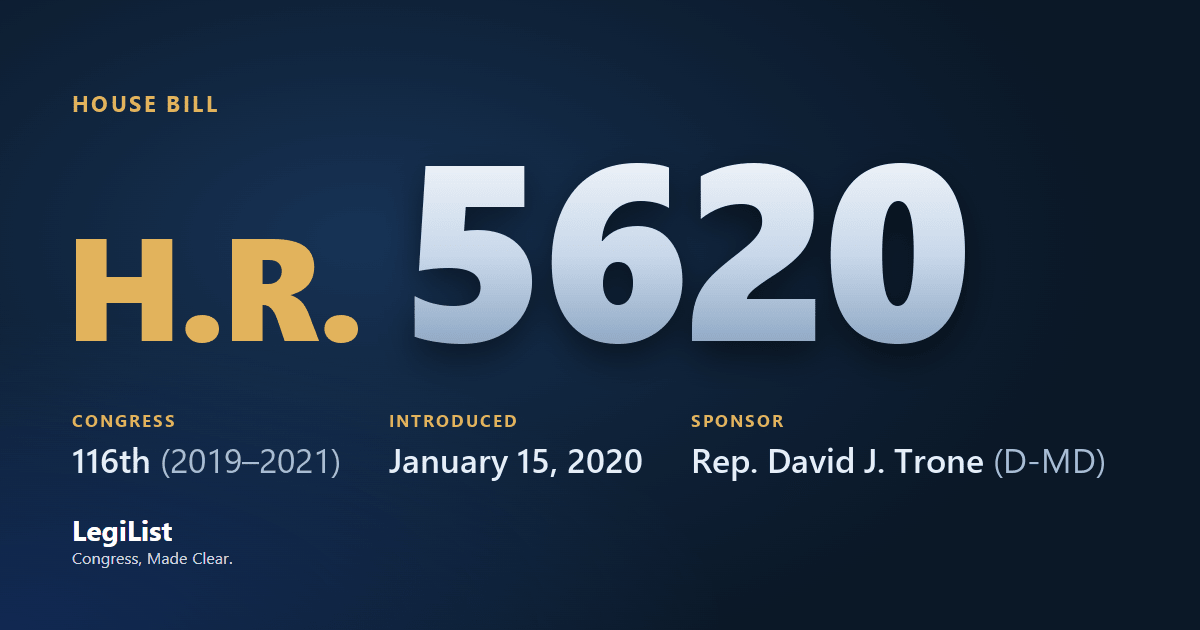
TRUE EQUITY Act
Latest action · Jan 15, 2020 Referred to the House Committee on Education and Labor.
Progress
Where this bill reached, and when. A stage with no date was not reached; one that failed a vote and later carried shows the date it carried.
- IntroducedJan 15, 2020
- Passed HouseNot reached
- Passed SenateNot reached
- To the PresidentNot reached
- Became lawNot reached
Summary
Transformational Reforms and Updates to Ensure Educational Quality and Urgent Investments in Today's Youth Act of 2020 or the TRUE EQUITY Act
This bill establishes various grant programs to address educational inequities in elementary and secondary schools.
Specifically, the bill creates grant programs related to (1) early childhood education, (2) high-quality and diverse teachers and leaders, (3) college and career readiness pathways, and (4) additional resources for at-risk students. For each grant program, the Department of Education (ED) must award a single grant to an eligible state.
To be eligible for a grant, a state must establish an independent state oversight board. The oversight board must, among other things (1) determine whether the state and its local educational agencies (LEAs) have met state educational equity goals, and (2) hold them accountable for failing to meet those goals. ED may renew a grant if the oversight board determines the state has met its goals.
In addition, for each grant program, the bill outlines the activities authorized under the program, maintenance-of-effort requirements, and matching fund requirements.
Finally, the bill permits ED to enter into a local flexibility demonstration agreement, through which a state educational agency may use funds to develop and implement a school funding system based on weighted per-pupil allocations for low-income and disadvantaged students. (Currently, ED may enter into these agreements with LEAs.)
Cosponsors 2
Members who signed on, in the order they did. All signed on Jan 15, 2020.
| Seat | Cosponsor | Signed on | |
|---|---|---|---|
| D-MD | Jamie Raskin | Original | Jan 15, 2020 |
| D-MD | John P. Sarbanes | Original | Jan 15, 2020 |
Committees 1
Where it was sent and what each committee and subcommittee did with it, in order.
| Chamber | Committee | What it did |
|---|---|---|
| House | Education and Workforce Committee | Referred Jan 15, 2020 |
Actions 2
Everything that happened, newest first.
- Jan 15, 2020Introduced in House
- Jan 15, 2020Referred to the House Committee on Education and Labor.
Research
What has been written about this bill: committee reports, cost estimates, the sponsor’s authority statement, printed hearings and the Congressional Research Service’s work.
Constitutional authority
The sponsor’s statement, as printed in the Congressional Record, vol. 166, no. 9, January 15, 2020, page H300.
Related bills 1
Companion bills and other measures the record links to this one.
| Bill | Title | Relationship | Latest action |
|---|---|---|---|
| S 3149 | TRUE EQUITY Act | Related bill | Jan 6, 2020 |
Titles 3
Every title it has carried, official and short, at each stage.
- Official Title as Introduced
- To provide for a Federal partnership to ensure educational equity and quality.
- Short Title(s) as Introduced
- TRUE EQUITY Act
- Transformational Reforms and Updates to Ensure Educational Quality and Urgent Investments in Today's Youth Act of 2020
Subjects
Assigned by the Library of Congress. Policy area: Education.
- Academic performance and assessments
- Disability and paralysis
- Education
- Education of the disadvantaged
- Education programs funding
- Educational guidance
- Elementary and secondary education
- Employment and training programs
- Foreign language and bilingual programs
- Higher education
- Licensing and registrations
- Minority education
- Preschool education
- School administration
- Special education
- State and local government operations
- Student aid and college costs
- Teaching, teachers, curricula
- Vocational and technical education
Text 1
Each version as it was printed, newest first.
- Jan 15, 2020Introduced in House
Support LegiList
This page is free, carries no paywall, and is built and maintained by one person. If the record here is useful to you, a few dollars keeps it going.
Everything here is as published by Congress: the summary is the Congressional Research Service's, the action wording is the clerks', and the subjects are the Library of Congress's. How far it got is read from the actions themselves, taking the most recent one of each kind, so a bill that failed a vote and later passed is shown as having passed. Records come from this bill on Congress.gov and govinfo.gov; cost estimates are the Congressional Budget Office's, and the hearings are the printed hearings GovInfo publishes, which can appear months after the hearing.