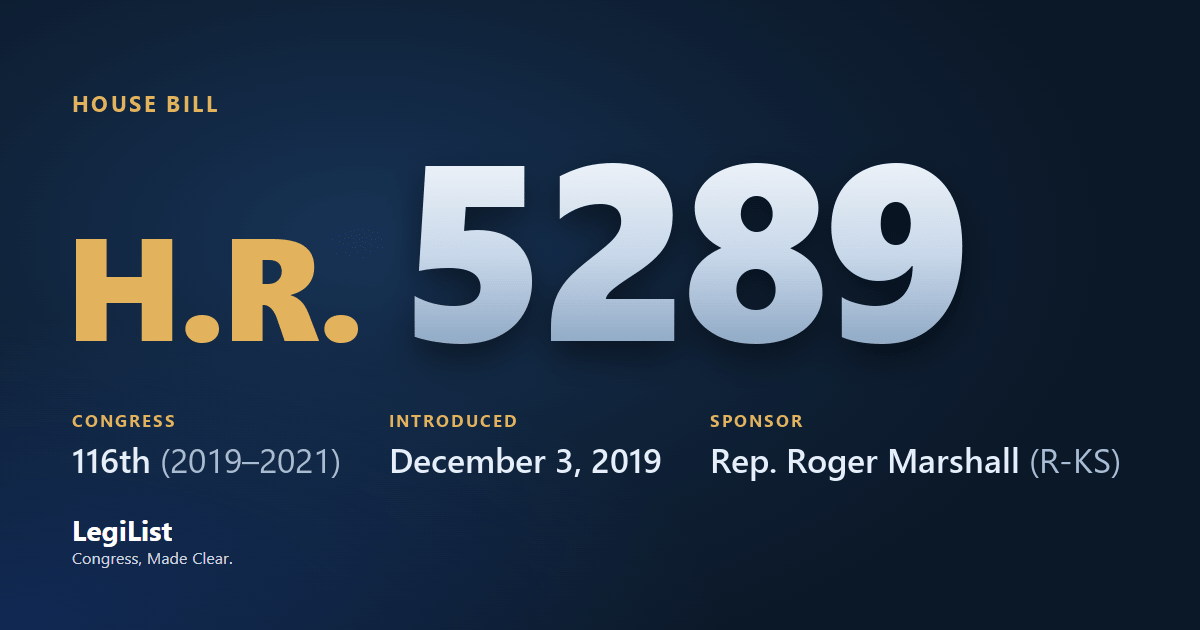
Home Defense and Competitive Shooting Act of 2019
Latest action · Jan 30, 2020 Referred to the Subcommittee on Crime, Terrorism, and Homeland Security.
Progress
Where this bill reached, and when. A stage with no date was not reached; one that failed a vote and later carried shows the date it carried.
- IntroducedDec 3, 2019
- Passed HouseNot reached
- Passed SenateNot reached
- To the PresidentNot reached
- Became lawNot reached
Summary
Home Defense and Competitive Shooting Act of 2019
This bill removes short-barreled rifles (barrels of less than 16 inches in length) from the definition of firearms for purposes of the National Firearms Act. It also eliminates the prohibition on the transportation of such rifles in interstate commerce and treats persons who acquire or possess a short-barreled rifle as meeting the registration or licensing requirements for such rifle where such requirements are determined by reference to the National Firearms Act.
The bill preempts state or local laws that impose a tax or recordkeeping requirements on short-barreled rifles.
The Department of Justice must destroy records relating to the registration of certain rifles within one year after the enactment of this bill.
Cosponsors 25
Members who signed on, in the order they did. Signatures ran from Dec 3, 2019 to Sep 21, 2020; 16 are original cosponsors, there from the day it was introduced.
| Seat | Cosponsor | Signed on | |
|---|---|---|---|
| R-GA | Austin Scott | Original | Dec 3, 2019 |
| R-TX | Brian Babin | Original | Dec 3, 2019 |
| R-WA | Dan Newhouse | Original | Dec 3, 2019 |
| R-AK | Don Young | Original | Dec 3, 2019 |
| R-VA | H. Morgan Griffith | Original | Dec 3, 2019 |
| R-SC | Jeff Duncan | Original | Dec 3, 2019 |
| R-GA | Jody B. Hice | Original | Dec 3, 2019 |
| R-NC | Mark Meadows | Original | Dec 3, 2019 |
| R-OK | Markwayne Mullin | Original | Dec 3, 2019 |
| R-FL | Matt Gaetz | Original | Dec 3, 2019 |
| R-AZ | Paul A. Gosar | Original | Dec 3, 2019 |
| R-KS | Ron Estes | Original | Dec 3, 2019 |
| R-KS | Steve Watkins | Original | Dec 3, 2019 |
| R-NC | Ted Budd | Original | Dec 3, 2019 |
| R-FL | Ted S. Yoho | Original | Dec 3, 2019 |
Committees 2
Where it was sent and what each committee and subcommittee did with it, in order.
| Chamber | Committee | What it did |
|---|---|---|
| House | Ways and Means Committee | Referred Dec 3, 2019 |
| House | Judiciary Committee | Referred Dec 3, 2019 |
| Crime and Federal Government Surveillance Subcommittee | Referred Jan 30, 2020 |
Actions 3
Everything that happened, newest first.
- Jan 30, 2020Referred to the Subcommittee on Crime, Terrorism, and Homeland Security.
- Dec 3, 2019Introduced in House
- Dec 3, 2019Referred to the Committee on Ways and Means, and in addition to the Committee on the Judiciary, for a period to be subsequently determined by the Speaker, in each case for consideration of such provisions as fall within the jurisdiction of the committee concerned.
Research
What has been written about this bill: committee reports, cost estimates, the sponsor’s authority statement, printed hearings and the Congressional Research Service’s work.
Constitutional authority
The sponsor’s statement, as printed in the Congressional Record, vol. 165, no. 192, December 3, 2019, page H9222.
Titles 2
Every title it has carried, official and short, at each stage.
- Official Title as Introduced
- To amend the Internal Revenue Code of 1986 to remove short-barreled rifles from the definition of firearms for purposes of the National Firearms Act, and for other purposes.
- Short Title(s) as Introduced
- Home Defense and Competitive Shooting Act of 2019
Subjects
Assigned by the Library of Congress. Policy area: Taxation.
Text 1
Each version as it was printed, newest first.
- Dec 3, 2019Introduced in House
Everything here is as published by Congress: the summary is the Congressional Research Service's, the action wording is the clerks', and the subjects are the Library of Congress's. How far it got is read from the actions themselves, taking the most recent one of each kind, so a bill that failed a vote and later passed is shown as having passed. Records come from this bill on Congress.gov and govinfo.gov; cost estimates are the Congressional Budget Office's, and the hearings are the printed hearings GovInfo publishes, which can appear months after the hearing.