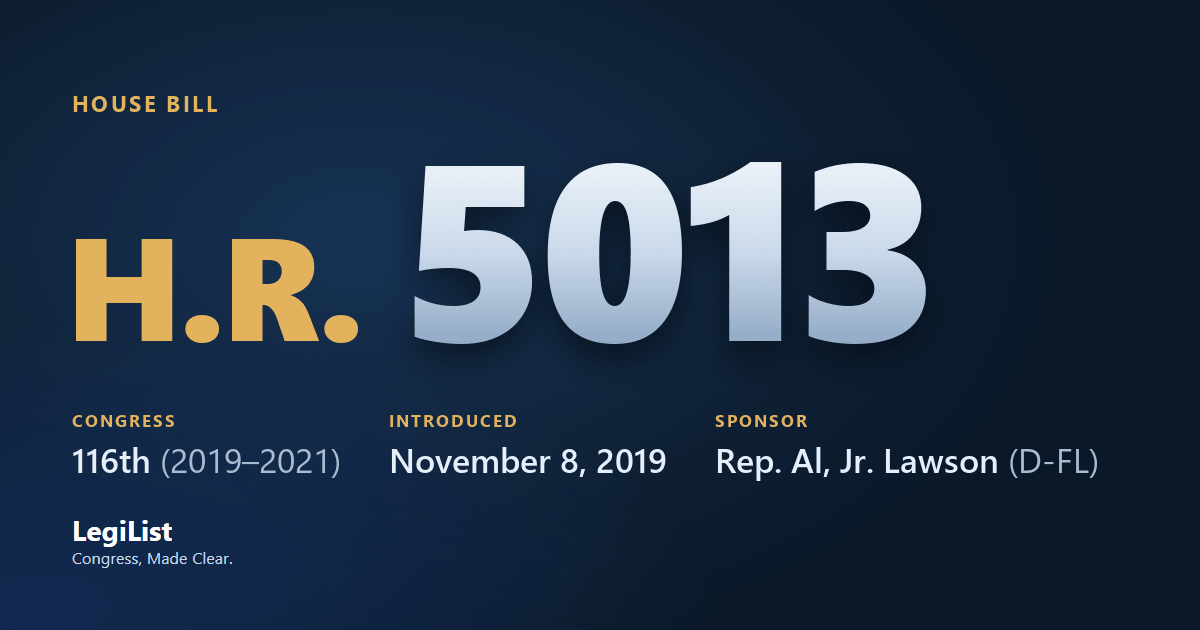
Small Business Fair Debt Collection Protection Act
Latest action · Dec 16, 2020 Placed on the Union Calendar, Calendar No. 540.
Progress
Where this bill reached, and when. A stage with no date was not reached; one that failed a vote and later carried shows the date it carried.
- IntroducedNov 8, 2019
- Passed HouseNot reached
- Passed SenateNot reached
- To the PresidentNot reached
- Became lawNot reached
Summary
Small Business Fair Debt Collection Protection Act
This bill applies consumer debt collection protections to small businesses, including protections regarding debt collection methods and third-party debt collection.
Cosponsors 1
Members who signed on, in the order they did. All signed on Nov 13, 2019.
| Seat | Cosponsor | Signed on | |
|---|---|---|---|
| D-MO | Emanuel Cleaver | Nov 13, 2019 |
Actions 7
Everything that happened, newest first.
- Dec 16, 2020Placed on the Union Calendar, Calendar No. 540.
- Dec 16, 2020Reported (Amended) by the Committee on Financial Services. H. Rept. 116-656.
- Nov 14, 2019Committee Consideration and Mark-up Session Held.
- Nov 14, 2019Ordered to be Reported (Amended) by the Yeas and Nays: 31 - 23.
- Nov 13, 2019Committee Consideration and Mark-up Session Held.
Related bills 1
Companion bills and other measures the record links to this one.
| Bill | Title | Relationship | Latest action |
|---|---|---|---|
| S 2884 | Small Business Fair Debt Collection Protection Act | Related bill | Nov 18, 2019 |
Subjects
Assigned by the Library of Congress. Policy area: Finance and Financial Sector.
Text 2
Each version as it was printed, newest first.
- Dec 16, 2020Reported in House
- Nov 8, 2019Introduced in House
Everything here is as published by Congress: the summary is the Congressional Research Service's, the action wording is the clerks', and the subjects are the Library of Congress's. How far it got is read from the actions themselves, taking the most recent one of each kind, so a bill that failed a vote and later passed is shown as having passed. Records come from this bill on Congress.gov and govinfo.gov.