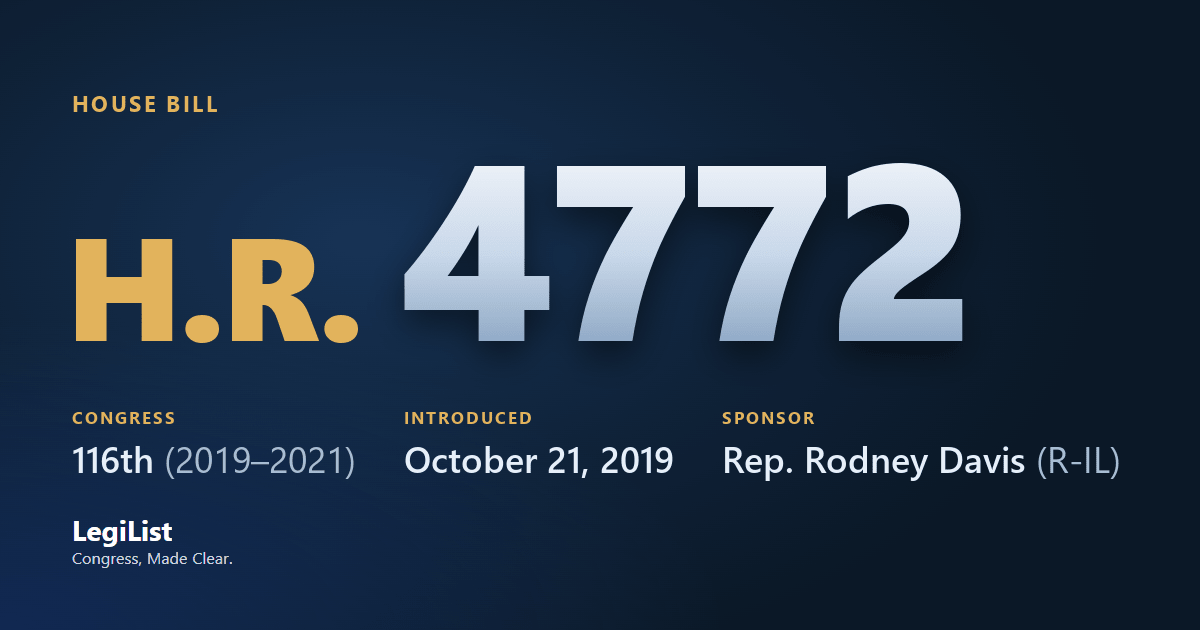
CFTC Cybersecurity and Data Protection Enhancement Act
Latest action · Nov 13, 2019 Referred to the Subcommittee on Commodity Exchanges, Energy, and Credit.
Progress
Where this bill reached, and when. A stage with no date was not reached; one that failed a vote and later carried shows the date it carried.
- IntroducedOct 21, 2019
- Passed HouseNot reached
- Passed SenateNot reached
- To the PresidentNot reached
- Became lawNot reached
Summary
CFTC Cybersecurity and Data Protection Enhancement Act
This bill addresses information requested and maintained by the Commodity Futures Trading Commission. Specifically, the commission must submit a request for proprietary information that includes the method of access to the data, data formats, and the purpose of the request. Unless the request is related to specified legal actions, a recipient of a request for proprietary information may refuse the request.
The commission must also establish rules related to protecting information provided to the commission.
Cosponsors 1
Members who signed on, in the order they did. All signed on Oct 22, 2019.
| Seat | Cosponsor | Signed on | |
|---|---|---|---|
| R-GA | Austin Scott | Oct 22, 2019 |
Actions 3
Everything that happened, newest first.
- Nov 13, 2019Referred to the Subcommittee on Commodity Exchanges, Energy, and Credit.
- Oct 21, 2019Introduced in House
- Oct 21, 2019Referred to the House Committee on Agriculture.
Subjects
Assigned by the Library of Congress. Policy area: Finance and Financial Sector.
- Administrative law and regulatory procedures
- Business records
- Commodities markets
- Commodity Futures Trading Commission
- Computer security and identity theft
- Computers and information technology
- Finance and Financial Sector
- Government information and archives
- Government studies and investigations
- Intellectual property
- Right of privacy
Text 1
Each version as it was printed, newest first.
- Oct 21, 2019Introduced in House
Everything here is as published by Congress: the summary is the Congressional Research Service's, the action wording is the clerks', and the subjects are the Library of Congress's. How far it got is read from the actions themselves, taking the most recent one of each kind, so a bill that failed a vote and later passed is shown as having passed. Records come from this bill on Congress.gov and govinfo.gov.