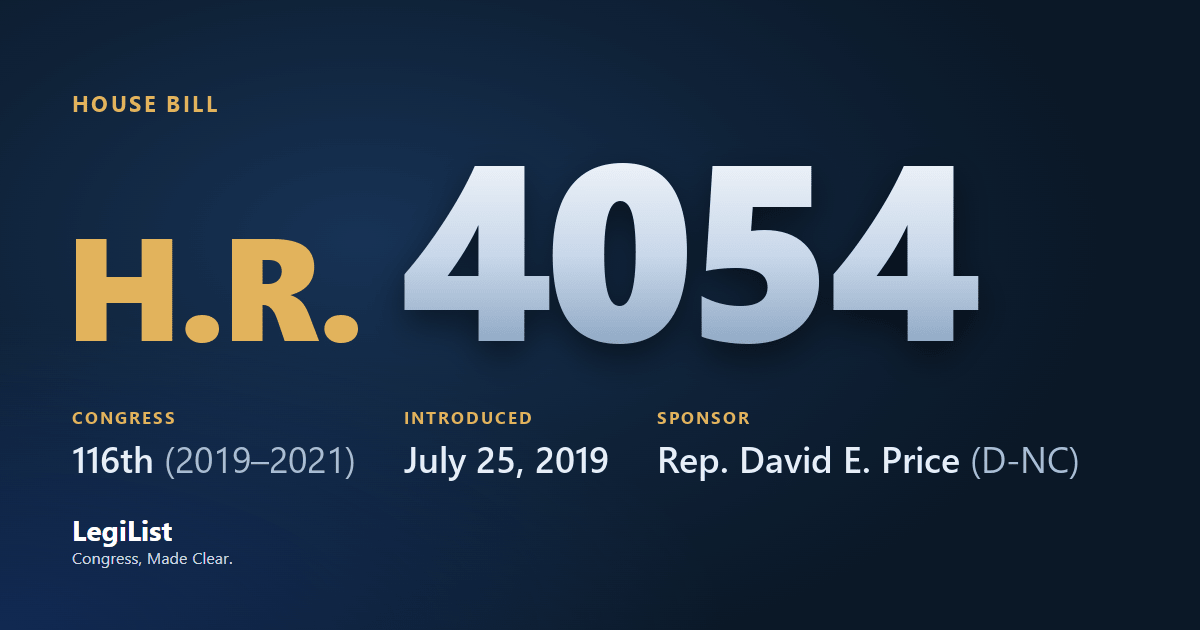
Stand By Every Ad Act
Latest action · Jul 25, 2019 Referred to the House Committee on House Administration.
Progress
Where this bill reached, and when. A stage with no date was not reached; one that failed a vote and later carried shows the date it carried.
- IntroducedJul 25, 2019
- Passed HouseNot reached
- Passed SenateNot reached
- To the PresidentNot reached
- Became lawNot reached
Summary
Stand By Every Ad Act
This bill generally revises requirements related to disclosures provided with political advertisements. The bill applies political advertising disclosure requirements currently applicable to candidates (also known as stand by your ad requirements) to entities such as corporations and nonprofit organizations. Political advertisements made by these organizations must generally disclose the top funders of the entity, with specified exceptions.
The bill revises the classification of certain media, including audio and visual media, for purposes of disclaimer requirements. The bill also expands the definition of public communication to include digital communication, creates additional disclaimer readability requirements, and expands disclosure requirements for public communications consisting of campaign-related disbursements.
Cosponsors
Members who signed on, in the order they did.
Committees 1
Where it was sent and what each committee and subcommittee did with it, in order.
| Chamber | Committee | What it did |
|---|---|---|
| House | Committee on House Administration | Referred Jul 25, 2019 |
Actions 2
Everything that happened, newest first.
- Jul 25, 2019Introduced in House
- Jul 25, 2019Referred to the House Committee on House Administration.
Research
What has been written about this bill: committee reports, cost estimates, the sponsor’s authority statement, printed hearings and the Congressional Research Service’s work.
Constitutional authority
The sponsor’s statement, as printed in the Congressional Record, vol. 165, no. 126, July 25, 2019, page H7470.
CRS reports 1
Congressional Research Service work that CRS links to this bill or the law it became, newest first.
Cite it 1
Products on other subjects that cite it, usually among other measures.
| Product | Title | Kind | Published |
|---|---|---|---|
| R46516 | Identifying TV Political and Issue Ad Sponsors in the Digital Age Archived | Report | Sep 9, 2020 |
Related bills 3
Companion bills and other measures the record links to this one.
| Bill | Title | Relationship | Latest action |
|---|---|---|---|
| HR 1 | For the People Act of 2019 | Related bill | Mar 14, 2019 |
| S 949 | For the People Act of 2019 | Related bill | Mar 28, 2019 |
| HR 1171 | Stand By Every Ad Act | Reintroduced Bill | Feb 18, 2021 |
Titles 2
Every title it has carried, official and short, at each stage.
- Official Title as Introduced
- To amend the Federal Election Campaign Act of 1971 to require the sponsors of certain general public political advertisements to include in the advertisements information on the persons who provided the funding for such advertisements, and for other purposes.
- Short Title(s) as Introduced
- Stand By Every Ad Act
Subjects
Assigned by the Library of Congress. Policy area: Government Operations and Politics.
- Broadcasting, cable, digital technologies
- Business records
- Congressional elections
- Digital media
- Elections, voting, political campaign regulation
- Government Operations and Politics
- Internet and video services
- Internet, web applications, social media
- Marketing and advertising
- Political advertising
- Political parties and affiliation
- Telephone and wireless communication
Text 1
Each version as it was printed, newest first.
- Jul 25, 2019Introduced in House
Support LegiList
This page is free, carries no paywall, and is built and maintained by one person. If the record here is useful to you, a few dollars keeps it going.
Everything here is as published by Congress: the summary is the Congressional Research Service's, the action wording is the clerks', and the subjects are the Library of Congress's. How far it got is read from the actions themselves, taking the most recent one of each kind, so a bill that failed a vote and later passed is shown as having passed. Records come from this bill on Congress.gov and govinfo.gov; cost estimates are the Congressional Budget Office's, and the hearings are the printed hearings GovInfo publishes, which can appear months after the hearing.