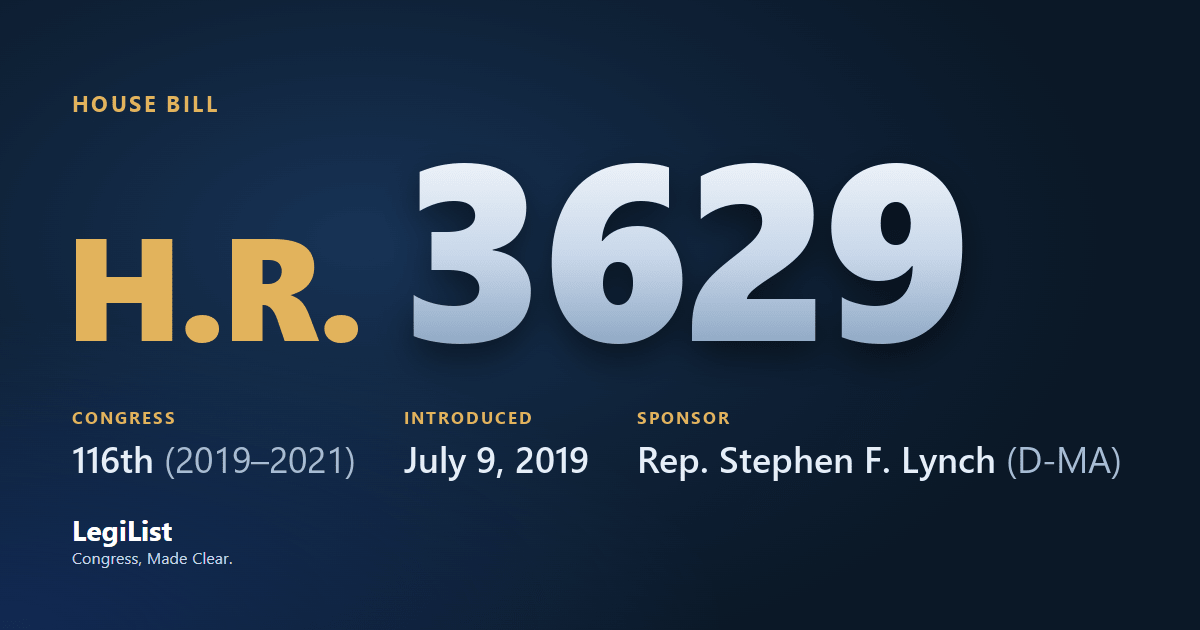
Clarity in Credit Score Formation Act of 2019
Latest action · Nov 21, 2019 Placed on the Union Calendar, Calendar No. 248.
Progress
Where this bill reached, and when. A stage with no date was not reached; one that failed a vote and later carried shows the date it carried.
- IntroducedJul 9, 2019
- Passed HouseNot reached
- Passed SenateNot reached
- To the PresidentNot reached
- Became lawNot reached
Summary
Clarity in Credit Score Formation Act of 2019
This bill provides that the Consumer Financial Protection Bureau (CFPB) must regulate credit score models by establishing standards for validating the accuracy and predictive value of these models. The bill also gives the CFPB the authority to prohibit the use of certain factors in credit score models.
The CFPB must report on the impact of the inclusion of nontraditional data in these models.
Cosponsors 1
Members who signed on, in the order they did. All signed on Jul 17, 2019.
| Seat | Cosponsor | Signed on | |
|---|---|---|---|
| D-MO | Emanuel Cleaver | Jul 17, 2019 |
Committees 1
Where it was sent and what each committee and subcommittee did with it, in order.
| Chamber | Committee | What it did |
|---|---|---|
| House | Financial Services Committee | Referred Jul 9, 2019Markup Jul 16, 2019Reported Nov 21, 2019 |
Actions 6
Everything that happened, newest first.
- Nov 21, 2019Reported (Amended) by the Committee on Financial Services. H. Rept. 116-307.
- Nov 21, 2019Placed on the Union Calendar, Calendar No. 248.
- Jul 16, 2019Committee Consideration and Mark-up Session Held.
- Jul 16, 2019Ordered to be Reported (Amended) by the Yeas and Nays: 33 - 25.
- Jul 9, 2019Introduced in House
- Jul 9, 2019Referred to the House Committee on Financial Services.
Research
What has been written about this bill: committee reports, cost estimates, the sponsor’s authority statement, printed hearings and the Congressional Research Service’s work.
Committee report
Congressional Budget Office cost estimate
- Oct 7, 2019H.R. 3629, Clarity in Credit Score Formation Act of 2019As ordered reported by the House Committee on Financial Services on July 16, 2019
Constitutional authority
The sponsor’s statement, as printed in the Congressional Record, vol. 165, no. 114, July 9, 2019, page H5303.
CRS reports 1
Congressional Research Service work that CRS links to this bill or the law it became, newest first.
Cite it 1
Products on other subjects that cite it, usually among other measures.
| Product | Title | Kind | Published |
|---|---|---|---|
| R45979 | Financial Inclusion and Credit Access Policy Issues Archived | Report | Oct 24, 2019 |
Related bills 1
Companion bills and other measures the record links to this one.
| Bill | Title | Relationship | Latest action |
|---|---|---|---|
| HR 3621 | Comprehensive Credit Reporting Enhancement, Disclosure, Innovation, and Transparency Act of 2020 | Related bill | Jan 30, 2020 |
Titles 3
Every title it has carried, official and short, at each stage.
- Official Title as Introduced
- To amend the Fair Credit Reporting Act to establish clear Federal oversight of the development of credit scoring models by the Bureau of Consumer Financial Protection, and for other purposes.
- Short Title(s) as Introduced
- Clarity in Credit Score Formation Act of 2019
- Short Title(s) as Reported to House
- Clarity in Credit Score Formation Act of 2019
Subjects
Assigned by the Library of Congress. Policy area: Finance and Financial Sector.
- Administrative law and regulatory procedures
- Banking and financial institutions regulation
- Business records
- Computer security and identity theft
- Congressional oversight
- Consumer credit
- Consumer Financial Protection Bureau
- Credit and credit markets
- Finance and Financial Sector
- Government information and archives
- Government studies and investigations
- Immigration status and procedures
- Low- and moderate-income housing
- Minority and disadvantaged businesses
- Racial and ethnic relations
- Refugees, asylum, displaced persons
- Right of privacy
- Rural conditions and development
- Sex, gender, sexual orientation discrimination
- Urban and suburban affairs and development
- Wages and earnings
Text 2
Each version as it was printed, newest first.
- Nov 21, 2019Reported in House
- Jul 9, 2019Introduced in House
Everything here is as published by Congress: the summary is the Congressional Research Service's, the action wording is the clerks', and the subjects are the Library of Congress's. How far it got is read from the actions themselves, taking the most recent one of each kind, so a bill that failed a vote and later passed is shown as having passed. Records come from this bill on Congress.gov and govinfo.gov; cost estimates are the Congressional Budget Office's, and the hearings are the printed hearings GovInfo publishes, which can appear months after the hearing.