Disability Voting Rights Act
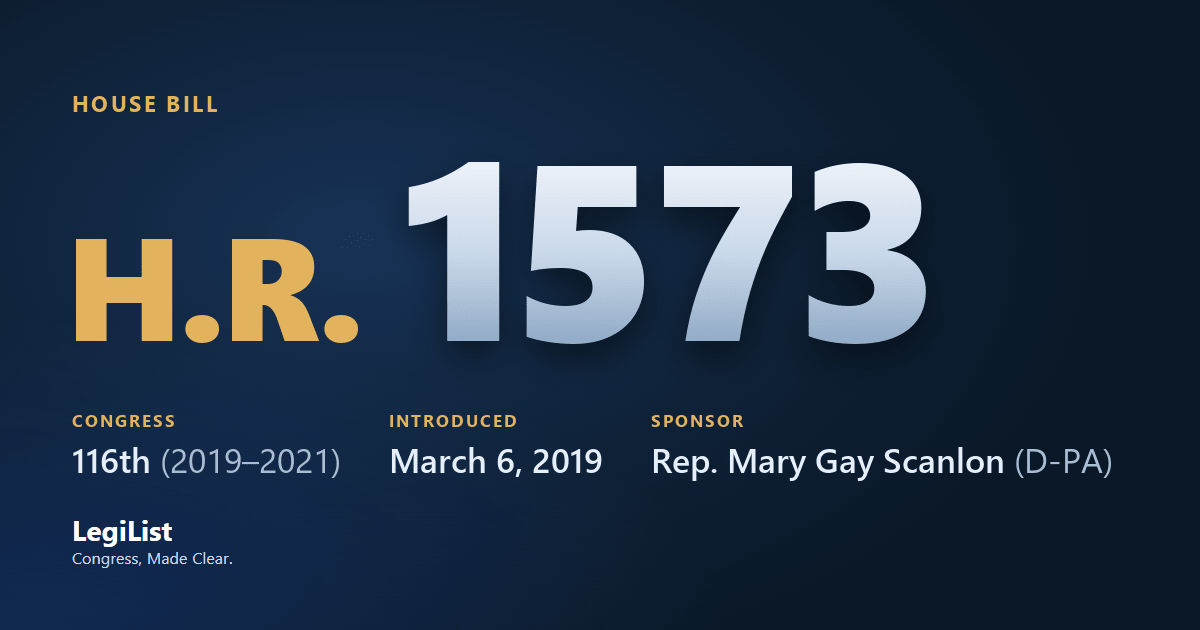
Latest action · Mar 6, 2019 Referred to the House Committee on House Administration.
Progress
Where this bill reached, and when. A stage with no date was not reached; one that failed a vote and later carried shows the date it carried.
- IntroducedMar 6, 2019
- Passed HouseNot reached
- Passed SenateNot reached
- To the PresidentNot reached
- Became lawNot reached
Summary
Disability Voting Rights Act
This bill requires each state to allow individuals with disabilities to use absentee registration procedures and to vote by absentee ballot in federal elections.
Among other things, each state must
- accept and process any otherwise valid voter registration and absentee ballot applications from individuals with disabilities if such applications are received within 30 days of the federal election;
- establish procedures for individuals with disabilities to request, and for the state to send, voter registration and absentee ballot applications by mail and through electronic means;
- create procedures for securely transmitting blank absentee ballots by mail and through electronic means to individuals with disabilities;
- designate a single office to provide information on voter registration and absentee ballot procedures for individuals with disabilities; and
- specify a means of electronic communication for individuals with disabilities to request, and for the state to send, voter registration and absentee ballot applications.
Further, each state must transmit a validly requested absentee ballot to an individual with a disability within 45 days of an election. However, the bill establishes a procedure for a state to apply to the Department of Justice for a waiver of this requirement.
The bill also permanently reauthorizes and expands a program under which the Department of Health and Human Services makes payments to eligible states and units of local government to assure voting access for individuals with disabilities.
Cosponsors 4
Members who signed on, in the order they did. Signatures ran from Mar 6, 2019 to Nov 16, 2020; 1 is an original cosponsor, there from the day it was introduced.
| Seat | Cosponsor | Signed on | |
|---|---|---|---|
| D-MD | John P. Sarbanes | Original | Mar 6, 2019 |
| D-PA | Conor Lamb | Mar 14, 2019 | |
| D-PA | Susan Wild | Jan 24, 2020 | |
| D-CA | Ted Lieu | Nov 16, 2020 |
Committees 1
Where it was sent and what each committee and subcommittee did with it, in order.
| Chamber | Committee | What it did |
|---|---|---|
| House | Committee on House Administration | Referred Mar 6, 2019 |
Actions 2
Everything that happened, newest first.
- Mar 6, 2019Introduced in House
- Mar 6, 2019Referred to the House Committee on House Administration.
Research
What has been written about this bill: committee reports, cost estimates, the sponsor’s authority statement, printed hearings and the Congressional Research Service’s work.
Constitutional authority
The sponsor’s statement, as printed in the Congressional Record, vol. 165, no. 40, March 6, 2019, page H2505.
Related bills 5
Companion bills and other measures the record links to this one.
| Bill | Title | Relationship | Latest action |
|---|---|---|---|
| HR 1 | For the People Act of 2019 | Related bill | Mar 14, 2019 |
| S 549 | Voter Empowerment Act of 2019 | Related bill | Feb 25, 2019 |
| S 949 | For the People Act of 2019 | Related bill | Mar 28, 2019 |
| HR 1275 | Voter Empowerment Act of 2019 | Related bill | Mar 22, 2019 |
| HR 1612 | Nonpartisan Bill For the People Act of 2019 | Related bill | Apr 12, 2019 |
Titles 2
Every title it has carried, official and short, at each stage.
- Official Title as Introduced
- To amend the Help America Vote Act of 2002 to promote access to voter registration and voting for individuals with disabilities, and for other purposes.
- Short Title(s) as Introduced
- Disability Voting Rights Act
Subjects
Assigned by the Library of Congress. Policy area: Government Operations and Politics.
Text 1
Each version as it was printed, newest first.
- Mar 6, 2019Introduced in House
Support LegiList
This page is free, carries no paywall, and is built and maintained by one person. If the record here is useful to you, a few dollars keeps it going.
Everything here is as published by Congress: the summary is the Congressional Research Service's, the action wording is the clerks', and the subjects are the Library of Congress's. How far it got is read from the actions themselves, taking the most recent one of each kind, so a bill that failed a vote and later passed is shown as having passed. Records come from this bill on Congress.gov and govinfo.gov; cost estimates are the Congressional Budget Office's, and the hearings are the printed hearings GovInfo publishes, which can appear months after the hearing.