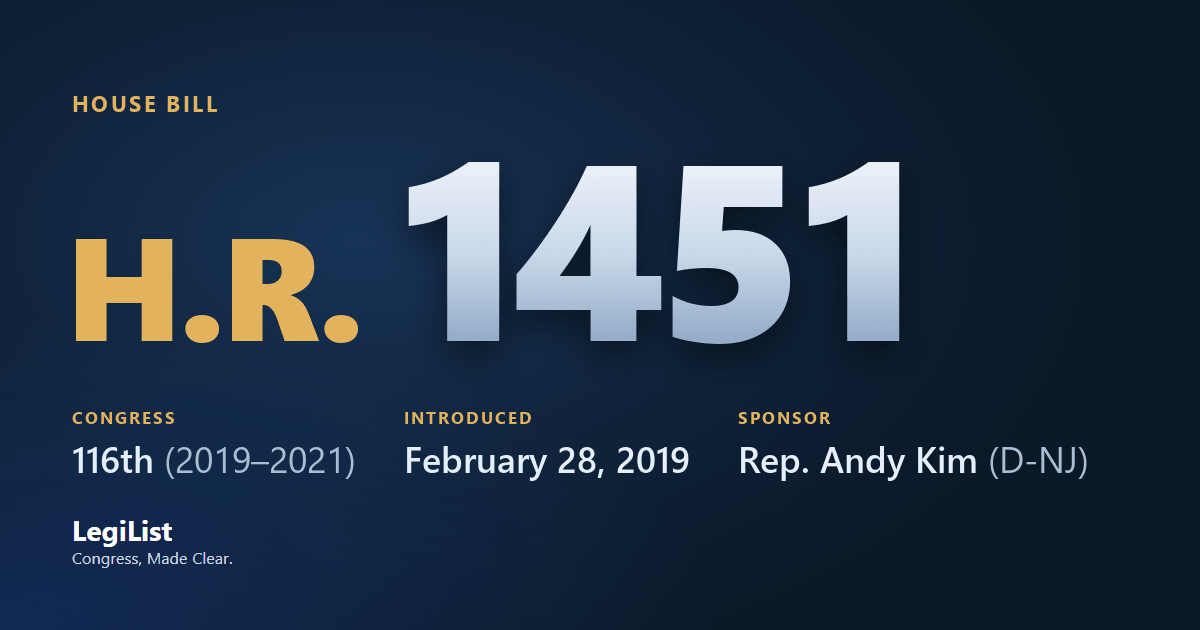
Alice Paul Voter Protection Act
Latest action · Apr 8, 2019 Referred to the Subcommittee on the Constitution, Civil Rights, and Civil Liberties.
Progress
Where this bill reached, and when. A stage with no date was not reached; one that failed a vote and later carried shows the date it carried.
- IntroducedFeb 28, 2019
- Passed HouseNot reached
- Passed SenateNot reached
- To the PresidentNot reached
- Became lawNot reached
Summary
Alice Paul Voter Protection Act
This bill establishes a new criminal offense for conduct (or attempted conduct) to corruptly hinder, interfere with, or prevent another person from registering to vote or helping someone register to vote. A violator is subject to criminal penalties—a fine, a prison term of not more than five years, or both.
The Election Assistance Commission must develop best practices for states to deter and prevent unlawful interference with voter registration.
Cosponsors
Members who signed on, in the order they did.
Committees 2
Where it was sent and what each committee and subcommittee did with it, in order.
| Chamber | Committee | What it did |
|---|---|---|
| House | Judiciary Committee | Referred Feb 28, 2019 |
| Crime and Federal Government Surveillance Subcommittee | Referred Apr 8, 2019 | |
| Constitution and Limited Government Subcommittee | Referred Apr 8, 2019 | |
| House | Committee on House Administration | Referred Feb 28, 2019 |
Actions 4
Everything that happened, newest first.
- Apr 8, 2019Referred to the Subcommittee on Crime, Terrorism, and Homeland Security.
- Apr 8, 2019Referred to the Subcommittee on the Constitution, Civil Rights, and Civil Liberties.
- Feb 28, 2019Introduced in House
- Feb 28, 2019Referred to the Committee on the Judiciary, and in addition to the Committee on House Administration, for a period to be subsequently determined by the Speaker, in each case for consideration of such provisions as fall within the jurisdiction of the committee concerned.
Research
What has been written about this bill: committee reports, cost estimates, the sponsor’s authority statement, printed hearings and the Congressional Research Service’s work.
Constitutional authority
The sponsor’s statement, as printed in the Congressional Record, vol. 165, no. 37, February 28, 2019, page H2316.
CRS reports 1
Congressional Research Service work that CRS links to this bill or the law it became, newest first.
Cite it 1
Products on other subjects that cite it, usually among other measures.
| Product | Title | Kind | Published |
|---|---|---|---|
| R46406 | Voter Registration: Recent Developments and Issues for Congress | Report | Oct 30, 2026 |
Related bills 5
Companion bills and other measures the record links to this one.
| Bill | Title | Relationship | Latest action |
|---|---|---|---|
| HR 1 | For the People Act of 2019 | Related bill | Mar 14, 2019 |
| S 549 | Voter Empowerment Act of 2019 | Related bill | Feb 25, 2019 |
| S 949 | For the People Act of 2019 | Related bill | Mar 28, 2019 |
| HR 1245 | Alice Paul Voter Protection Act | Reintroduced Bill | Apr 28, 2021 |
| HR 1275 | Voter Empowerment Act of 2019 | Related bill | Mar 22, 2019 |
Titles 2
Every title it has carried, official and short, at each stage.
- Official Title as Introduced
- To amend title 18, United States Code, to prohibit interfering with voter registration, and for other purposes.
- Short Title(s) as Introduced
- Alice Paul Voter Protection Act
Subjects
Assigned by the Library of Congress. Policy area: Crime and Law Enforcement.
Text 1
Each version as it was printed, newest first.
- Feb 28, 2019Introduced in House
Everything here is as published by Congress: the summary is the Congressional Research Service's, the action wording is the clerks', and the subjects are the Library of Congress's. How far it got is read from the actions themselves, taking the most recent one of each kind, so a bill that failed a vote and later passed is shown as having passed. Records come from this bill on Congress.gov and govinfo.gov; cost estimates are the Congressional Budget Office's, and the hearings are the printed hearings GovInfo publishes, which can appear months after the hearing.