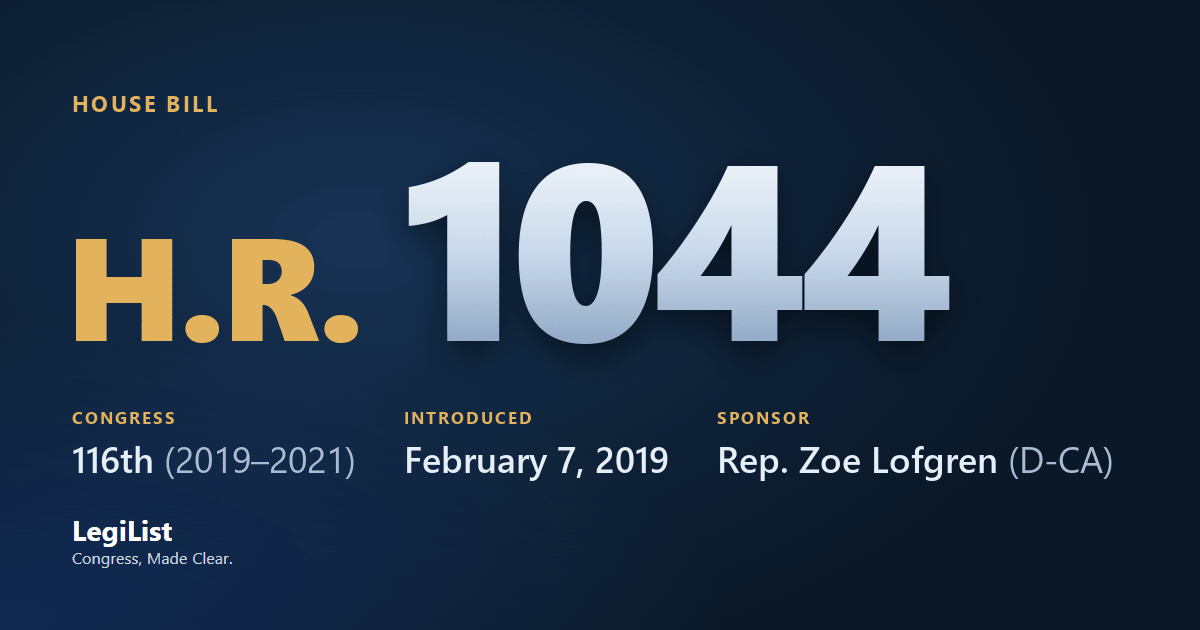
Fairness for High-Skilled Immigrants Act of 2020
Latest action · Dec 3, 2020 Message on Senate action sent to the House.
Progress
Where this bill reached, and when. A stage with no date was not reached; one that failed a vote and later carried shows the date it carried.
- IntroducedFeb 7, 2019
- Passed HouseJul 10, 2019
- Passed SenateDec 2, 2020
- To the PresidentNot reached
- Became lawNot reached
Summary
Fairness for High-Skilled Immigrants Act of 2020
This bill modifies requirements related to employment-based visas, changes annual limits on certain visas, and contains other related provisions.
The bill increases the per-country cap on family-based immigrant visas from 7% of the total number of such visas available that year to 15%, eliminates the 7% cap for employment-based immigrant visas, and limits the percentage of employment-based visas which may go to an alien on an H-1B (specialty profession) or H-4 (family member of H-1B visa holder) nonimmigrant visa.
The bill establishes various transition rules for employment-based visas such as (1) reserving a percentage of EB-2 (workers with advanced degrees or exceptional ability) and EB-3 (skilled and other workers) visas for individuals not from the two countries with the largest number of recipients of such visas, (2) reserving a percentage of visas for certain immigrants with approved backlogged petitions, and (3) allotting a number of visas for eligible professional nurses and physical therapists.
The bill removes an offset that reduced the number of visas for individuals from China and also bars an alien affiliated with China's military forces from obtaining permanent legal resident status.
The bill also imposes additional requirements on an employer seeking an H-1B visa, such as (1) requiring an employer to provide certain information in a new application for such a visa, such as the qualifications and application process for the position; (2) prohibiting an employer from advertising that the open position is only available to an H-1B applicant or that an H-1B applicant is preferred; and (3) prohibiting an employer of a certain size from having more than half of its employees as H-1B or other nonimmigrant visa workers.
The Department of Labor shall create a publicly-available website where an employer seeking an H-1B visa shall post certain information about the open position to be filled by the H-1B worker.
The bill also expands Labor's authority to review and investigate H-1B applications for fraud or misrepresentations of material fact, whereas currently Labor is generally only authorized by statute to review applications for completeness and obvious inaccuracies. The bill also increases civil monetary fines for certain visa-related violations.
The bill also establishes a mechanism allowing an eligible alien (and the alien's dependents) to obtain authorization to work or travel outside of the United States, if the alien has an approved immigrant visa petition but is awaiting an immigrant visa to become available. Generally, this mechanism shall be available to an alien on an employment-based nonimmigrant visa who files an application with the Department of Homeland Security at least two years after the immigrant visa petition was approved.
Recorded votes 1
Newest first. Open one to see how every member voted.
| Roll call | Question | Result | Date |
|---|---|---|---|
| House 437 | On Motion to Suspend the Rules and Pass, as Amended | Passed365–65 | Jul 10, 2019 |
Cosponsors 311
Members who signed on, in the order they did. Signatures ran from Feb 7, 2019 to Jun 24, 2019, with 116 there on the day it was introduced.
| Seat | Cosponsor | Signed on | |
|---|---|---|---|
| D-VA | A. Donald McEachin | Original | Feb 7, 2019 |
| R-IL | Adam Kinzinger | Original | Feb 7, 2019 |
| D-WA | Adam Smith | Original | Feb 7, 2019 |
| D-NY | Adriano Espaillat | Original | Feb 7, 2019 |
| D-FL | Al Lawson, Jr. | Original | Feb 7, 2019 |
| D-CA | Alan S. Lowenthal | Original | Feb 7, 2019 |
| D-NJ | Albio Sires | Original | Feb 7, 2019 |
| D-CA | Ami Bera | Original | Feb 7, 2019 |
| D-IN | André Carson | Original | Feb 7, 2019 |
| R-KY | Andy Barr | Original | Feb 7, 2019 |
| D-NH | Ann M. Kuster | Original | Feb 7, 2019 |
| R-MO | Ann Wagner | Original | Feb 7, 2019 |
| D-CA | Anna G. Eshoo | Original | Feb 7, 2019 |
| D-MN | Betty McCollum | Original | Feb 7, 2019 |
| D-IL | Bill Foster | Original | Feb 7, 2019 |
Actions 18
Everything that happened, newest first.
- Dec 3, 2020Message on Senate action sent to the House.
- Dec 2, 2020Measure laid before Senate by unanimous consent. (consideration: CR S7170)
- Dec 2, 2020Passed Senate with an amendment by Voice Vote. (text of amendment in the nature of a substitute: CR S7183-7187)
- Dec 2, 2020Passed/agreed to in Senate: Passed Senate with an amendment by Voice Vote.(text of amendment in the nature of a substitute: CR S7183-7187)
- Dec 2, 2020Senate Committee on the Judiciary discharged by Unanimous Consent.
Amendments 2
Amendments offered to this bill.
| Amendment | Description | Offered by | Status |
|---|---|---|---|
| SA 939 | In the nature of a substitute. | Mike Lee R-UT | Referred to the Committee on the Judiciary. |
| SA 2690 | In the nature of a substitute. | Mike Lee R-UT | Amendment SA 2690 agreed to in Senate by Unanimous Consent. |
Related bills 4
Companion bills and other measures the record links to this one.
| Bill | Title | Relationship | Latest action |
|---|---|---|---|
| S 328 | Startup Act | Related bill | Feb 4, 2019 |
| S 386 | Fairness for High-Skilled Immigrants Act of 2019 | Related bill | Feb 7, 2019 |
| S 2603 | RELIEF Act | Related bill | Oct 16, 2019 |
| HR 5327 | RELIEF Act | Related bill | Jan 30, 2020 |
Subjects
Assigned by the Library of Congress. Policy area: Immigration.
Text 4
Each version as it was printed, newest first.
- Dec 2, 2020Engrossed Amendment Senate
- Jul 11, 2019Referred in Senate
- Jul 10, 2019Engrossed in House
- Feb 7, 2019Introduced in House
Everything here is as published by Congress: the summary is the Congressional Research Service's, the action wording is the clerks', and the subjects are the Library of Congress's. How far it got is read from the actions themselves, taking the most recent one of each kind, so a bill that failed a vote and later passed is shown as having passed. Records come from this bill on Congress.gov and govinfo.gov.