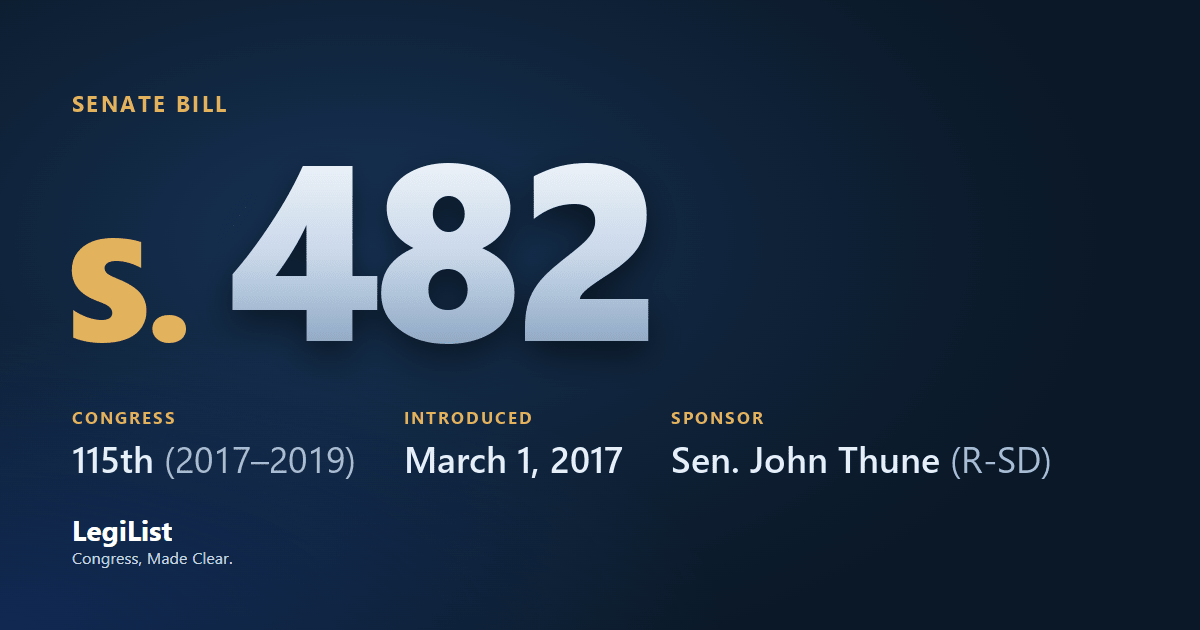
PHIT Act of 2017
Latest action · Mar 1, 2017 Read twice and referred to the Committee on Finance.
Progress
Where this bill reached, and when. A stage with no date was not reached; one that failed a vote and later carried shows the date it carried.
- IntroducedMar 1, 2017
- Passed SenateNot reached
- Passed HouseNot reached
- To the PresidentNot reached
- Became lawNot reached
Summary
Personal Health Investment Today Act of 2017 or the PHIT Act of 2017
This bill amends the Internal Revenue Code to allow a medical care tax deduction for up to $1,000 ($2,000 for a joint return or a head of household) of qualified sports and fitness expenses per year. The bill defines "qualified sports and fitness expenses" as amounts paid exclusively for the sole purpose of participating in a physical activity, including: (1) fitness facility memberships, (2) physical exercise or activity programs, and (3) equipment for a physical exercise or activity program.
Cosponsors 16
Members who signed on, in the order they did. Signatures ran from Mar 1, 2017 to Apr 23, 2018; 3 are original cosponsors, there from the day it was introduced.
| Seat | Cosponsor | Signed on | |
|---|---|---|---|
| D-CT | Christopher Murphy | Original | Mar 1, 2017 |
| D-IN | Joe Donnelly | Original | Mar 1, 2017 |
| R-WV | Shelley Moore Capito | Original | Mar 1, 2017 |
| R-SD | Mike Rounds | Mar 7, 2017 | |
| R-GA | Johnny Isakson | Mar 9, 2017 | |
| R-MS | Roger F. Wicker | Mar 28, 2017 | |
| R-AZ | John McCain | Mar 29, 2017 | |
| D-WI | Tammy Baldwin | Apr 24, 2017 | |
| R-WY | John Barrasso | May 2, 2017 | |
| R-KS | Jerry Moran | May 22, 2017 | |
| D-MI | Gary C. Peters | Sep 12, 2017 | |
| R-MO | Roy Blunt | Oct 3, 2017 | |
| D-DE | Christopher A. Coons | Jan 16, 2018 | |
| D-DE | Thomas R. Carper | Feb 8, 2018 | |
| I-ME | Angus S. King Jr. | Mar 12, 2018 | |
| R-NV | Dean Heller | Apr 23, 2018 |
Committees 1
Where it was sent and what each committee and subcommittee did with it, in order.
| Chamber | Committee | What it did |
|---|---|---|
| Senate | Finance Committee | Referred Mar 1, 2017 |
Actions 2
Everything that happened, newest first.
- Mar 1, 2017Introduced in Senate
- Mar 1, 2017Read twice and referred to the Committee on Finance.
Research
What has been written about this bill: committee reports, cost estimates, the sponsor’s authority statement, printed hearings and the Congressional Research Service’s work.
Printed hearings 1
Hearings whose printed record names this bill, newest first: hearings on it, and wider hearings where it came up.
| Number | Hearing | Committee | Held |
|---|---|---|---|
| S. Hrg. 115-244 | FISCAL YEAR 2018 BUDGET PROPOSALS FOR THE DEPARTMENT OF THE TREASURY AND TAX REFORM109 pages | Finance Committee | May 25, 2017 |
Related bills 4
Companion bills and other measures the record links to this one.
| Bill | Title | Relationship | Latest action |
|---|---|---|---|
| S 680 | PHIT Act of 2019 | Reintroduced Bill | Mar 6, 2019 |
| HR 1267 | PHIT Act | Related bill | Mar 1, 2017 |
| S 2218 | PHIT Act of 2015 | Reintroduction of | Oct 29, 2015 |
| HR 6312 | PHIT Act | Related bill | Jul 19, 2018 |
Titles 3
Every title it has carried, official and short, at each stage.
- Official Title as Introduced
- A bill to amend the Internal Revenue Code of 1986 to treat certain amounts paid for physical activity, fitness, and exercise as amounts paid for medical care.
- Short Titles as Introduced
- PHIT Act of 2017
- Personal Health Investment Today Act of 2017
Subjects
Assigned by the Library of Congress. Policy area: Taxation.
Text 1
Each version as it was printed, newest first.
- Mar 1, 2017Introduced in Senate
Everything here is as published by Congress: the summary is the Congressional Research Service's, the action wording is the clerks', and the subjects are the Library of Congress's. How far it got is read from the actions themselves, taking the most recent one of each kind, so a bill that failed a vote and later passed is shown as having passed. Records come from this bill on Congress.gov and govinfo.gov; cost estimates are the Congressional Budget Office's, and the hearings are the printed hearings GovInfo publishes, which can appear months after the hearing.