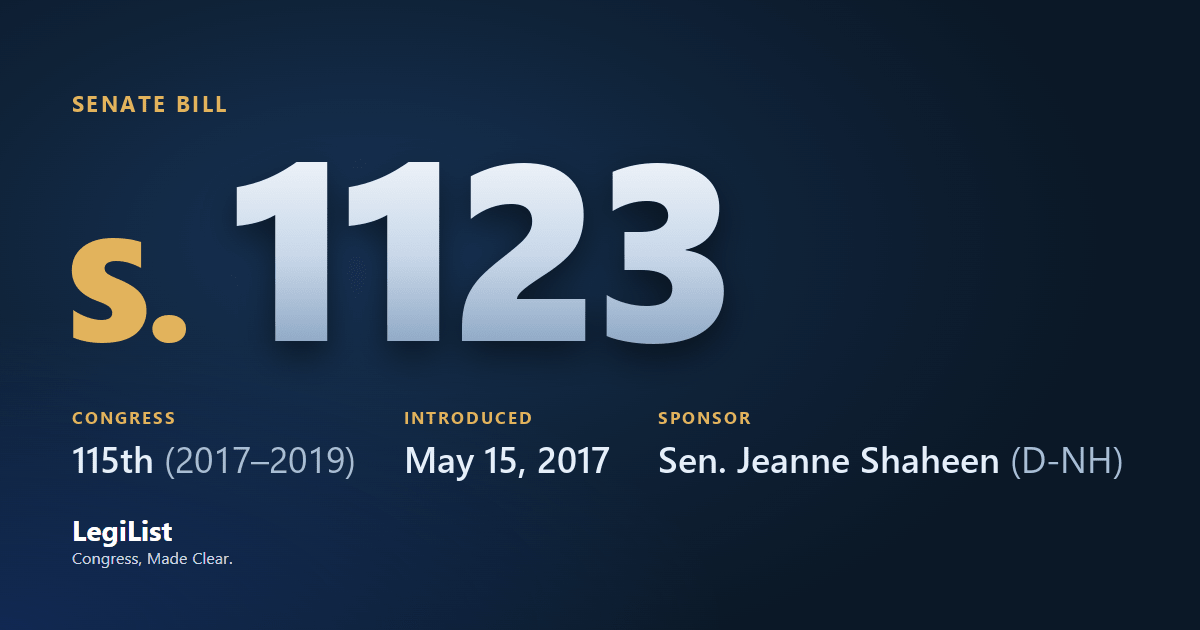
Office of National Drug Control Policy Reauthorization Act of 2017
Latest action · May 15, 2017 Read twice and referred to the Committee on the Judiciary.
Progress
Where this bill reached, and when. A stage with no date was not reached; one that failed a vote and later carried shows the date it carried.
- IntroducedMay 15, 2017
- Passed SenateNot reached
- Passed HouseNot reached
- To the PresidentNot reached
- Became lawNot reached
Summary
Office of National Drug Control Policy Reauthorization Act of 2017
This bill reauthorizes the Office of National Drug Control Policy through FY2023. It amends the definition of "demand reduction" in a National Drug Control Program to include screenings, interventions, promoting availability of and access to health care services, and support for long-term recovery from substance abuse disorders. It defines "illicit drug use," "illegal drug use," and like terms to include the illegal use of prescription drugs.
The Director of the National Drug Control Policy (Director) shall be directly responsible for demand reduction activities, supply reduction activities, and for state, local, and tribal affairs.
The Director shall require each National Drug Control Program agency to submit to the Director on an annual basis an evaluation of progress by the agency regarding implementation of drug recovery programs. The Director shall also ensure that drug recovery research is effectively disseminated by the National Drug Control Program agencies to state and local governments and nongovernmental agencies involved in demand reduction.
The President shall submit to Congress a National Drug Control Strategy, which shall set forth a comprehensive plan for the year to reduce illicit drug use and the consequences of such use by promoting prevention, early intervention, treatment, and recovery support for individuals with substance abuse disorders.
The Director shall submit to Congress a report evaluating high intensity drug trafficking areas (HIDTAs) as part of the National Drug Control Strategy, assessing drug enforcement task forces in HIDTAs, and assessing law enforcement intelligence sharing in HIDTAs.
Cosponsors 1
Members who signed on, in the order they did. All signed on May 15, 2017.
| Seat | Cosponsor | Signed on | |
|---|---|---|---|
| D-NH | Margaret Wood Hassan | Original | May 15, 2017 |
Committees 1
Where it was sent and what each committee and subcommittee did with it, in order.
| Chamber | Committee | What it did |
|---|---|---|
| Senate | Judiciary Committee | Referred May 15, 2017 |
Actions 2
Everything that happened, newest first.
- May 15, 2017Introduced in Senate
- May 15, 2017Read twice and referred to the Committee on the Judiciary.
Titles 2
Every title it has carried, official and short, at each stage.
- Official Title as Introduced
- A bill to reauthorize the Office of National Drug Control Policy, and for other purposes.
- Short Titles as Introduced
- Office of National Drug Control Policy Reauthorization Act of 2017
Subjects
Assigned by the Library of Congress. Policy area: Crime and Law Enforcement.
- Afghanistan
- Asia
- Colombia
- Congressional oversight
- Crime and Law Enforcement
- Criminal investigation, prosecution, interrogation
- Drug trafficking and controlled substances
- Drug, alcohol, tobacco use
- Environmental health
- Executive agency funding and structure
- Executive Office of the President
- Federal officials
- Government studies and investigations
- Hazardous wastes and toxic substances
- Health care coverage and access
- Health promotion and preventive care
- Internet and video services
- Internet, web applications, social media
- Latin America
- Peru
- Pest management
- Prescription drugs
- Specialized courts
- State and local government operations
Text 1
Each version as it was printed, newest first.
- May 15, 2017Introduced in Senate
Everything here is as published by Congress: the summary is the Congressional Research Service's, the action wording is the clerks', and the subjects are the Library of Congress's. How far it got is read from the actions themselves, taking the most recent one of each kind, so a bill that failed a vote and later passed is shown as having passed. Records come from this bill on Congress.gov and govinfo.gov; cost estimates are the Congressional Budget Office's, and the hearings are the printed hearings GovInfo publishes, which can appear months after the hearing.