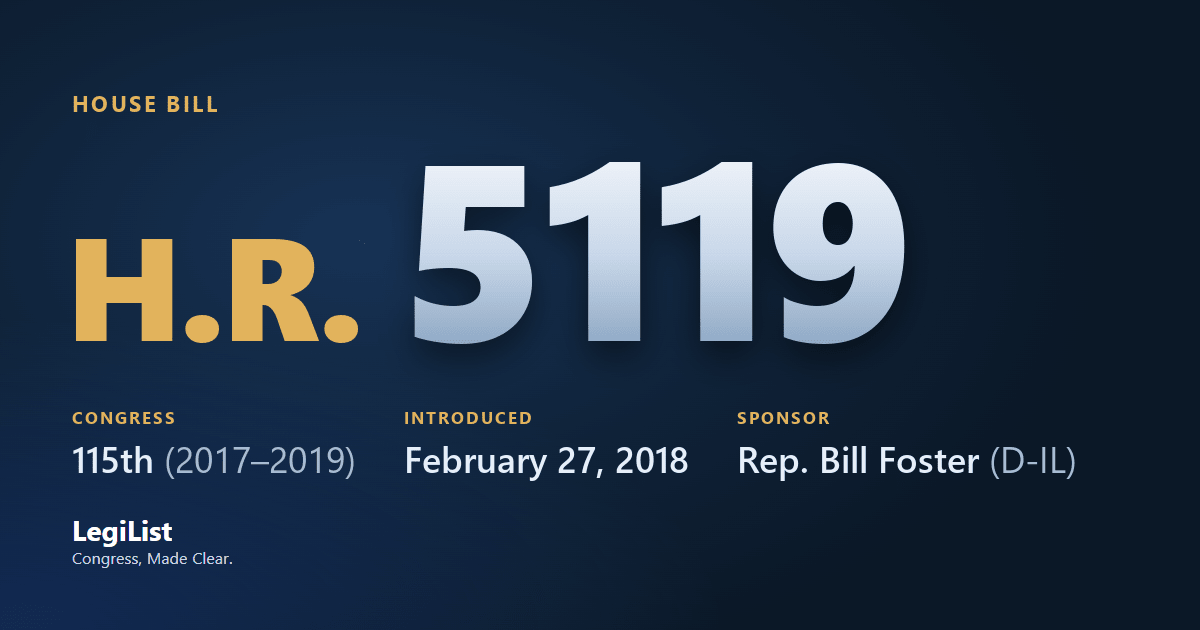
P3 Act
Latest action · Feb 27, 2018 Referred to the House Committee on Education and the Workforce.
Progress
Where this bill reached, and when. A stage with no date was not reached; one that failed a vote and later carried shows the date it carried.
- IntroducedFeb 27, 2018
- Passed HouseNot reached
- Passed SenateNot reached
- To the PresidentNot reached
- Became lawNot reached
Summary
Partnerships for Progress and Prosperity Act or the P3 Act
This bill requires the Department of Education (ED) to award grants to local educational agencies (LEAs) and institutions of higher education for the improvement of students' education in science, technology, engineering, and mathematics (STEM).
Each grantee shall partner with an employer in a STEM field to:
- assist students in obtaining internships or apprenticeships,
- develop STEM coursework curricula and metrics,
- carry out dual-credit courses,
- provide tutoring and mentoring,
- enable students and teachers to attend STEM events outside of the classroom,
- provide after-school and summer STEM programs, and
- purchase educational materials or equipment to facilitate STEM instruction.
In awarding grants under the program, ED shall give special consideration to applicants that:
- promote in-classroom engagement between STEM professionals and students;
- use technology-based materials and content;
- pair mentors and tutors with students struggling to meet curriculum benchmarks;
- in the case of LEA applicants, serve schools in which most students are eligible for free or reduced-price lunch; and
- propose to use grant funds to target interventions for populations that are traditionally underrepresented in STEM fields.
Each grantee shall provide matching funds equal to 50% of the grant amount.
Cosponsors 5
Members who signed on, in the order they did. Signatures ran from Feb 27, 2018 to Mar 8, 2018; 3 are original cosponsors, there from the day it was introduced.
| Seat | Cosponsor | Signed on | |
|---|---|---|---|
| D-GA | David Scott | Original | Feb 27, 2018 |
| D-CO | Jared Polis | Original | Feb 27, 2018 |
| D-OH | Tim Ryan | Original | Feb 27, 2018 |
| D-CA | Eric Swalwell | Mar 8, 2018 | |
| D-NV | Jacky Rosen | Mar 8, 2018 |
Committees 1
Where it was sent and what each committee and subcommittee did with it, in order.
| Chamber | Committee | What it did |
|---|---|---|
| House | Education and Workforce Committee | Referred Feb 27, 2018 |
Actions 2
Everything that happened, newest first.
- Feb 27, 2018Introduced in House
- Feb 27, 2018Referred to the House Committee on Education and the Workforce.
Research
What has been written about this bill: committee reports, cost estimates, the sponsor’s authority statement, printed hearings and the Congressional Research Service’s work.
Constitutional authority
The sponsor’s statement, as printed in the Congressional Record, vol. 164, no. 35, February 27, 2018, page H1335.
Related bills 2
Companion bills and other measures the record links to this one.
Titles 3
Every title it has carried, official and short, at each stage.
- Official Title as Introduced
- To direct the Secretary of Education to carry out a STEM grant program.
- Short Titles as Introduced
- P3 Act
- Partnerships for Progress and Prosperity Act
Subjects
Assigned by the Library of Congress. Policy area: Education.
- Academic performance and assessments
- Education
- Education of the disadvantaged
- Education programs funding
- Elementary and secondary education
- Employment and training programs
- Higher education
- Minority education
- Minority employment
- Science and engineering education
- Teaching, teachers, curricula
- Women's education
- Women's employment
Text 1
Each version as it was printed, newest first.
- Feb 27, 2018Introduced in House
Support LegiList
This page is free, carries no paywall, and is built and maintained by one person. If the record here is useful to you, a few dollars keeps it going.
Everything here is as published by Congress: the summary is the Congressional Research Service's, the action wording is the clerks', and the subjects are the Library of Congress's. How far it got is read from the actions themselves, taking the most recent one of each kind, so a bill that failed a vote and later passed is shown as having passed. Records come from this bill on Congress.gov and govinfo.gov; cost estimates are the Congressional Budget Office's, and the hearings are the printed hearings GovInfo publishes, which can appear months after the hearing.