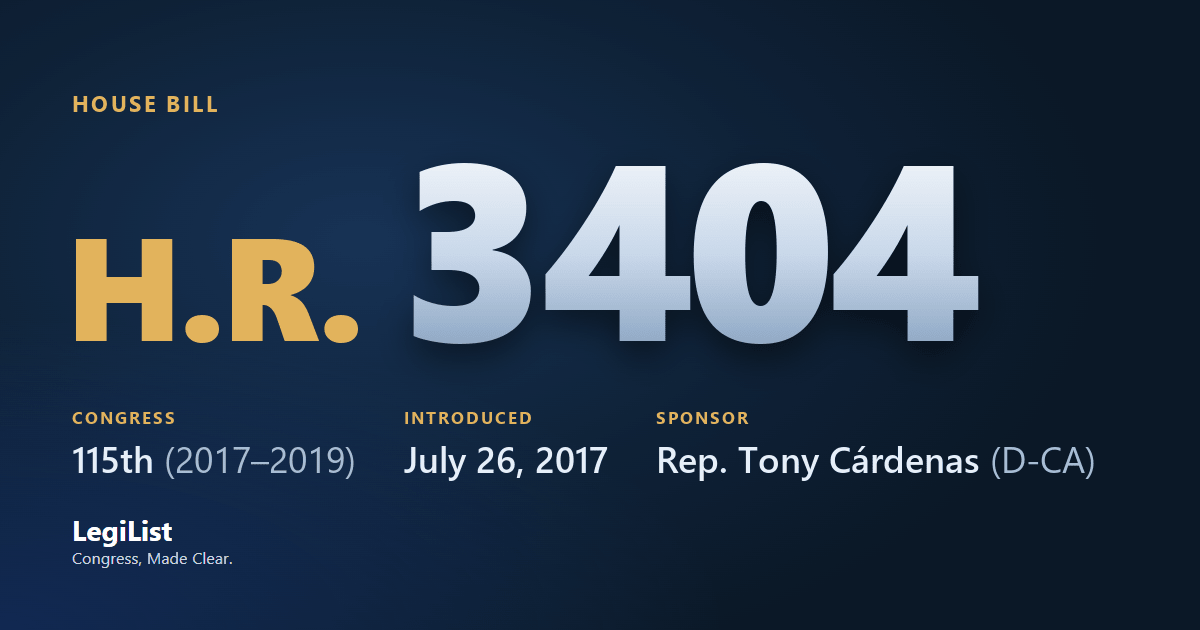
To provide for the establishment in the National Highway Traffic Safety Administration of a Highly Automated Vehicle Advisory Council.
Latest action · Jul 28, 2017 Referred to the Subcommittee on Digital Commerce and Consumer Protection.
Progress
Where this bill reached, and when. A stage with no date was not reached; one that failed a vote and later carried shows the date it carried.
- IntroducedJul 26, 2017
- Passed HouseNot reached
- Passed SenateNot reached
- To the PresidentNot reached
- Became lawNot reached
Summary
This bill directs the Department of Transportation (DOT) to establish in the National Highway Traffic Safety Administration a Highly Automated Vehicle Advisory Council to undertake information gathering activities, develop technical advice, and present best practices or recommendations to DOT regarding:
- labor and employment issues that may be affected by the deployment of highly automated vehicles;
- the impact of the development and deployment of such vehicles on the environment;
- protection of consumer privacy and security of information collected by such vehicles; and
- cabin safety for vehicle passengers and how automated driving systems may impact collision vectors, overall crashworthiness, and the use and placement of airbags, seatbelts, anchor belts, head restraints, and other protective features in the cabin.
A "highly automated vehicle" is defined as a motor vehicle (excluding a commercial motor vehicle) equipped with an automated driving system.
An "automated driving system" is defined as the hardware and software that are collectively capable of performing the entire dynamic driving task on a sustained basis, regardless of whether such system is limited to a specific operational design domain.
Cosponsors
Members who signed on, in the order they did.
Committees 2
Where it was sent and what each committee and subcommittee did with it, in order.
| Chamber | Committee | What it did |
|---|---|---|
| House | Energy and Commerce Committee | Referred Jul 26, 2017 |
| Commerce, Manufacturing, and Trade Subcommittee | Referred Jul 28, 2017 | |
| House | Education and Workforce Committee | Referred Jul 26, 2017 |
Actions 3
Everything that happened, newest first.
- Jul 28, 2017Referred to the Subcommittee on Digital Commerce and Consumer Protection.
- Jul 26, 2017Introduced in House
- Jul 26, 2017Referred to the Committee on Energy and Commerce, and in addition to the Committee on Education and the Workforce, for a period to be subsequently determined by the Speaker, in each case for consideration of such provisions as fall within the jurisdiction of the committee concerned.
Research
What has been written about this bill: committee reports, cost estimates, the sponsor’s authority statement, printed hearings and the Congressional Research Service’s work.
Constitutional authority
The sponsor’s statement, as printed in the Congressional Record, vol. 163, no. 126, July 26, 2017, page H6466.
Related bills 1
Companion bills and other measures the record links to this one.
| Bill | Title | Relationship | Latest action |
|---|---|---|---|
| HR 3388 | SELF DRIVE Act | Related bill | Sep 7, 2017 |
Titles 1
Every title it has carried, official and short, at each stage.
- Official Title as Introduced
- To provide for the establishment in the National Highway Traffic Safety Administration of a Highly Automated Vehicle Advisory Council.
Subjects
Assigned by the Library of Congress. Policy area: Transportation and Public Works.
- Advisory bodies
- Computers and information technology
- Consumer affairs
- Environmental assessment, monitoring, research
- Hybrid, electric, and advanced technology vehicles
- Motor vehicles
- Product safety and quality
- Right of privacy
- Transportation and Public Works
- Transportation employees
- Transportation safety and security
Text 1
Each version as it was printed, newest first.
- Jul 26, 2017Introduced in House
Support LegiList
This page is free, carries no paywall, and is built and maintained by one person. If the record here is useful to you, a few dollars keeps it going.
Everything here is as published by Congress: the summary is the Congressional Research Service's, the action wording is the clerks', and the subjects are the Library of Congress's. How far it got is read from the actions themselves, taking the most recent one of each kind, so a bill that failed a vote and later passed is shown as having passed. Records come from this bill on Congress.gov and govinfo.gov; cost estimates are the Congressional Budget Office's, and the hearings are the printed hearings GovInfo publishes, which can appear months after the hearing.