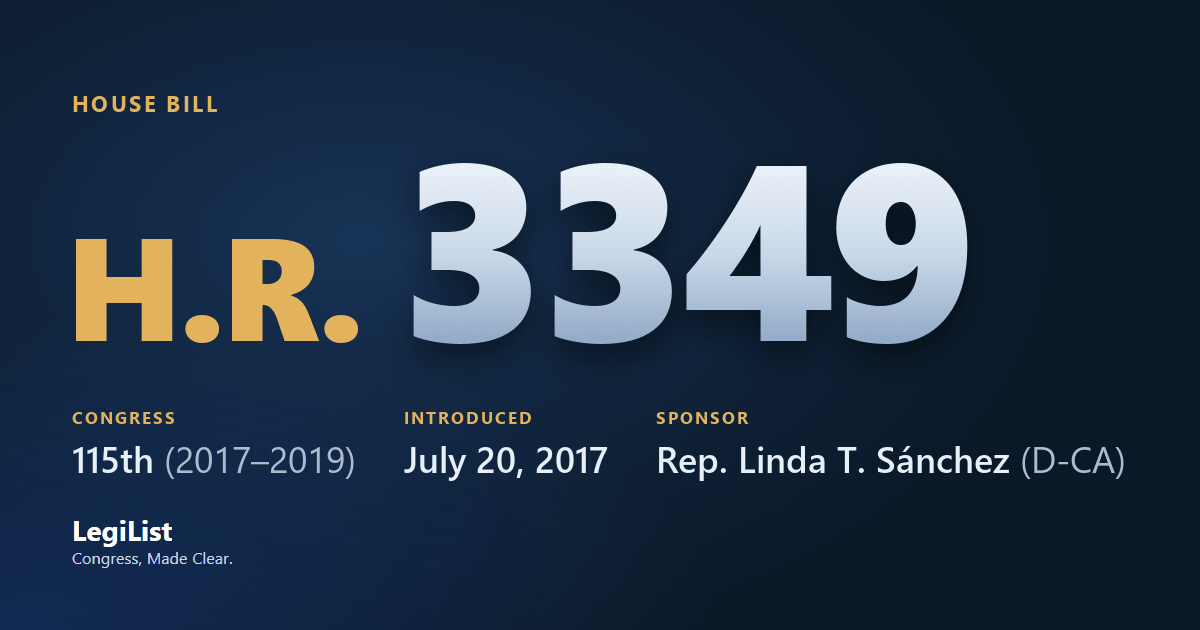
Mechanical Insulation Installation Incentive Act of 2017
Latest action · Jul 20, 2017 Referred to the House Committee on Ways and Means.
Progress
Where this bill reached, and when. A stage with no date was not reached; one that failed a vote and later carried shows the date it carried.
- IntroducedJul 20, 2017
- Passed HouseNot reached
- Passed SenateNot reached
- To the PresidentNot reached
- Became lawNot reached
Summary
Mechanical Insulation Installation Incentive Act of 2017
This bill amends the Internal Revenue Code to allow an additional tax deduction for the cost of installing mechanical insulation property. The bill: (1) limits the amount of such deduction to the lesser of 30% of the cost or the reduction in energy loss from the installed mechanical insulation property compared to property that meets the minimum requirements of American Society of Heating, Refrigerating and Air-Conditioning Engineers (ASHRAE) standard 90.1-2007; and (2) allows the cost of mechanical insulation property that is placed in service to replace insulation property to be treated as a deductible business expense in the current taxable year.
The bill defines "mechanical insulation property" as insulation materials, facings, and accessory products: (1) placed in service in connection with a mechanical system which is located in the United States and of a character subject to an allowance for depreciation; and (2) utilized for thermal requirements for mechanical piping and equipment, hot and cold applications, and heating, venting and air conditioning applications which can be used in a variety of facilities.
The bill also allows a tax deduction for capital expenditures related to mechanical insulation property.
Cosponsors 29
Members who signed on, in the order they did. Signatures ran from Jul 20, 2017 to Sep 25, 2018; 3 are original cosponsors, there from the day it was introduced.
| Seat | Cosponsor | Signed on | |
|---|---|---|---|
| R-PA | Patrick Meehan | Original | Jul 20, 2017 |
| D-OH | Tim Ryan | Original | Jul 20, 2017 |
| R-NY | Tom Reed | Original | Jul 20, 2017 |
| D-WA | Suzan K. DelBene | Sep 25, 2017 | |
| D-WI | Mark Pocan | Sep 27, 2017 | |
| D-OR | Earl Blumenauer | Oct 11, 2017 | |
| D-CA | Scott H. Peters | Oct 11, 2017 | |
| R-IL | Rodney Davis | Oct 25, 2017 | |
| D-CA | Julia Brownley | Nov 3, 2017 | |
| D-IL | Raja Krishnamoorthi | Nov 3, 2017 | |
| D-NJ | Donald Norcross | Nov 16, 2017 | |
| R-NY | John Katko | Nov 29, 2017 | |
| D-NY | Joseph Crowley | Nov 29, 2017 | |
| D-NJ | Bill Pascrell, Jr. | Dec 19, 2017 | |
| D-LA | Cedric L. Richmond | Jan 8, 2018 |
Committees 1
Where it was sent and what each committee and subcommittee did with it, in order.
| Chamber | Committee | What it did |
|---|---|---|
| House | Ways and Means Committee | Referred Jul 20, 2017 |
Actions 2
Everything that happened, newest first.
- Jul 20, 2017Introduced in House
- Jul 20, 2017Referred to the House Committee on Ways and Means.
Research
What has been written about this bill: committee reports, cost estimates, the sponsor’s authority statement, printed hearings and the Congressional Research Service’s work.
Constitutional authority
The sponsor’s statement, as printed in the Congressional Record, vol. 163, no. 123, July 20, 2017, page H6147.
Related bills 1
Companion bills and other measures the record links to this one.
| Bill | Title | Relationship | Latest action |
|---|---|---|---|
| HR 1987 | Mechanical Insulation Installation Incentive Act of 2019 | Reintroduced Bill | Mar 28, 2019 |
Titles 2
Every title it has carried, official and short, at each stage.
- Official Title as Introduced
- To amend the Internal Revenue Code of 1986 to provide a tax incentive for the installation and maintenance of mechanical insulation property.
- Short Titles as Introduced
- Mechanical Insulation Installation Incentive Act of 2017
Subjects
Assigned by the Library of Congress. Policy area: Taxation.
Text 1
Each version as it was printed, newest first.
- Jul 20, 2017Introduced in House
Support LegiList
This page is free, carries no paywall, and is built and maintained by one person. If the record here is useful to you, a few dollars keeps it going.
Everything here is as published by Congress: the summary is the Congressional Research Service's, the action wording is the clerks', and the subjects are the Library of Congress's. How far it got is read from the actions themselves, taking the most recent one of each kind, so a bill that failed a vote and later passed is shown as having passed. Records come from this bill on Congress.gov and govinfo.gov; cost estimates are the Congressional Budget Office's, and the hearings are the printed hearings GovInfo publishes, which can appear months after the hearing.