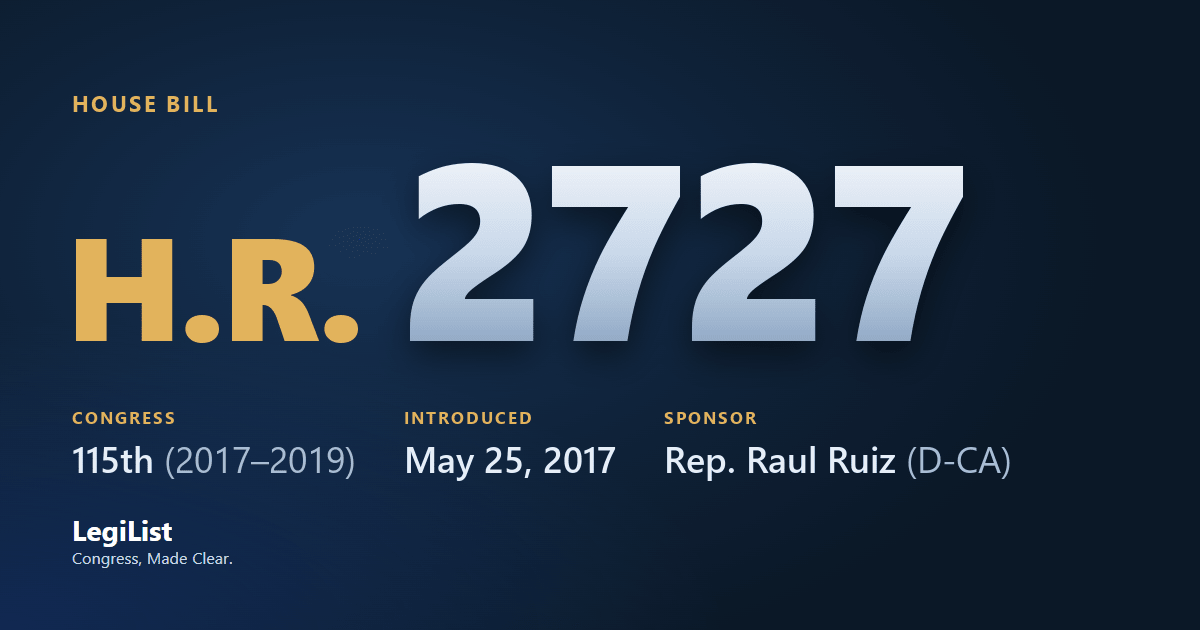
NEST Act
Latest action · May 25, 2017 Referred to the House Committee on Education and the Workforce.
Progress
Where this bill reached, and when. A stage with no date was not reached; one that failed a vote and later carried shows the date it carried.
- IntroducedMay 25, 2017
- Passed HouseNot reached
- Passed SenateNot reached
- To the PresidentNot reached
- Became lawNot reached
Summary
Native Educator Support and Training Act or the NEST Act
This bill amends the Higher Education Act of 1965 to establish scholarships, loan forgiveness plans, and training programs for educators who commit to teaching in Native American or Bureau of Indian Education (BIE) schools.
This bill establishes three scholarship programs for students who are seeking degrees in education or school administration at institutions of higher education and commit to teaching in Native American or BIE schools:
- the Indian Student Educator Scholarship Program for students seeking degrees,
- the Indian Educator Scholarship Program for Indian students seeking degrees, and
- the Indian Educator Graduate Fellowship Program for Indian students seeking graduate degrees.
Recipients of the scholarships must commit to working for a BIE school, a school serving Native Americans, a tribal early childhood education program, or other specified schools and agencies for the greater of three years or the number of school years that the scholarship funded.
The bill establishes loan forgiveness programs for educators and Native Americans who have taught for at least five consecutive years at BIE schools or local educational agencies with high percentages of Native American students.
The bill extends the federal Perkins Loan Cancellation Program to educators teaching in BIE schools or in Native American language immersion programs.
The bill authorizes professional development grants for native-serving elementary and secondary schools. It also establishes the Native American Language Teacher Training Program to provide grants for institutions of higher education to develop training programs for Native American immersion and language teachers.
Cosponsors
Members who signed on, in the order they did.
Committees 1
Where it was sent and what each committee and subcommittee did with it, in order.
| Chamber | Committee | What it did |
|---|---|---|
| House | Education and Workforce Committee | Referred May 25, 2017 |
Actions 2
Everything that happened, newest first.
- May 25, 2017Introduced in House
- May 25, 2017Referred to the House Committee on Education and the Workforce.
Research
What has been written about this bill: committee reports, cost estimates, the sponsor’s authority statement, printed hearings and the Congressional Research Service’s work.
Constitutional authority
The sponsor’s statement, as printed in the Congressional Record, vol. 163, no. 91, May 25, 2017, page H4610.
Related bills 1
Companion bills and other measures the record links to this one.
| Bill | Title | Relationship | Latest action |
|---|---|---|---|
| S 458 | NEST Act | Related bill | May 17, 2017 |
Titles 3
Every title it has carried, official and short, at each stage.
- Official Title as Introduced
- To support the education of Indian children.
- Short Titles as Introduced
- NEST Act
- Native Educator Support and Training Act
Subjects
Assigned by the Library of Congress. Policy area: Native Americans.
- Child care and development
- Education programs funding
- Elementary and secondary education
- Higher education
- Indian social and development programs
- Language arts
- Licensing and registrations
- Minority education
- Native Americans
- Preschool education
- School administration
- Special education
- Student aid and college costs
- Teaching, teachers, curricula
Text 1
Each version as it was printed, newest first.
- May 25, 2017Introduced in House
Everything here is as published by Congress: the summary is the Congressional Research Service's, the action wording is the clerks', and the subjects are the Library of Congress's. How far it got is read from the actions themselves, taking the most recent one of each kind, so a bill that failed a vote and later passed is shown as having passed. Records come from this bill on Congress.gov and govinfo.gov; cost estimates are the Congressional Budget Office's, and the hearings are the printed hearings GovInfo publishes, which can appear months after the hearing.