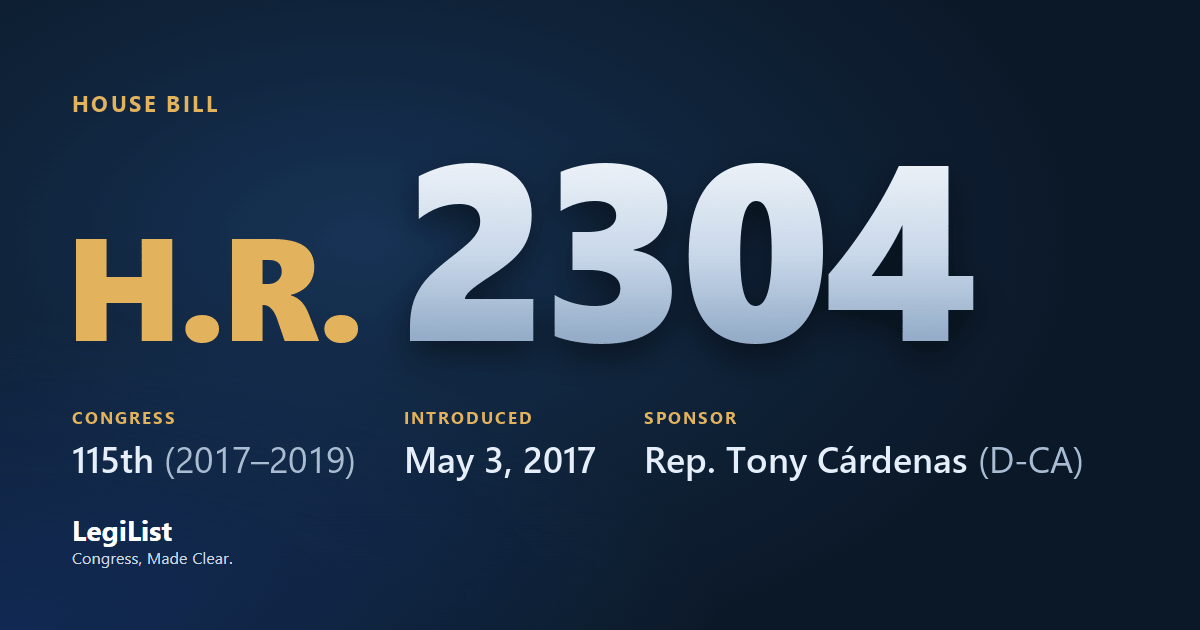
Computer Science Career Education Act of 2017
Latest action · May 3, 2017 Referred to the House Committee on Education and the Workforce.
Progress
Where this bill reached, and when. A stage with no date was not reached; one that failed a vote and later carried shows the date it carried.
- IntroducedMay 3, 2017
- Passed HouseNot reached
- Passed SenateNot reached
- To the PresidentNot reached
- Became lawNot reached
Summary
Computer Science Career Education Act of 2017
This bill directs the Department of Education to award competitive grants to consortia composed of at least one local educational agency, at least one institution of higher education (IHE), and community representatives for the development and operation of four- or six-year computer science career education programs.
Each such career education program must include the development of a computer science program for both secondary and postsecondary education that:
- is aligned with rigorous computer science standards for kindergarten through grade 12 computer science education;
- links secondary schools and IHEs through non-duplicative sequences of courses in computer science career fields;
- uses, if appropriate and available, experiential or work-based learning in collaboration with local or regional employers;
- uses educational technology and distance learning to involve all members of the consortium more fully in the development and operation of the programs;
- aligns with industry needs in the state or region; and
- creates innovative opportunities for students that lead to attainment of industry-recognized credentials.
A program must also provide: (1) professional development for teachers, (2) career and academic counseling for students, and (3) equal access to the full range of career education programs to members of underrepresented groups and special populations.
Cosponsors 6
Members who signed on, in the order they did. Signatures ran from May 3, 2017 to May 26, 2017; 5 are original cosponsors, there from the day it was introduced.
| Seat | Cosponsor | Signed on | |
|---|---|---|---|
| D-WA | Derek Kilmer | Original | May 3, 2017 |
| D-NY | Louise McIntosh Slaughter | Original | May 3, 2017 |
| D-PA | Matt Cartwright | Original | May 3, 2017 |
| R-PA | Ryan A. Costello | Original | May 3, 2017 |
| D-WA | Suzan K. DelBene | Original | May 3, 2017 |
| D-NV | Jacky Rosen | May 26, 2017 |
Committees 1
Where it was sent and what each committee and subcommittee did with it, in order.
| Chamber | Committee | What it did |
|---|---|---|
| House | Education and Workforce Committee | Referred May 3, 2017 |
Actions 2
Everything that happened, newest first.
- May 3, 2017Introduced in House
- May 3, 2017Referred to the House Committee on Education and the Workforce.
Research
What has been written about this bill: committee reports, cost estimates, the sponsor’s authority statement, printed hearings and the Congressional Research Service’s work.
Constitutional authority
The sponsor’s statement, as printed in the Congressional Record, vol. 163, no. 76, May 3, 2017, page H3324.
Related bills 2
Companion bills and other measures the record links to this one.
| Bill | Title | Relationship | Latest action |
|---|---|---|---|
| S 648 | Computer Science Career Education Act of 2017 | Identical bill | Mar 15, 2017 |
| HR 2056 | Computer Science Career Education Act of 2015 | Reintroduction of | Nov 16, 2015 |
Titles 2
Every title it has carried, official and short, at each stage.
- Official Title as Introduced
- To establish a grant program to promote the development of career education programs in computer science in secondary and postsecondary education.
- Short Titles as Introduced
- Computer Science Career Education Act of 2017
Subjects
Assigned by the Library of Congress. Policy area: Education.
- Computers and information technology
- Education
- Education of the disadvantaged
- Education programs funding
- Educational technology and distance education
- Elementary and secondary education
- Higher education
- Minority education
- Public-private cooperation
- Science and engineering education
- Teaching, teachers, curricula
- Vocational and technical education
Text 1
Each version as it was printed, newest first.
- May 3, 2017Introduced in House
Support LegiList
This page is free, carries no paywall, and is built and maintained by one person. If the record here is useful to you, a few dollars keeps it going.
Everything here is as published by Congress: the summary is the Congressional Research Service's, the action wording is the clerks', and the subjects are the Library of Congress's. How far it got is read from the actions themselves, taking the most recent one of each kind, so a bill that failed a vote and later passed is shown as having passed. Records come from this bill on Congress.gov and govinfo.gov; cost estimates are the Congressional Budget Office's, and the hearings are the printed hearings GovInfo publishes, which can appear months after the hearing.