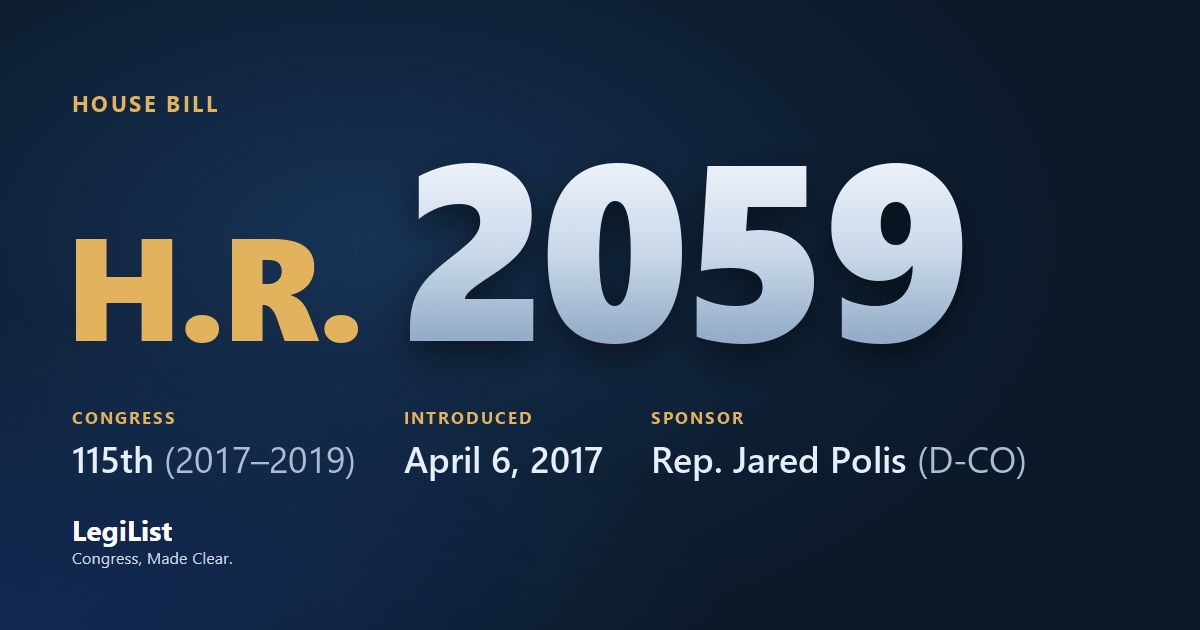
BREATHE Act
Latest action · Apr 7, 2017 Referred to the Subcommittee on Environment.
Progress
Where this bill reached, and when. A stage with no date was not reached; one that failed a vote and later carried shows the date it carried.
- IntroducedApr 6, 2017
- Passed HouseNot reached
- Passed SenateNot reached
- To the PresidentNot reached
- Became lawNot reached
Summary
Bringing Reductions to Energy's Airborne Toxic Health Effects Act or the BREATHE Act
This bill amends the Clean Air Act to revise requirements for hazardous air pollutants. Specifically, the bill allows: (1) emissions from oil or gas exploration or production wells and emissions from pipeline compressors or pump stations to be aggregated with emissions from other similar sources and regulated as a major source of toxic air pollutants, (2) emissions from those wells to be aggregated for purposes of emissions standards for hazardous air pollutants, and (3) emissions from oil or gas production wells to be regulated as an area source of toxic air pollutants.
The Environmental Protection Agency must: (1) issue a final rule adding hydrogen sulfide to the list of hazardous air pollutants; and (2) revise the list of air pollution sources within 365 days after issuing the rule to include categories and subcategories of major sources and area sources of hydrogen sulfide, including oil and gas wells.
Cosponsors 52
Members who signed on, in the order they did. Signatures ran from Apr 6, 2017 to Nov 13, 2018; 37 are original cosponsors, there from the day it was introduced.
| Seat | Cosponsor | Signed on | |
|---|---|---|---|
| D-WA | Adam Smith | Original | Apr 6, 2017 |
| D-CA | Alan S. Lowenthal | Original | Apr 6, 2017 |
| D-CA | Anna G. Eshoo | Original | Apr 6, 2017 |
| D-CA | Barbara Lee | Original | Apr 6, 2017 |
| D-MN | Betty McCollum | Original | Apr 6, 2017 |
| D-NY | Carolyn B. Maloney | Original | Apr 6, 2017 |
| D-ME | Chellie Pingree | Original | Apr 6, 2017 |
| D-FL | Darren Soto | Original | Apr 6, 2017 |
| D-CO | Diana DeGette | Original | Apr 6, 2017 |
| D-VA | Donald S. Beyer, Jr. | Original | Apr 6, 2017 |
| D-OR | Earl Blumenauer | Original | Apr 6, 2017 |
| D-CO | Ed Perlmutter | Original | Apr 6, 2017 |
| D-DC | Eleanor Holmes Norton | Original | Apr 6, 2017 |
| D-VA | Gerald E. Connolly | Original | Apr 6, 2017 |
| D-CA | Grace F. Napolitano | Original | Apr 6, 2017 |
Committees 1
Where it was sent and what each committee and subcommittee did with it, in order.
| Chamber | Committee | What it did |
|---|---|---|
| House | Energy and Commerce Committee | Referred Apr 6, 2017 |
| Environment Subcommittee | Referred Apr 7, 2017 |
Actions 3
Everything that happened, newest first.
- Apr 7, 2017Referred to the Subcommittee on Environment.
- Apr 6, 2017Introduced in House
- Apr 6, 2017Referred to the House Committee on Energy and Commerce.
Research
What has been written about this bill: committee reports, cost estimates, the sponsor’s authority statement, printed hearings and the Congressional Research Service’s work.
Constitutional authority
The sponsor’s statement, as printed in the Congressional Record, vol. 163, no. 60, April 6, 2017, page H2792.
Related bills 2
Companion bills and other measures the record links to this one.
| Bill | Title | Relationship | Latest action |
|---|---|---|---|
| HR 1548 | BREATHE Act | Reintroduction of | Mar 27, 2015 |
| HR 4426 | Sustainable Energy Development Reform Act | Related bill | May 22, 2018 |
Titles 3
Every title it has carried, official and short, at each stage.
- Official Title as Introduced
- To amend the Clean Air Act to eliminate the exemption for aggregation of emissions from oil and gas sources, and for other purposes.
- Short Titles as Introduced
- BREATHE Act
- Bringing Reductions to Energy's Airborne Toxic Health Effects Act
Subjects
Assigned by the Library of Congress. Policy area: Environmental Protection.
Text 1
Each version as it was printed, newest first.
- Apr 6, 2017Introduced in House
Everything here is as published by Congress: the summary is the Congressional Research Service's, the action wording is the clerks', and the subjects are the Library of Congress's. How far it got is read from the actions themselves, taking the most recent one of each kind, so a bill that failed a vote and later passed is shown as having passed. Records come from this bill on Congress.gov and govinfo.gov; cost estimates are the Congressional Budget Office's, and the hearings are the printed hearings GovInfo publishes, which can appear months after the hearing.