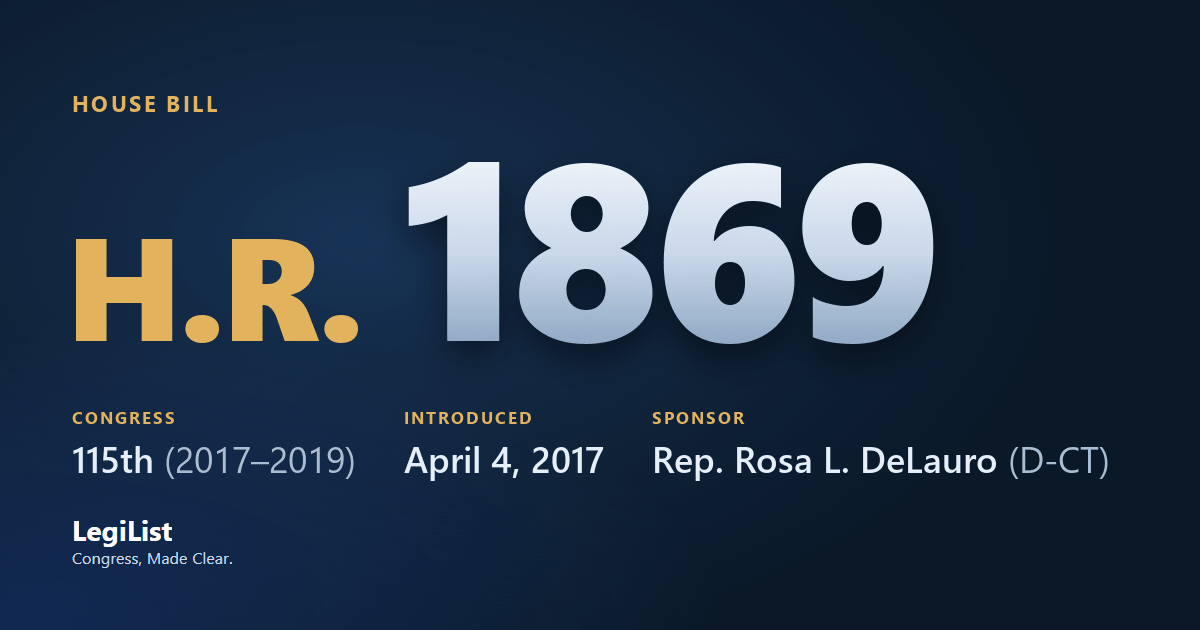
Paycheck Fairness Act
Latest action · Apr 4, 2017 Referred to the House Committee on Education and the Workforce.
Progress
Where this bill reached, and when. A stage with no date was not reached; one that failed a vote and later carried shows the date it carried.
- IntroducedApr 4, 2017
- Passed HouseNot reached
- Passed SenateNot reached
- To the PresidentNot reached
- Became lawNot reached
Summary
Paycheck Fairness Act
This bill amends equal pay provisions of the Fair Labor Standards Act of 1938 to: (1) restrict the use of the bona fide factor defense to wage discrimination claims, (2) enhance nonretaliation prohibitions, (3) make it unlawful to require an employee to sign a contract or waiver prohibiting the employee from disclosing information about the employee's wages, and (4) increase civil penalties for violations of equal pay provisions.
The Equal Employment Opportunity Commission (EEOC) and the Office of Federal Contract Compliance Programs shall train EEOC employees and other affected parties on wage discrimination.
The bill directs the Department of Labor to: (1) establish and carry out a grant program for negotiation skills training for girls and women, (2) conduct studies to eliminate pay disparities between men and women, and (3) make available information on wage discrimination to assist the public in understanding and addressing such discrimination.
The Secretary of Labor's National Award for Pay Equity in the Workplace is established for an employer who has made a substantial effort to eliminate pay disparities between men and women.
The bill amends the Civil Rights Act of 1964 to require the EEOC to issue regulations for collecting from employers compensation and other employment data according to the sex, race, and national origin of employees for use in enforcing laws prohibiting pay discrimination.
Cosponsors 201
Members who signed on, in the order they did. Signatures ran from Apr 4, 2017 to Dec 20, 2018; 197 are original cosponsors, there from the day it was introduced.
| Seat | Cosponsor | Signed on | |
|---|---|---|---|
| D-VA | A. Donald McEachin | Original | Apr 4, 2017 |
| D-CA | Adam B. Schiff | Original | Apr 4, 2017 |
| D-WA | Adam Smith | Original | Apr 4, 2017 |
| D-NY | Adriano Espaillat | Original | Apr 4, 2017 |
| D-TX | Al Green | Original | Apr 4, 2017 |
| D-FL | Al Lawson, Jr. | Original | Apr 4, 2017 |
| D-CA | Alan S. Lowenthal | Original | Apr 4, 2017 |
| D-NJ | Albio Sires | Original | Apr 4, 2017 |
| D-FL | Alcee L. Hastings | Original | Apr 4, 2017 |
| D-NC | Alma S. Adams | Original | Apr 4, 2017 |
| D-CA | Ami Bera | Original | Apr 4, 2017 |
| D-IN | André Carson | Original | Apr 4, 2017 |
| D-NH | Ann M. Kuster | Original | Apr 4, 2017 |
| D-CA | Anna G. Eshoo | Original | Apr 4, 2017 |
| D-MD | Anthony G. Brown | Original | Apr 4, 2017 |
Committees 1
Where it was sent and what each committee and subcommittee did with it, in order.
| Chamber | Committee | What it did |
|---|---|---|
| House | Education and Workforce Committee | Referred Apr 4, 2017 |
Actions 2
Everything that happened, newest first.
- Apr 4, 2017Introduced in House
- Apr 4, 2017Referred to the House Committee on Education and the Workforce.
In the Congressional Record 4
Days the Record’s own index lists this bill, newest first, with the pages and the members it names. Pages starting H are the House, S the Senate, E Extensions of Remarks.
| Where | In the Record | Members | Date |
|---|---|---|---|
| Extensions | Debate and remarks E428 | Joyce Beatty D-OH | Apr 10, 2018 |
| Extensions | Debate and remarks E1062 | Joyce Beatty D-OH | Jul 26, 2017 |
| House · Extensions | Debate and remarks E447, H2637, H2639, H2645, H2646, H2678, H2679 | Alma S. Adams D-NC, Jared Polis D-CO, Jimmy Panetta D-CA, Marcy Kaptur D-OH, Rosa L. DeLauro D-CT, Sheila Jackson Lee D-TX, Yvette D. Clarke D-NY | Apr 4, 2017 |
| House | Debate and remarks H2617, H2618 | Joyce Beatty D-OH, Raja Krishnamoorthi D-IL | Apr 3, 2017 |
Research
What has been written about this bill: committee reports, cost estimates, the sponsor’s authority statement, printed hearings and the Congressional Research Service’s work.
Constitutional authority
The sponsor’s statement, as printed in the Congressional Record, vol. 163, no. 58, April 4, 2017, page H2697.
Related bills 6
Companion bills and other measures the record links to this one.
| Bill | Title | Relationship | Latest action |
|---|---|---|---|
| HR 7 | Paycheck Fairness Act | Reintroduced Bill | Apr 3, 2019 |
| S 44 | End Pay Discrimination Through Information Act | Related bill | Jan 5, 2017 |
| S 345 | Workplace Advancement Act | Related bill | Feb 8, 2017 |
| S 819 | Paycheck Fairness Act | Identical bill | Apr 4, 2017 |
| HR 1890 | Workplace Advancement Act | Related bill | Apr 4, 2017 |
Titles 2
Every title it has carried, official and short, at each stage.
- Official Title as Introduced
- To amend the Fair Labor Standards Act of 1938 to provide more effective remedies to victims of discrimination in the payment of wages on the basis of sex, and for other purposes.
- Short Titles as Introduced
- Paycheck Fairness Act
Subjects
Assigned by the Library of Congress. Policy area: Labor and Employment.
- Administrative law and regulatory procedures
- Civil actions and liability
- Contracts and agency
- Department of Education
- Department of Labor
- Employee hiring
- Employment discrimination and employee rights
- Equal Employment Opportunity Commission (EEOC)
- Government information and archives
- Government studies and investigations
- Labor and Employment
- Labor standards
- Public contracts and procurement
- Racial and ethnic relations
- Sex, gender, sexual orientation discrimination
- Small business
- Wages and earnings
- Women's employment
Text 1
Each version as it was printed, newest first.
- Apr 4, 2017Introduced in House
Support LegiList
This page is free, carries no paywall, and is built and maintained by one person. If the record here is useful to you, a few dollars keeps it going.
Everything here is as published by Congress: the summary is the Congressional Research Service's, the action wording is the clerks', and the subjects are the Library of Congress's. How far it got is read from the actions themselves, taking the most recent one of each kind, so a bill that failed a vote and later passed is shown as having passed. Records come from this bill on Congress.gov and govinfo.gov; cost estimates are the Congressional Budget Office's, and the hearings are the printed hearings GovInfo publishes, which can appear months after the hearing.