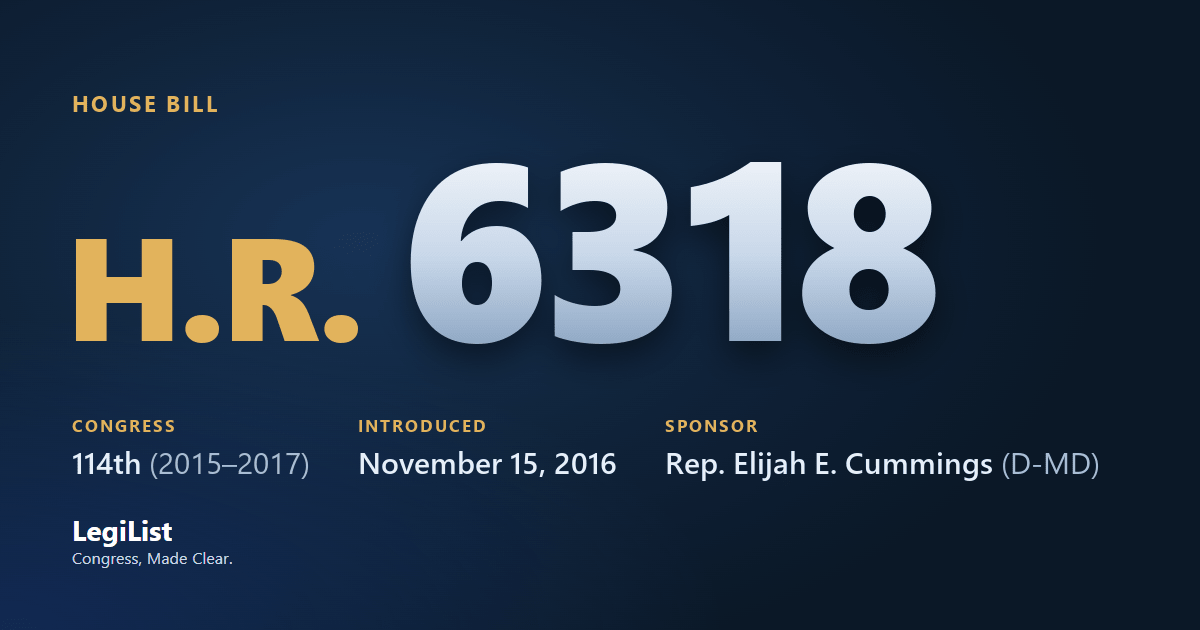
Fair Pay for Presidential Protection Act
Latest action · Nov 15, 2016 Referred to the House Committee on Oversight and Government Reform.
Progress
Where this bill reached, and when. A stage with no date was not reached; one that failed a vote and later carried shows the date it carried.
- IntroducedNov 15, 2016
- Passed HouseNot reached
- Passed SenateNot reached
- To the PresidentNot reached
- Became lawNot reached
Summary
Fair Pay for Presidential Protection Act
This bill creates an exception to a limitation on premium pay for U.S. Secret Service personnel performing protective services during any year in which a presidential election is held to the extent that payment of such pay does not cause: (1) the aggregate total of basic and premium pay for any pay period to exceed the biweekly equivalent of the annual salary rate established for level I of the Executive Schedule; or (2) the total basic and premium pay in any calendar year to exceed the annual salary rate established for such level.
Such additional premium pay shall not be considered or creditable as basic pay for purposes of retirement or any other purpose and shall not be used in computing payment for accumulated and accrued annual leave.
The Director of the Secret Service may act as the head of an agency in applying such annual limitation on premium pay in calendar years in which a presidential election is not held.
Cosponsors 16
Members who signed on, in the order they did. All signed on Nov 15, 2016.
| Seat | Cosponsor | Signed on | |
|---|---|---|---|
| D-NJ | Bonnie Watson Coleman | Original | Nov 15, 2016 |
| D-MI | Brenda L. Lawrence | Original | Nov 15, 2016 |
| D-PA | Brendan F. Boyle | Original | Nov 15, 2016 |
| D-NY | Carolyn B. Maloney | Original | Nov 15, 2016 |
| D-DC | Eleanor Holmes Norton | Original | Nov 15, 2016 |
| D-VA | Gerald E. Connolly | Original | Nov 15, 2016 |
| D-TN | Jim Cooper | Original | Nov 15, 2016 |
| D-CA | Mark DeSaulnier | Original | Nov 15, 2016 |
| D-NM | Michelle Lujan Grisham | Original | Nov 15, 2016 |
| D-VT | Peter Welch | Original | Nov 15, 2016 |
| D-IL | Robin L. Kelly | Original | Nov 15, 2016 |
| D-VI | Stacey E. Plaskett | Original | Nov 15, 2016 |
| D-MA | Stephen F. Lynch | Original | Nov 15, 2016 |
| D-IL | Tammy Duckworth | Original | Nov 15, 2016 |
| D-CA | Ted Lieu | Original | Nov 15, 2016 |
| D-MO | Wm. Lacy Clay | Original | Nov 15, 2016 |
Committees 1
Where it was sent and what each committee and subcommittee did with it, in order.
| Chamber | Committee | What it did |
|---|---|---|
| House | Oversight and Government Reform Committee | Referred Nov 15, 2016 |
Actions 2
Everything that happened, newest first.
- Nov 15, 2016Introduced in House
- Nov 15, 2016Referred to the House Committee on Oversight and Government Reform.
In the Congressional Record 1
Days the Record’s own index lists this bill, newest first, with the pages and the members it names. Pages starting H are the House, S the Senate, E Extensions of Remarks.
| Where | In the Record | Members | Date |
|---|---|---|---|
| House | Debate and remarks H7008 | Elijah E. Cummings D-MD | Nov 30, 2016 |
Research
What has been written about this bill: committee reports, cost estimates, the sponsor’s authority statement, printed hearings and the Congressional Research Service’s work.
Constitutional authority
The sponsor’s statement, as printed in the Congressional Record, vol. 162, no. 163, November 15, 2016, page H6239.
Titles 2
Every title it has carried, official and short, at each stage.
- Official Title as Introduced
- To amend title 5, United States Code, to provide an increase in premium pay for certain Federal employees performing protective services during any year in which a presidential election is held, and for other purposes.
- Short Titles as Introduced
- Fair Pay for Presidential Protection Act
Subjects
Assigned by the Library of Congress. Policy area: Government Operations and Politics.
Text 1
Each version as it was printed, newest first.
- Nov 15, 2016Introduced in House
Everything here is as published by Congress: the summary is the Congressional Research Service's, the action wording is the clerks', and the subjects are the Library of Congress's. How far it got is read from the actions themselves, taking the most recent one of each kind, so a bill that failed a vote and later passed is shown as having passed. Records come from this bill on Congress.gov and govinfo.gov; cost estimates are the Congressional Budget Office's, and the hearings are the printed hearings GovInfo publishes, which can appear months after the hearing.