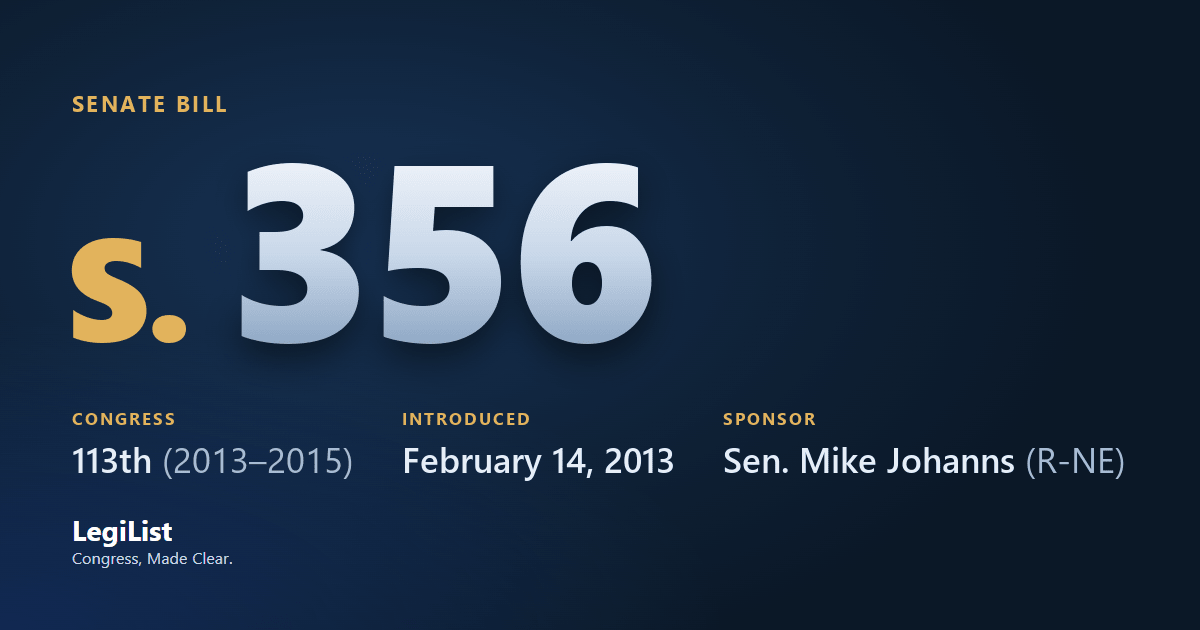
Unborn Child Pain Awareness Act of 2013
Latest action · Feb 14, 2013 Read twice and referred to the Committee on Health, Education, Labor, and Pensions.
Progress
Where this bill reached, and when. A stage with no date was not reached; one that failed a vote and later carried shows the date it carried.
- IntroducedFeb 14, 2013
- Passed SenateNot reached
- Passed HouseNot reached
- To the PresidentNot reached
- Became lawNot reached
Summary
Unborn Child Pain Awareness Act of 2013 - Amends the Public Health Service Act to require an abortion provider who knowingly performs an abortion of a pain-capable unborn child (defined as an unborn child who has reached a probable stage of development of 20 weeks or more after fertilization), to first: (1) inform the woman of the probable age of the child, (2) provide to the woman an Unborn Child Pain Awareness Brochure (unless she waives receipt), (3) provide information that pain medicine administered to the mother may not prevent pain in the child, but in some cases anesthesia or pain-reducing drugs can be administered directly to the child, (4) give the woman the provider's best medical judgment of the risks and costs of such anesthesia or analgesic, and (5) obtain the woman's signature on the Unborn Child Pain Awareness Decision Form and her explicit request for or refusal of the administration of drugs to the child. Requires the Secretary of Health and Human Services (HHS) to develop the Unborn Child Pain Awareness Brochure that includes a statement that there is substantial evidence that the process of being killed in an abortion will cause the unborn child pain and that the mother has the option of having pain-reducing drugs administered directly to the child.
Creates an exception to save the life of the mother.
Establishes civil penalties for willfully failing to comply with this Act. Authorizes: (1) the Attorney General (DOJ) to bring a civil action under this Act, and (2) private rights of action for violations of this Act.
Cosponsors 9
Members who signed on, in the order they did. All signed on Feb 14, 2013.
| Seat | Cosponsor | Signed on | |
|---|---|---|---|
| R-IA | Chuck Grassley | Original | Feb 14, 2013 |
| R-LA | David Vitter | Original | Feb 14, 2013 |
| R-NE | Deb Fischer | Original | Feb 14, 2013 |
| R-ID | James E. Risch | Original | Feb 14, 2013 |
| R-OK | James M. Inhofe | Original | Feb 14, 2013 |
| R-AR | John Boozman | Original | Feb 14, 2013 |
| R-SD | John Thune | Original | Feb 14, 2013 |
| R-WY | Michael B. Enzi | Original | Feb 14, 2013 |
| R-MS | Thad Cochran | Original | Feb 14, 2013 |
Committees 1
Where it was sent and what each committee and subcommittee did with it, in order.
| Chamber | Committee | What it did |
|---|---|---|
| Senate | Health, Education, Labor, and Pensions Committee | Referred Feb 14, 2013 |
Actions 2
Everything that happened, newest first.
- Feb 14, 2013Introduced in Senate
- Feb 14, 2013Read twice and referred to the Committee on Health, Education, Labor, and Pensions.
Titles 2
Every title it has carried, official and short, at each stage.
- Official Title as Introduced
- A bill to ensure that women seeking an abortion are fully informed regarding the pain experienced by their unborn child.
- Short Titles as Introduced
- Unborn Child Pain Awareness Act of 2013
Subjects
Assigned by the Library of Congress. Policy area: Health.
Text 1
Each version as it was printed, newest first.
- Feb 14, 2013Introduced in Senate
Everything here is as published by Congress: the summary is the Congressional Research Service's, the action wording is the clerks', and the subjects are the Library of Congress's. How far it got is read from the actions themselves, taking the most recent one of each kind, so a bill that failed a vote and later passed is shown as having passed. Records come from this bill on Congress.gov and govinfo.gov; cost estimates are the Congressional Budget Office's, and the hearings are the printed hearings GovInfo publishes, which can appear months after the hearing.