ReLIEF Act
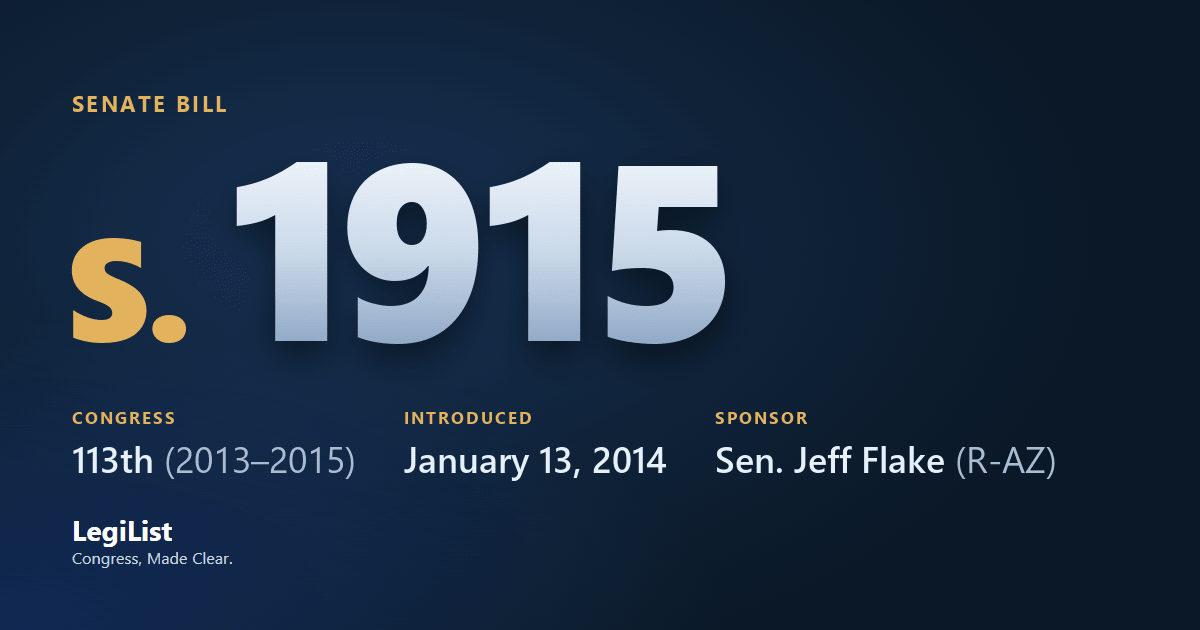
Latest action · Jan 13, 2014 Read twice and referred to the Committee on Finance.
Progress
Where this bill reached, and when. A stage with no date was not reached; one that failed a vote and later carried shows the date it carried.
- IntroducedJan 13, 2014
- Passed SenateNot reached
- Passed HouseNot reached
- To the PresidentNot reached
- Became lawNot reached
Summary
Removing Limitations on Insurance Effectiveness and Flexibility Act of 2013 or the ReLIEF Act - Allows catastrophic health plans described in the Patient Protection and Affordable Care Act to be considered as providing essential health benefits by removing certain enrollment eligibility restrictions (concerning age and certification of exemption from the Internal Revenue Code requirement to maintain minimum essential coverage).
Deems coverage under such a plan to meet the Internal Revenue Code requirement that an individual maintain minimum essential coverage.
Cosponsors 2
Members who signed on, in the order they did. Signatures ran from Jan 13, 2014 to Jan 14, 2014, with 1 there on the day it was introduced.
| Seat | Cosponsor | Signed on | |
|---|---|---|---|
| R-WI | Ron Johnson | Original | Jan 13, 2014 |
| R-NH | Kelly Ayotte | Jan 14, 2014 |
Actions 2
Everything that happened, newest first.
- Jan 13, 2014Introduced in Senate
- Jan 13, 2014Read twice and referred to the Committee on Finance.
Subjects
Assigned by the Library of Congress. Policy area: Health.
Text 1
Each version as it was printed, newest first.
- Jan 13, 2014Introduced in Senate
Everything here is as published by Congress: the summary is the Congressional Research Service's, the action wording is the clerks', and the subjects are the Library of Congress's. How far it got is read from the actions themselves, taking the most recent one of each kind, so a bill that failed a vote and later passed is shown as having passed. Records come from this bill on Congress.gov and govinfo.gov.