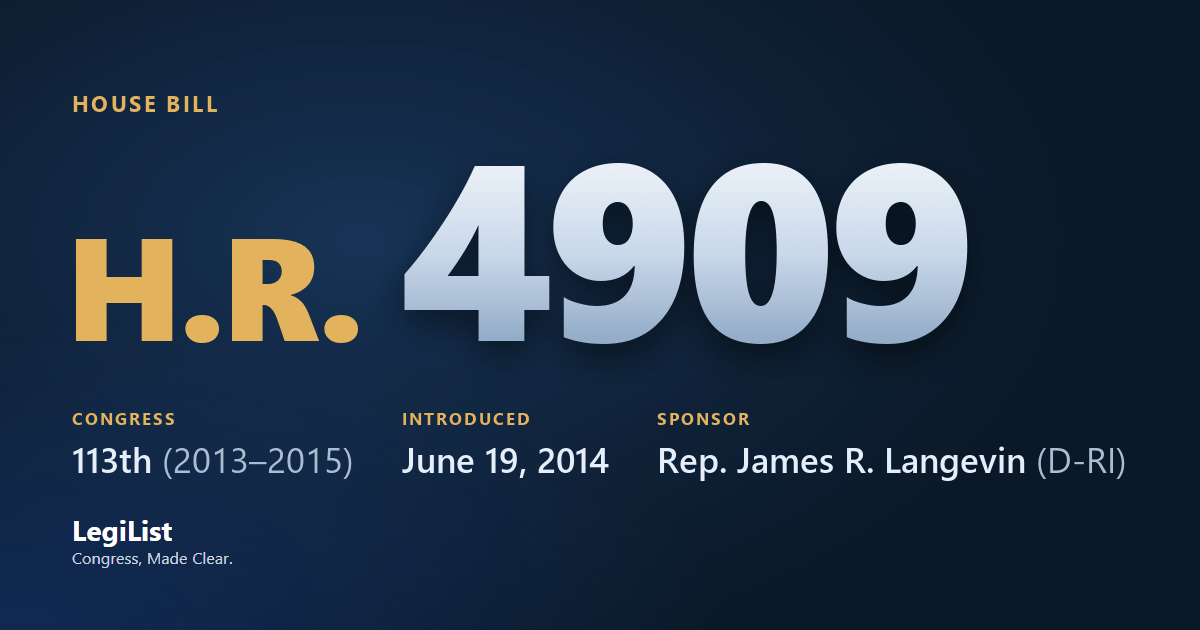
Permanent Families for All Children Act
Latest action · Nov 17, 2014 Referred to the Subcommittee on Higher Education and Workforce Training.
Progress
Where this bill reached, and when. A stage with no date was not reached; one that failed a vote and later carried shows the date it carried.
- IntroducedJun 19, 2014
- Passed HouseNot reached
- Passed SenateNot reached
- To the PresidentNot reached
- Became lawNot reached
Summary
Permanent Families for All Children Act - Amends part E (Foster Care and Adoption Assistance) of title IV of the Social Security Act to:
- limit to 36 the number of months for which foster care maintenance payments made on behalf of a child not in a legal guardianship or kinship guardian arrangement may be reimbursed;
- limit to 12 the number of months for which foster care maintenance payments made to child-care institutions on behalf of a child residing in the institution may be reimbursed;
- eliminate the Aid to Families with Dependent Children (AFDC) income eligibility requirement for foster care maintenance payments;
- replace the federal medical assistance percentage (FMAP, or federal matching rate) for foster care maintenance payments and related costs in a state with a foster care partnership rate for the quarter determined by the Secretary of Health and Human Services (HHS); and
- make children in residential treatment programs eligible for 50% of regular foster care maintenance payments.
Directs the Secretary to increase the proportion of the amounts expended by a state for caseworker training on child-focused recruitment and retention.
Increases the amount of spending for child welfare programs by the unused savings resulting from this Act.
Amends the Higher Education Act of 1965 to authorize the cancellation of Federal Direct Student Loans for a social worker employed in a public child or family service agency after the social worker has made 60 monthly payments on the eligible loan after the enactment of this Act.
Cosponsors 2
Members who signed on, in the order they did. Signatures ran from Jun 20, 2014 to Jun 25, 2014.
| Seat | Cosponsor | Signed on | |
|---|---|---|---|
| D-NY | Yvette D. Clarke | Jun 20, 2014 | |
| D-CA | Tony Cárdenas | Jun 25, 2014 |
Committees 2
Where it was sent and what each committee and subcommittee did with it, in order.
| Chamber | Committee | What it did |
|---|---|---|
| House | Ways and Means Committee | Referred Jun 19, 2014 |
| House | Education and Workforce Committee | Referred Jun 19, 2014 |
| Higher Education and Workforce Development Subcommittee | Referred Nov 17, 2014 |
Actions 3
Everything that happened, newest first.
- Nov 17, 2014Referred to the Subcommittee on Higher Education and Workforce Training.
- Jun 19, 2014Introduced in House
- Jun 19, 2014Referred to the Committee on Ways and Means, and in addition to the Committee on Education and the Workforce, for a period to be subsequently determined by the Speaker, in each case for consideration of such provisions as fall within the jurisdiction of the committee concerned.
Research
What has been written about this bill: committee reports, cost estimates, the sponsor’s authority statement, printed hearings and the Congressional Research Service’s work.
Constitutional authority
The sponsor’s statement, as printed in the page H5558.
Titles 2
Every title it has carried, official and short, at each stage.
- Official Title as Introduced
- To provide States with assistance in finding a permanent home for every child.
- Short Titles as Introduced
- Permanent Families for All Children Act
Subjects
Assigned by the Library of Congress. Policy area: Families.
Text 1
Each version as it was printed, newest first.
- Jun 19, 2014Introduced in House
Everything here is as published by Congress: the summary is the Congressional Research Service's, the action wording is the clerks', and the subjects are the Library of Congress's. How far it got is read from the actions themselves, taking the most recent one of each kind, so a bill that failed a vote and later passed is shown as having passed. Records come from this bill on Congress.gov and govinfo.gov; cost estimates are the Congressional Budget Office's, and the hearings are the printed hearings GovInfo publishes, which can appear months after the hearing.