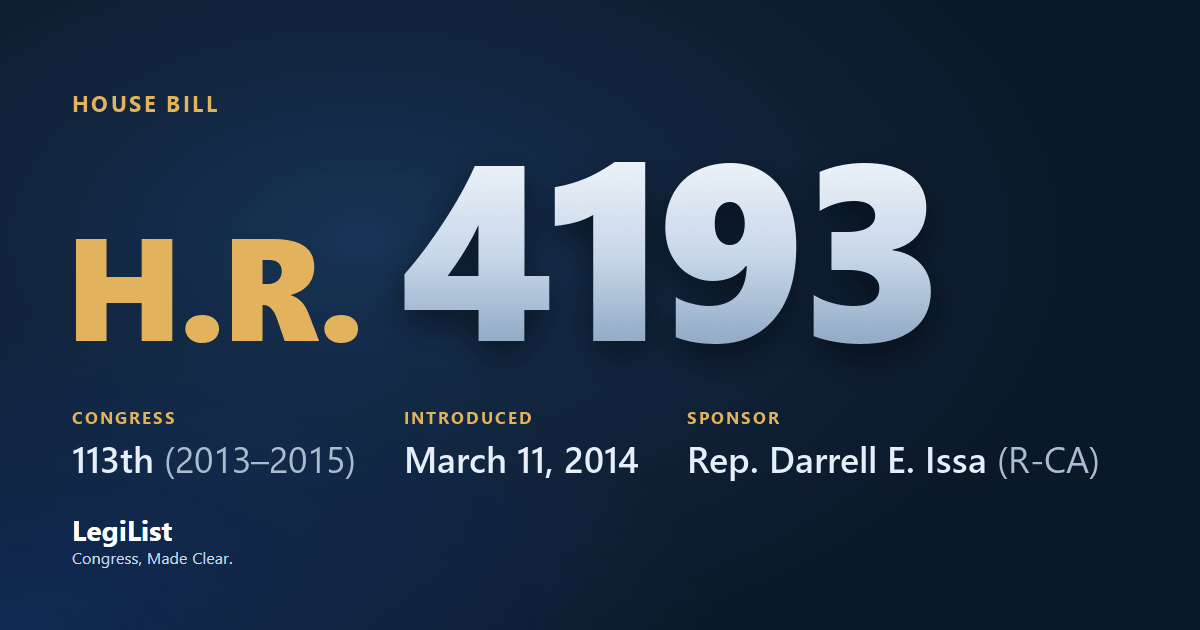
Smart Savings Act
Latest action · Dec 18, 2014 Became Public Law No: 113-255.
Progress
Where this bill reached, and when. A stage with no date was not reached; one that failed a vote and later carried shows the date it carried.
- IntroducedMar 11, 2014
- Passed HouseJul 14, 2014
- Passed SenateDec 10, 2014
- To the PresidentDec 12, 2014
- Became lawDec 18, 2014Public Law 113-255
Summary
(This measure has not been amended since it was passed by the House on July 14, 2014. The summary of that version is repeated here.)
Smart Savings Act - Makes the default investment in the Thrift Savings Plan (TSP) an age-appropriate target date asset allocation investment fund (L Fund), instead of the Government Securities Investment Fund (G Fund), if no election has been made for the investment of available funds. Retains the Government Securities Investment Fund as the default fund for members of the Uniformed Services. Requires TSP participants whose default fund is an age-appropriate L Fund to receive a risk acknowledgement prior to enrollment.
Extends requirements relating to fiduciary protections to TSP beneficiaries.
Cosponsors 6
Members who signed on, in the order they did. Signatures ran from Mar 11, 2014 to Mar 13, 2014; 5 are original cosponsors, there from the day it was introduced.
| Seat | Cosponsor | Signed on | |
|---|---|---|---|
| R-TX | Blake Farenthold | Original | Mar 11, 2014 |
| D-MD | Elijah E. Cummings | Original | Mar 11, 2014 |
| D-VA | Gerald E. Connolly | Original | Mar 11, 2014 |
| R-GA | Rob Woodall | Original | Mar 11, 2014 |
| D-MA | Stephen F. Lynch | Original | Mar 11, 2014 |
| D-DC | Eleanor Holmes Norton | Mar 13, 2014 |
Committees 1
Where it was sent and what each committee and subcommittee did with it, in order.
| Chamber | Committee | What it did |
|---|---|---|
| House | Oversight and Government Reform Committee | Referred Mar 11, 2014Markup Mar 12, 2014Reported Jun 30, 2014 |
Actions 16
Everything that happened, newest first.
- Dec 18, 2014Signed by President.
- Dec 18, 2014Became Public Law No: 113-255.
- Dec 12, 2014Presented to President.
- Dec 11, 2014Message on Senate action sent to the House.
- Dec 10, 2014Passed/agreed to in Senate: Passed Senate without amendment by Unanimous Consent. (consideration: CR S6580)
- Jul 15, 2014Received in the Senate, read twice.
- Jul 14, 2014Mr. Gosar moved to suspend the rules and pass the bill, as amended.
- Jul 14, 2014Considered under suspension of the rules. (consideration: CR H6162-6164)
- Jul 14, 2014DEBATE - The House proceeded with forty minutes of debate on H.R. 4193.
- Jul 14, 2014Passed/agreed to in House: On motion to suspend the rules and pass the bill, as amended Agreed to by voice vote. (text: CR H6162)
- Jun 30, 2014Reported by the Committee on Oversight and Government Reform. H. Rept. 113-507.
- Jun 30, 2014Placed on the Union Calendar, Calendar No. 379.
- Mar 12, 2014Committee Consideration and Mark-up Session Held.
- Mar 12, 2014Ordered to be Reported by Voice Vote.
- Mar 11, 2014Introduced in House
- Mar 11, 2014Referred to the House Committee on Oversight and Government Reform.
In the Congressional Record 2
Days the Record’s own index lists this bill, newest first, with the pages and the members it names. Pages starting H are the House, S the Senate, E Extensions of Remarks.
| Where | In the Record | Members | Date |
|---|---|---|---|
| Senate | Debate and remarks S6580 | Michael F. Bennet D-CO | Dec 10, 2014 |
| House | Debate and remarks H6162–H6164Text printed H6162 | Darrell Issa R-CA, Elijah E. Cummings D-MD, Paul A. Gosar R-AZ, Stephen F. Lynch D-MA | Jul 14, 2014 |
Research
What has been written about this bill: committee reports, cost estimates, the sponsor’s authority statement, printed hearings and the Congressional Research Service’s work.
Committee report
Congressional Budget Office cost estimate
- May 9, 2014H.R. 4193, Smart Savings ActAs ordered reported by House Committee on Oversight and Government Reform on March 12, 2014
Constitutional authority
The sponsor’s statement, as printed in the page H2302.
CRS reports 3
Congressional Research Service work that CRS links to this bill or the law it became, newest first.
Cite it 3
Products on other subjects that cite it, usually among other measures.
| Product | Title | Kind | Published |
|---|---|---|---|
| R47996 | Pensions and Individual Retirement Accounts (IRAs): Investment Issues | Report | Nov 4, 2024 |
| IF12110 | Thrift Savings Plan: Investment Issues | Resource | May 17, 2022 |
| R40477 | Desalination and Membrane Technologies: Federal Research and Adoption Issues Archived | Report | Jan 2, 2015 |
Related bills 1
Companion bills and other measures the record links to this one.
| Bill | Title | Relationship | Latest action |
|---|---|---|---|
| S 2117 | Smart Savings Act | Related bill | Sep 17, 2014 |
Titles 6
Every title it has carried, official and short, at each stage.
- Official Title as Introduced
- To amend title 5, United States Code, to change the default investment fund under the Thrift Savings Plan, and for other purposes.
- Short Titles as Introduced
- Smart Savings Act
- Short Titles as Reported to House
- Smart Savings Act
- Short Titles as Passed House
- Smart Savings Act
- Short Titles as Passed Senate
- Smart Savings Act
- Short Titles as Enacted
- Smart Savings Act
Subjects
Assigned by the Library of Congress. Policy area: Government Operations and Politics.
Text 5
Each version as it was printed, newest first.
- —Enrolled Bill
- Jul 15, 2014Received in Senate
- Jul 14, 2014Engrossed in House
- Jun 30, 2014Reported in House
- Mar 11, 2014Introduced in House
Everything here is as published by Congress: the summary is the Congressional Research Service's, the action wording is the clerks', and the subjects are the Library of Congress's. How far it got is read from the actions themselves, taking the most recent one of each kind, so a bill that failed a vote and later passed is shown as having passed. Records come from this bill on Congress.gov and govinfo.gov; cost estimates are the Congressional Budget Office's, and the hearings are the printed hearings GovInfo publishes, which can appear months after the hearing.