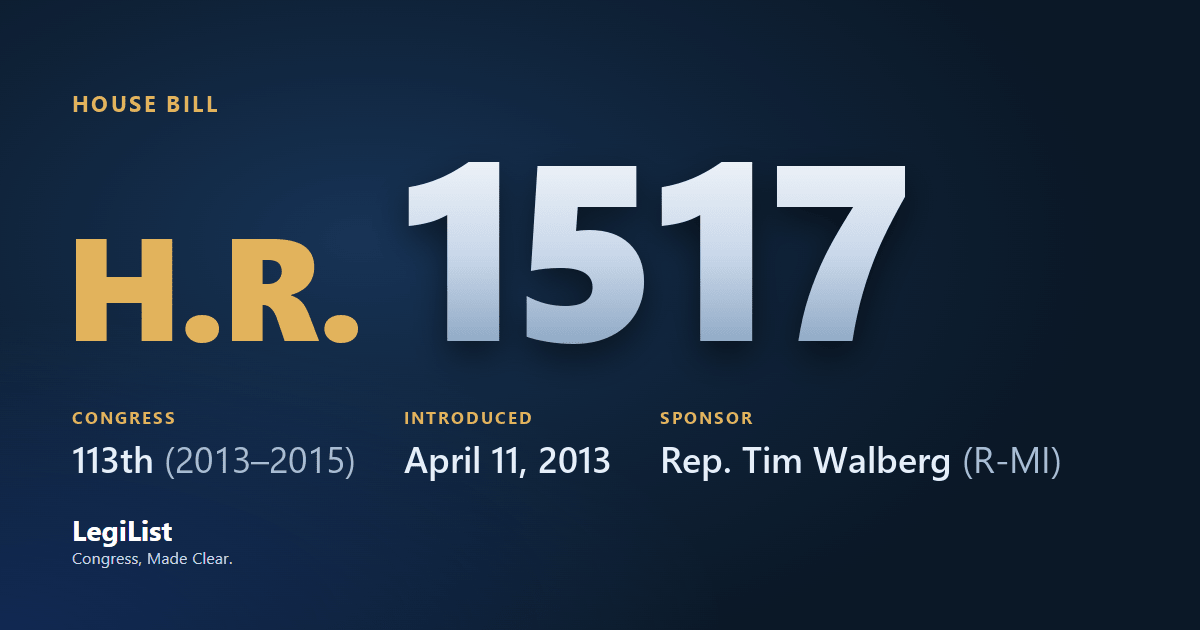
Social Security and Medicare Lock-Box Act
Latest action · Apr 23, 2013 Referred to the Subcommittee on Social Security.
Progress
Where this bill reached, and when. A stage with no date was not reached; one that failed a vote and later carried shows the date it carried.
- IntroducedApr 11, 2013
- Passed HouseNot reached
- Passed SenateNot reached
- To the PresidentNot reached
- Became lawNot reached
Summary
Social Security and Medicare Lock-Box Act - Amends title II (Old Age, Survivors and Disability Insurance) (OASDI) of the Social Security Act to establish in the Federal Old-Age and Survivors Insurance Trust Fund a Social Security Surplus Protection Account to hold the Social Security surplus for the fiscal year of the sum of Social Security taxes collected, as well as the aggregate increase in certain tax liabilities, over the sum of benefits paid.
Establishes in the Federal Hospital Insurance Trust Fund a Medicare Surplus Protection Account to hold amounts equivalent to the Medicare part A surplus for the fiscal year of the sum of hospital insurance taxes collected over the sum of Medicare part A benefits paid.
Denies the availability of the balance in either Account for investment by the Managing Trustee.
Establishes in the executive branch a Social Security and Medicare Part A Investment Commission to study the most effective vehicles for investment of the Federal Old-Age and Survivors Insurance Trust Fund and the Federal Hospital Insurance Trust Fund (other than investment in the form of U.S. obligations resulting in the transfer of Trust Fund assets to the general fund of the Treasury).
Cosponsors
Members who signed on, in the order they did.
Committees 1
Where it was sent and what each committee and subcommittee did with it, in order.
| Chamber | Committee | What it did |
|---|---|---|
| House | Ways and Means Committee | Referred Apr 11, 2013 |
| Social Security Subcommittee | Referred Apr 23, 2013 |
Actions 3
Everything that happened, newest first.
- Apr 23, 2013Referred to the Subcommittee on Social Security.
- Apr 11, 2013Introduced in House
- Apr 11, 2013Referred to the House Committee on Ways and Means.
Research
What has been written about this bill: committee reports, cost estimates, the sponsor’s authority statement, printed hearings and the Congressional Research Service’s work.
Constitutional authority
The sponsor’s statement, as printed in the page H1958.
Related bills 1
Companion bills and other measures the record links to this one.
| Bill | Title | Relationship | Latest action |
|---|---|---|---|
| HR 370 | Savings for Seniors Act of 2013 | Related bill | Feb 4, 2013 |
Titles 2
Every title it has carried, official and short, at each stage.
- Official Title as Introduced
- To amend titles II and XVIII of the Social Security Act to establish a Social Security Surplus Protection Account in the Federal Old-Age and Survivors Insurance Trust Fund to hold the Social Security surplus and a Medicare Surplus Protection Account in the Federal Hospital Insurance Trust Fund to hold the Medicare surplus, to provide for suspension of investment of amounts held in such Accounts until enactment of legislation providing for investment of the Trust Funds in investment vehicles other than obligations of the United States, and to establish a Social Security and Medicare Part A Investment Commission to make recommendations for alternative forms of investment of the Social Security and Medicare surpluses.
- Short Titles as Introduced
- Social Security and Medicare Lock-Box Act
Subjects
Assigned by the Library of Congress. Policy area: Social Welfare.
Text 1
Each version as it was printed, newest first.
- Apr 11, 2013Introduced in House
Everything here is as published by Congress: the summary is the Congressional Research Service's, the action wording is the clerks', and the subjects are the Library of Congress's. How far it got is read from the actions themselves, taking the most recent one of each kind, so a bill that failed a vote and later passed is shown as having passed. Records come from this bill on Congress.gov and govinfo.gov; cost estimates are the Congressional Budget Office's, and the hearings are the printed hearings GovInfo publishes, which can appear months after the hearing.