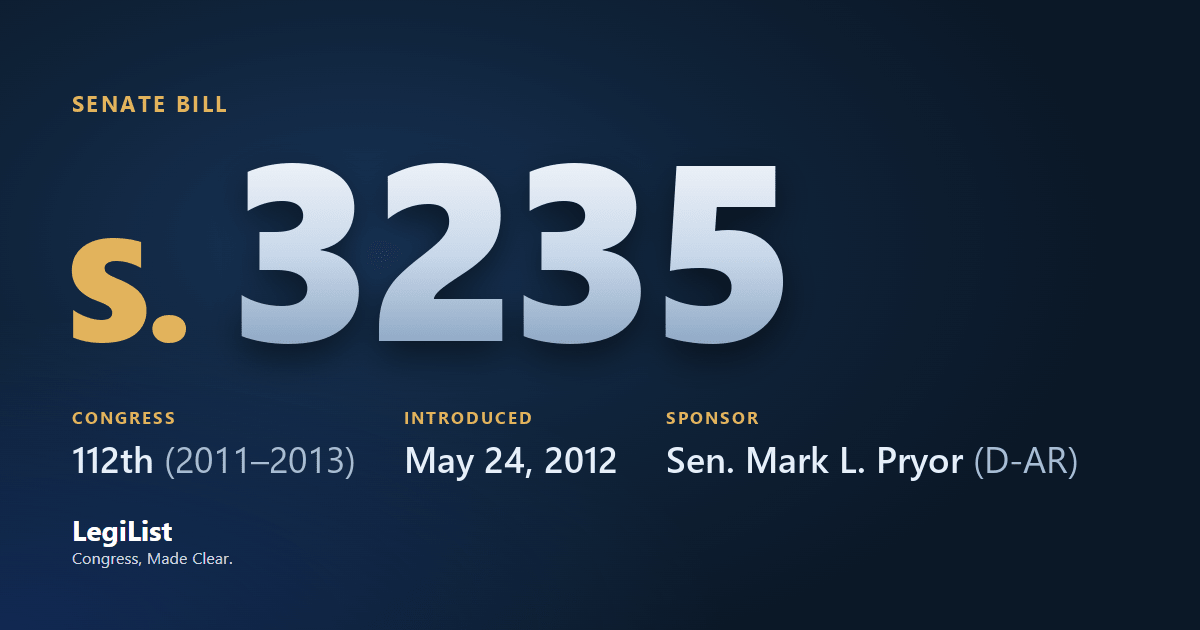
HIRE at HOME Act
Latest action · Jun 13, 2012 Committee on Veterans' Affairs. Hearings held. Hearings printed: S.Hrg. 112-567.
Progress
Where this bill reached, and when. A stage with no date was not reached; one that failed a vote and later carried shows the date it carried.
- IntroducedMay 24, 2012
- Passed SenateNot reached
- Passed HouseNot reached
- To the PresidentNot reached
- Became lawNot reached
Summary
Helping Iraq and Afghanistan Veterans Return to Employment at Home Act or HIRE at HOME Act - Directs the Secretary of Veterans Affairs (VA), as a condition of a grant or contract to a state for certain veterans' employment and training programs, to require the state to demonstrate the consideration of any military training received by a veteran when approving or denying a license or certification as a nursing assistant, certified nursing assistant, commercial driver, emergency medical technician EMT-B or EMT-1, or emergency medical technician-paramedic.
Cosponsors 7
Members who signed on, in the order they did. Signatures ran from May 24, 2012 to Sep 10, 2012; 1 is an original cosponsor, there from the day it was introduced.
| Seat | Cosponsor | Signed on | |
|---|---|---|---|
| R-NE | Mike Johanns | Original | May 24, 2012 |
| R-GA | Johnny Isakson | Jun 13, 2012 | |
| D-IL | Richard J. Durbin | Jun 14, 2012 | |
| D-MN | Amy Klobuchar | Jun 18, 2012 | |
| R-MO | Roy Blunt | Jun 18, 2012 | |
| D-AK | Mark Begich | Jun 20, 2012 | |
| R-AR | John Boozman | Sep 10, 2012 |
Committees 1
Where it was sent and what each committee and subcommittee did with it, in order.
| Chamber | Committee | What it did |
|---|---|---|
| Senate | Veterans' Affairs Committee | Referred May 24, 2012Hearings Jun 13, 2012 |
Actions 3
Everything that happened, newest first.
- Jun 13, 2012Committee on Veterans' Affairs. Hearings held. Hearings printed: S.Hrg. 112-567.
- May 24, 2012Introduced in Senate
- May 24, 2012Read twice and referred to the Committee on Veterans' Affairs.
Research
What has been written about this bill: committee reports, cost estimates, the sponsor’s authority statement, printed hearings and the Congressional Research Service’s work.
Printed hearings 1
Hearings whose printed record names this bill, newest first: hearings on it, and wider hearings where it came up.
| Number | Hearing | Committee | Held |
|---|---|---|---|
| S. Hrg. 112-567 | ECONOMIC OPPORTUNITY AND TRANSITION LEGISLATION103 pages | Veterans' Affairs Committee | Jun 13, 2012 |
Related bills 4
Companion bills and other measures the record links to this one.
| Bill | Title | Relationship | Latest action |
|---|---|---|---|
| S 3254 | National Defense Authorization Act for Fiscal Year 2013 | Related bill | Dec 12, 2012 |
| S 3429 | Veterans Jobs Corps Act of 2012 | Related bill | Jul 31, 2012 |
| HR 4115 | HIRE at HOME Act | Related bill | Jun 28, 2012 |
| HR 6563 | Veterans Jobs Corps Act of 2012 | Related bill | Oct 19, 2012 |
Titles 3
Every title it has carried, official and short, at each stage.
- Official Title as Introduced
- A bill to amend title 38, United States Code, to require, as a condition on the receipt by a State of certain funds for veterans employment and training, that the State ensures that training received by a veteran while on active duty is taken into consideration in granting certain State certifications or licenses, and for other purposes.
- Short Titles as Introduced
- HIRE at HOME Act
- Helping Iraq and Afghanistan Veterans Return to Employment at Home Act
Subjects
Assigned by the Library of Congress. Policy area: Armed Forces and National Security.
Text 1
Each version as it was printed, newest first.
- May 24, 2012Introduced in Senate
Support LegiList
This page is free, carries no paywall, and is built and maintained by one person. If the record here is useful to you, a few dollars keeps it going.
Everything here is as published by Congress: the summary is the Congressional Research Service's, the action wording is the clerks', and the subjects are the Library of Congress's. How far it got is read from the actions themselves, taking the most recent one of each kind, so a bill that failed a vote and later passed is shown as having passed. Records come from this bill on Congress.gov and govinfo.gov; cost estimates are the Congressional Budget Office's, and the hearings are the printed hearings GovInfo publishes, which can appear months after the hearing.