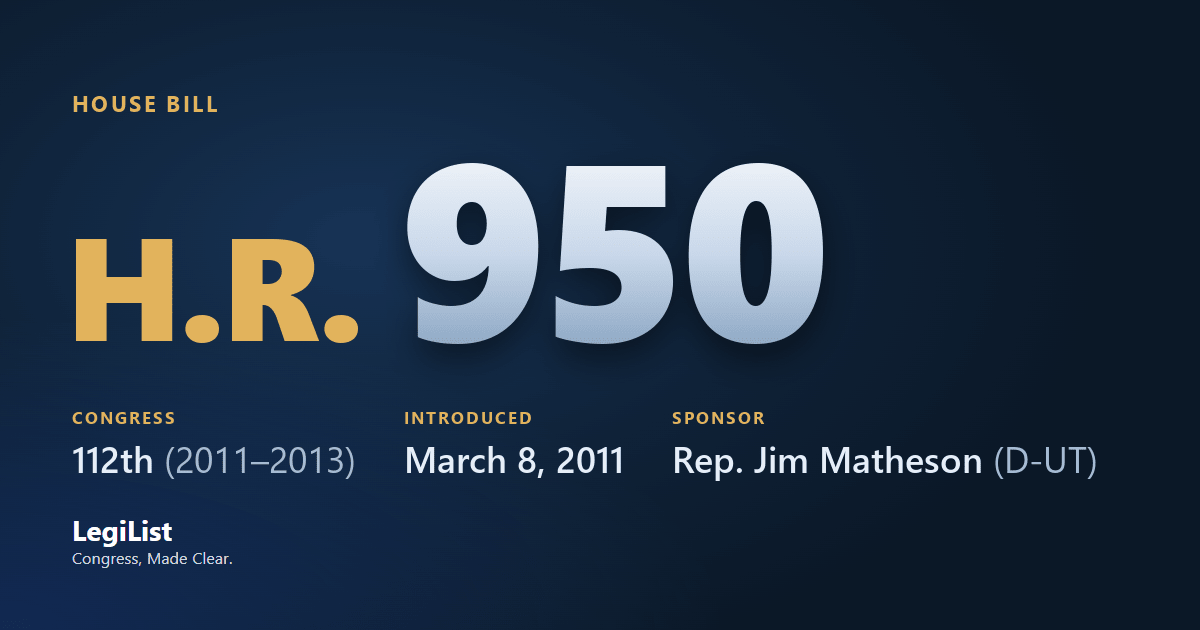
Ticket Act
Latest action · Mar 11, 2011 Referred to the Subcommittee on Commerce, Manufacturing, and Trade.
Progress
Where this bill reached, and when. A stage with no date was not reached; one that failed a vote and later carried shows the date it carried.
- IntroducedMar 8, 2011
- Passed HouseNot reached
- Passed SenateNot reached
- To the PresidentNot reached
- Became lawNot reached
Summary
Ticket Act - Prohibits any ticket issuer from prohibiting or restricting the resale or offering for resale of an event ticket by a lawful possessor. Includes among prohibited activities: (1) purporting to impose license or contractual terms on the initial sale that restrict the terms and conditions under which a ticket may be resold, and (2) requiring the purchaser of a ticket to agree not to resell the ticket or to resell the ticket only through an approved channel.
Establishes consumer protection minimum standards applicable to all persons engaging in the trade or business of acting as a ticket issuer, engaging in the resale of more than 25 event tickets in any one year, or providing a physical or electronic market for the sale or resale of event tickets by other persons. Includes within such standards requirements to: (1) maintain a toll-free telephone number for complaints and inquiries, and (2) implement and publicize a standard refund policy that provides for a full refund under specified circumstances.
Requires the Federal Trade Commission (FTC) to enforce a violation of this Act as an unfair or deceptive act or practice.
Authorizes states to file civil actions to enforce this Act. Establishes damages for violations of this Act.
Preempts any state or local law that limits the price at which an event ticket may be resold.
Exempts from this Act: (1) sponsors or promoters of charitable events for which all tickets are distributed without charge; and (2) not-for-profit educational institutions for athletic events involving their athletes or teams with respect to tickets initially distributed to students, faculty, staff, or alumni without charge or to members of bona fide booster organizations.
Cosponsors 1
Members who signed on, in the order they did. All signed on Mar 8, 2011.
| Seat | Cosponsor | Signed on | |
|---|---|---|---|
| R-NE | Lee Terry | Original | Mar 8, 2011 |
Committees 1
Where it was sent and what each committee and subcommittee did with it, in order.
| Chamber | Committee | What it did |
|---|---|---|
| House | Energy and Commerce Committee | Referred Mar 8, 2011 |
| Commerce, Manufacturing, and Trade Subcommittee | Referred Mar 11, 2011 |
Actions 3
Everything that happened, newest first.
- Mar 11, 2011Referred to the Subcommittee on Commerce, Manufacturing, and Trade.
- Mar 8, 2011Introduced in House
- Mar 8, 2011Referred to the House Committee on Energy and Commerce.
Research
What has been written about this bill: committee reports, cost estimates, the sponsor’s authority statement, printed hearings and the Congressional Research Service’s work.
Constitutional authority
The sponsor’s statement, as printed in the page H1620.
Titles 2
Every title it has carried, official and short, at each stage.
- Official Title as Introduced
- To prohibit restrictions on the resale of event tickets sold in interstate commerce as an unfair or deceptive act or practice.
- Short Titles as Introduced
- Ticket Act
Subjects
Assigned by the Library of Congress. Policy area: Commerce.
Text 1
Each version as it was printed, newest first.
- Mar 8, 2011Introduced in House
Support LegiList
This page is free, carries no paywall, and is built and maintained by one person. If the record here is useful to you, a few dollars keeps it going.
Everything here is as published by Congress: the summary is the Congressional Research Service's, the action wording is the clerks', and the subjects are the Library of Congress's. How far it got is read from the actions themselves, taking the most recent one of each kind, so a bill that failed a vote and later passed is shown as having passed. Records come from this bill on Congress.gov and govinfo.gov; cost estimates are the Congressional Budget Office's, and the hearings are the printed hearings GovInfo publishes, which can appear months after the hearing.