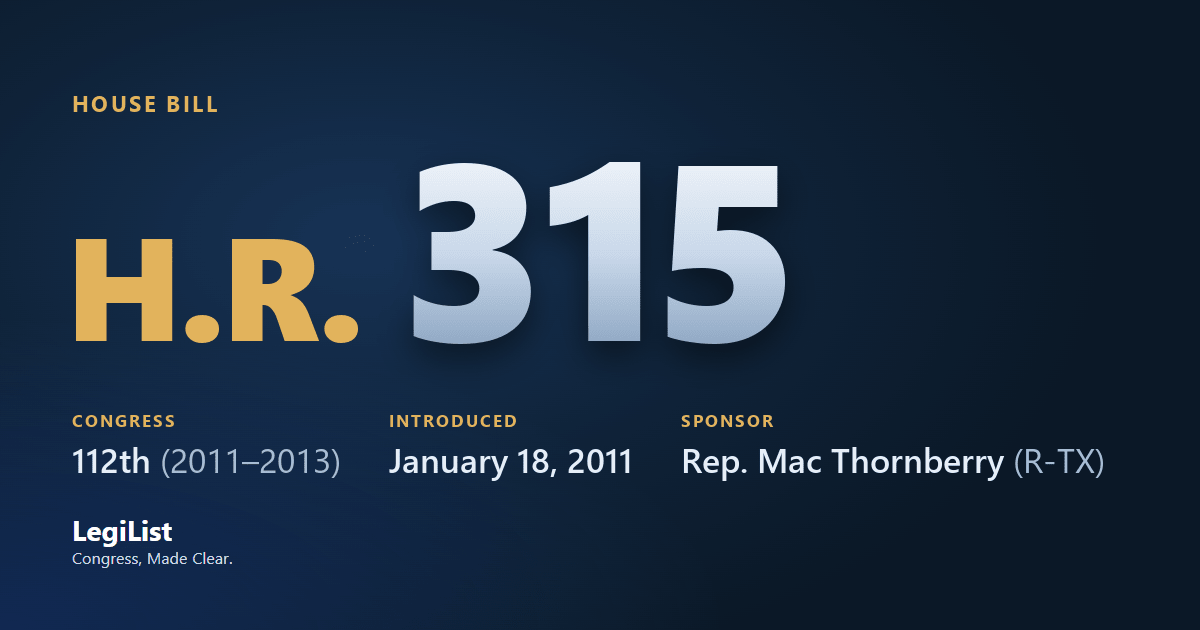
Health Care Paperwork Reduction and Fraud Prevention Act
Latest action · Feb 1, 2011 Referred to the Subcommittee on Health.
Progress
Where this bill reached, and when. A stage with no date was not reached; one that failed a vote and later carried shows the date it carried.
- IntroducedJan 18, 2011
- Passed HouseNot reached
- Passed SenateNot reached
- To the PresidentNot reached
- Became lawNot reached
Summary
Health Care Paperwork Reduction and Fraud Prevention Act - Establishes the Commission on Health Care Billing Codes and Forms Simplification which shall make recommendations regarding: (1) standardizing and simplifying credentialing and billing forms for health care claims; (2) reducing and simplifying billing codes; (3) reforming the Medicare regulatory and appeals processes to ensure that the Secretary of Health and Human Services provides appropriate guidance to providers for submitting Medicare claims and does not target inadvertent billing errors; and (4) updating electronic forms of the Centers for Medicare & Medicaid Services to ensure simplicity and privacy.
Directs the Secretary of Health and Human Services to establish a process under which a physician may request from a carrier written assistance in addressing questionable codes and procedures under the Medicare program.
Prohibits the Administrator from implementing any new evaluation and management (E&M) guidelines under the Medicare program unless the Administrator: (1) has provided for an assessment of the proposed guidelines by physicians; (2) has established a plan that contains specific goals, including a schedule for improving participation of physicians in such assessment; (3) has carried out a minimum of four pilot projects in at least four different regions to test E&M guidelines; and (4) finds that specified objectives will be met in the implementation of such guidelines.
Sets forth provisions concerning: (1) physician participation and pilot program testing requirements and objectives for new E&M guidelines under Medicare; and (2) notice, administrative, and penalty requirements with respect to Medicare overpayments.
Cosponsors
Members who signed on, in the order they did.
Committees 2
Where it was sent and what each committee and subcommittee did with it, in order.
| Chamber | Committee | What it did |
|---|---|---|
| House | Energy and Commerce Committee | Referred Jan 18, 2011 |
| Health Subcommittee | Referred Feb 1, 2011 | |
| House | Ways and Means Committee | Referred Jan 18, 2011 |
| Trade Subcommittee | Referred Jan 25, 2011 |
Actions 4
Everything that happened, newest first.
- Feb 1, 2011Referred to the Subcommittee on Health.
- Jan 25, 2011Referred to the Subcommittee on Trade.
- Jan 18, 2011Introduced in House
- Jan 18, 2011Referred to the Committee on Energy and Commerce, and in addition to the Committee on Ways and Means, for a period to be subsequently determined by the Speaker, in each case for consideration of such provisions as fall within the jurisdiction of the committee concerned.
Research
What has been written about this bill: committee reports, cost estimates, the sponsor’s authority statement, printed hearings and the Congressional Research Service’s work.
Constitutional authority
The sponsor’s statement, as printed in the page H256.
Titles 2
Every title it has carried, official and short, at each stage.
- Official Title as Introduced
- To reduce the amount of paperwork and improve payment policies for health care services, to prevent fraud and abuse through health care provider education, and for other purposes.
- Short Titles as Introduced
- Health Care Paperwork Reduction and Fraud Prevention Act
Subjects
Assigned by the Library of Congress. Policy area: Health.
Text 1
Each version as it was printed, newest first.
- Jan 18, 2011Introduced in House
Support LegiList
This page is free, carries no paywall, and is built and maintained by one person. If the record here is useful to you, a few dollars keeps it going.
Everything here is as published by Congress: the summary is the Congressional Research Service's, the action wording is the clerks', and the subjects are the Library of Congress's. How far it got is read from the actions themselves, taking the most recent one of each kind, so a bill that failed a vote and later passed is shown as having passed. Records come from this bill on Congress.gov and govinfo.gov; cost estimates are the Congressional Budget Office's, and the hearings are the printed hearings GovInfo publishes, which can appear months after the hearing.