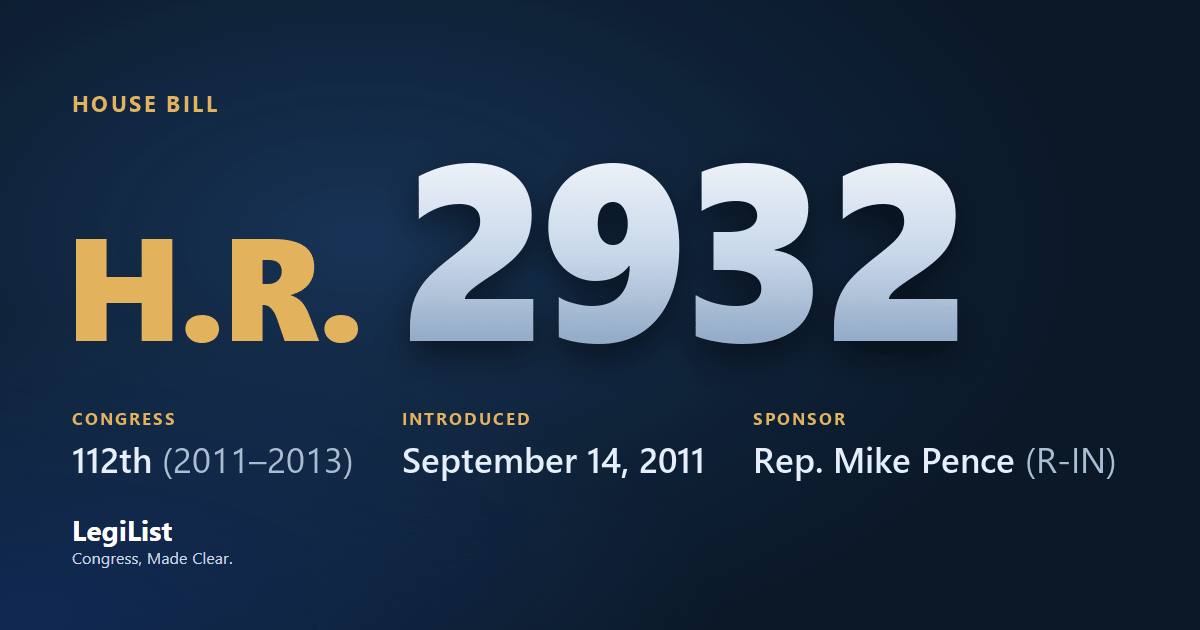
Free Flow of Information Act of 2011
Latest action · Sep 23, 2011 Referred to the Subcommittee on the Constitution.
Progress
Where this bill reached, and when. A stage with no date was not reached; one that failed a vote and later carried shows the date it carried.
- IntroducedSep 14, 2011
- Passed HouseNot reached
- Passed SenateNot reached
- To the PresidentNot reached
- Became lawNot reached
Summary
Free Flow of Information Act of 2011 - Prohibits a federal entity (an entity or employee of the judicial or executive branch or an administrative agency of the federal government), in any matter arising under federal law, from compelling a covered person to testify or produce any document related to information obtained or created as part of engaging in journalism unless a court makes specified determinations by a preponderance of the evidence, including determinations that: (1) alternative sources have been exhausted; (2) the testimony or document sought is critical to the investigation, prosecution, or defense of a crime or the successful completion of a noncriminal matter; (3) disclosure of an information source's identity is necessary to prevent an act of terrorism, harm to national security, imminent death, significant bodily harm or to identify a person who has disclosed a trade secret, individually identifiable health information, or certain nonpublic personal information; and (4) the public interest in compelling disclosure of the information or document involved outweighs the public interest in gathering or disseminating news or information. Allows a court, in making the last of those determinations, to consider the extent of any harm to national security.
Defines "covered person" as a person who regularly gathers, photographs, records, writes, edits, reports, or publishes information concerning matters of public interest for dissemination to the public for a substantial portion of the person's livelihood or substantial financial gain, including a supervisor, employer, parent, subsidiary, or affiliate of such a person. Excludes from that definition foreign powers and their agents and certain terrorist organizations and individuals.
Requires the content of compelled testimony or documents to be limited and narrowly tailored.
Prohibits this Act from being construed as applying to civil defamation, slander, or libel claims or defenses under state law.
Exempts certain criminal or tortious conduct.
Applies this Act to communications service providers with regard to testimony or any record, information, or other communication that relates to a business transaction between such providers and covered persons. Sets forth notice requirements. Permits a court to delay notice to a covered person upon determining that such notice would pose a substantial threat to the integrity of a criminal investigation.
Cosponsors
Members who signed on, in the order they did.
Committees 1
Where it was sent and what each committee and subcommittee did with it, in order.
| Chamber | Committee | What it did |
|---|---|---|
| House | Judiciary Committee | Referred Sep 14, 2011 |
| Courts, Intellectual Property, Artificial Intelligence, and the Internet Subcommittee | Referred Sep 23, 2011 | |
| Constitution and Limited Government Subcommittee | Referred Sep 23, 2011 |
Actions 4
Everything that happened, newest first.
- Sep 23, 2011Referred to the Subcommittee on Courts, Commercial and Administrative Law.
- Sep 23, 2011Referred to the Subcommittee on the Constitution.
- Sep 14, 2011Introduced in House
- Sep 14, 2011Referred to the House Committee on the Judiciary.
Research
What has been written about this bill: committee reports, cost estimates, the sponsor’s authority statement, printed hearings and the Congressional Research Service’s work.
Constitutional authority
The sponsor’s statement, as printed in the page H6182.
Titles 2
Every title it has carried, official and short, at each stage.
- Official Title as Introduced
- To maintain the free flow of information to the public by providing conditions for the federally compelled disclosure of information by certain persons connected with the news media.
- Short Titles as Introduced
- Free Flow of Information Act of 2011
Subjects
Assigned by the Library of Congress. Policy area: Law.
- Art, artists, authorship
- Business records
- Criminal investigation, prosecution, interrogation
- Evidence and witnesses
- First Amendment rights
- Health information and medical records
- Internet and video services
- Internet, web applications, social media
- Judicial procedure and administration
- Law
- News media and reporting
- Right of privacy
- Terrorism
- Trade secrets and economic espionage
Text 1
Each version as it was printed, newest first.
- Sep 14, 2011Introduced in House
Everything here is as published by Congress: the summary is the Congressional Research Service's, the action wording is the clerks', and the subjects are the Library of Congress's. How far it got is read from the actions themselves, taking the most recent one of each kind, so a bill that failed a vote and later passed is shown as having passed. Records come from this bill on Congress.gov and govinfo.gov; cost estimates are the Congressional Budget Office's, and the hearings are the printed hearings GovInfo publishes, which can appear months after the hearing.