Armed Career Criminal Sentencing Act of 2010
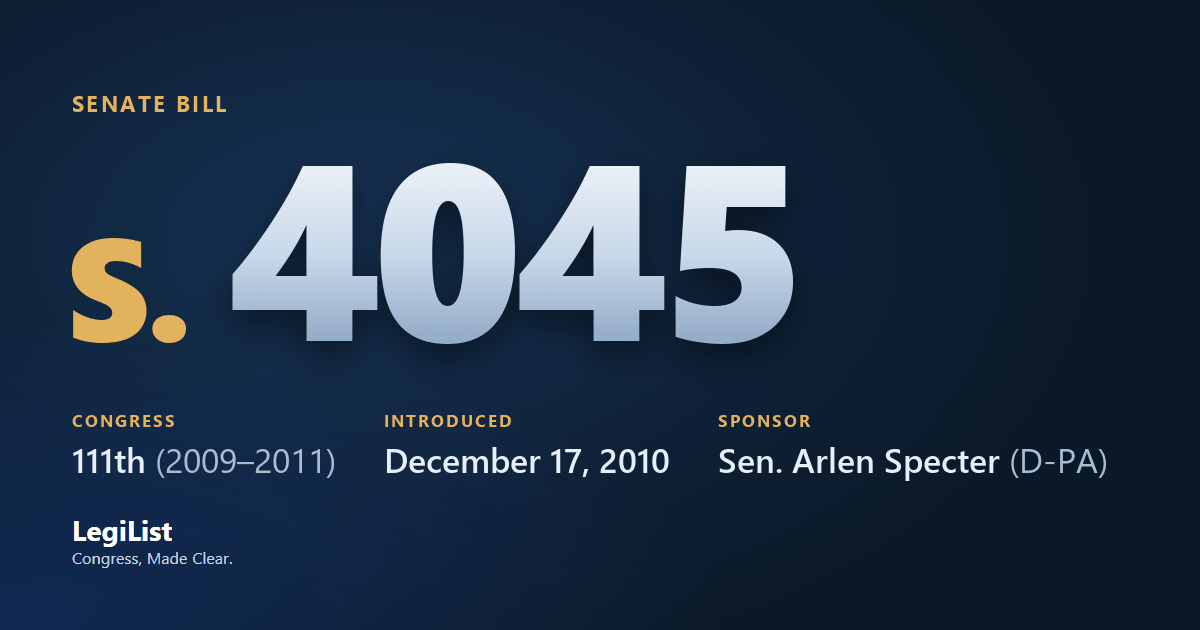
Latest action · Dec 17, 2010 Read twice and referred to the Committee on the Judiciary.
Progress
Where this bill reached, and when. A stage with no date was not reached; one that failed a vote and later carried shows the date it carried.
- IntroducedDec 17, 2010
- Passed SenateNot reached
- Passed HouseNot reached
- To the PresidentNot reached
- Became lawNot reached
Summary
Armed Career Criminal Sentencing Act of 2010 - Amends the federal criminal code to revise provisions relating to the sentencing of repeat offenders who commit a serious drug offense or a violent crime using a firearm that is punishable by imprisonment for a term of more than one year. Requires the United States Attorney prosecuting a repeat offender to file a written notice of the previous convictions being relied upon to obtain an increased sentence against such offender.
Directs the United States Sentencing Commmission to review and amend federal sentencing guidelines and policy statements to reflect the amendments made by this Act.
Cosponsors
Members who signed on, in the order they did.
Actions 3
Everything that happened, newest first.
- Dec 17, 2010Introduced in Senate
- Dec 17, 2010Read twice and referred to the Committee on the Judiciary.
- Dec 17, 2010Sponsor introductory remarks on measure. (CR S10516-10517)
Subjects
Assigned by the Library of Congress. Policy area: Crime and Law Enforcement.
Text 1
Each version as it was printed, newest first.
- Dec 17, 2010Introduced in Senate
Everything here is as published by Congress: the summary is the Congressional Research Service's, the action wording is the clerks', and the subjects are the Library of Congress's. How far it got is read from the actions themselves, taking the most recent one of each kind, so a bill that failed a vote and later passed is shown as having passed. Records come from this bill on Congress.gov and govinfo.gov.