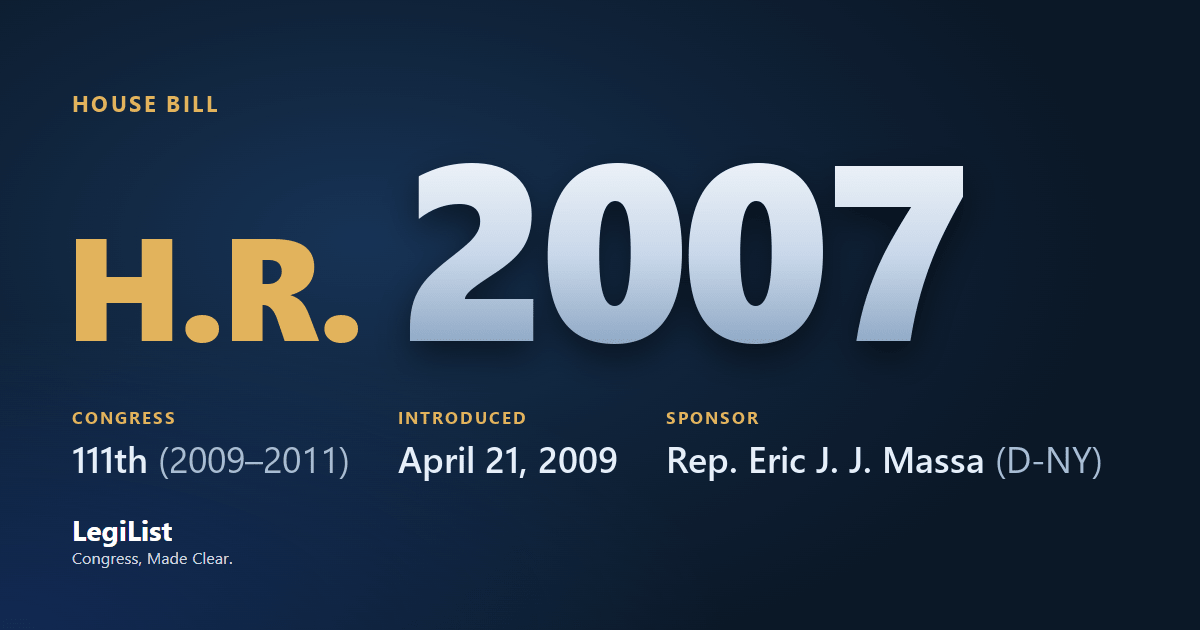
American Credit Card Reform Act
Latest action · Apr 21, 2009 Referred to the House Committee on Financial Services.
Progress
Where this bill reached, and when. A stage with no date was not reached; one that failed a vote and later carried shows the date it carried.
- IntroducedApr 21, 2009
- Passed HouseNot reached
- Passed SenateNot reached
- To the PresidentNot reached
- Became lawNot reached
Summary
American Credit Card Reform Act - Amends the Truth in Lending Act to prohibit the annual percentage rate (APR) applicable to any extension of credit on an open end consumer credit account from exceeding 14%.
Prohibits a credit card issuer from imposing any fee or penalty in connection with a transaction initiated by a consumer in which credit extended under such credit plan is applied to reduce an outstanding balance on another credit card account of the consumer.
Prohibits a credit card issuer from: (1) advertising any credit card account on the grounds of an institution of higher education through the distribution of written applications or solicitations; or (2) amending or changing the terms of a credit card contract so long as the consumer remains in full compliance with the contract's existing terms.
Prohibits the due date for any periodic payment on an outstanding credit card balance from being less than 30 days after: (1) the date of the postmark on the envelope in which the periodic statement was sent to the consumer; or if no postmark appears on the envelope, (2) the date that is three days after the closing date of such periodic statement.
Cosponsors
Members who signed on, in the order they did.
Actions 2
Everything that happened, newest first.
- Apr 21, 2009Introduced in House
- Apr 21, 2009Referred to the House Committee on Financial Services.
Subjects
Assigned by the Library of Congress. Policy area: Finance and Financial Sector.
Text 1
Each version as it was printed, newest first.
- Apr 21, 2009Introduced in House
Everything here is as published by Congress: the summary is the Congressional Research Service's, the action wording is the clerks', and the subjects are the Library of Congress's. How far it got is read from the actions themselves, taking the most recent one of each kind, so a bill that failed a vote and later passed is shown as having passed. Records come from this bill on Congress.gov and govinfo.gov.