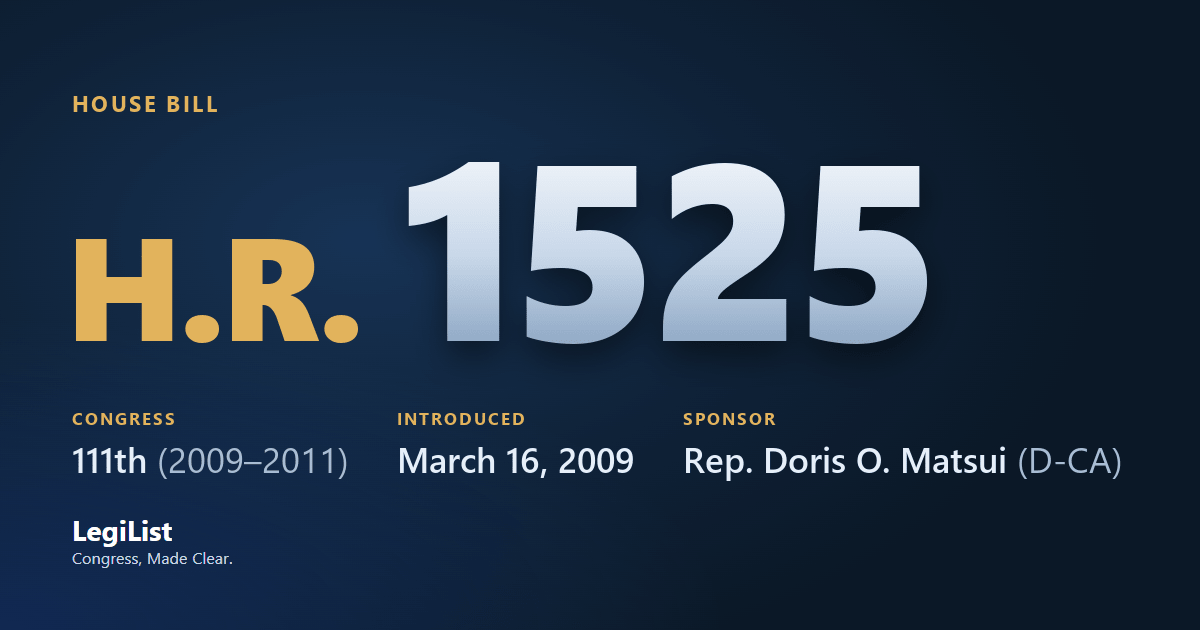
To amend the National Flood Insurance Act of 1968 to require the Administrator of the Federal Emergency Management Agency to consider reconstruction and improvement of flood protection systems when establishing flood insurance rates.
Latest action · Mar 16, 2009 Referred to the House Committee on Financial Services.
Progress
Where this bill reached, and when. A stage with no date was not reached; one that failed a vote and later carried shows the date it carried.
- IntroducedMar 16, 2009
- Passed HouseNot reached
- Passed SenateNot reached
- To the PresidentNot reached
- Became lawNot reached
Summary
Amends the National Flood Insurance Act of 1968 to: (1) make communities that reconstruct and improve flood protection systems (in addition to constructing them) eligible for premium flood insurance rates under such Act; and (2) allow entities that own, operate, maintain, or repair flood protection systems (instead of a federal agency) to determine whether a flood protection system is restorable.
Cosponsors 4
Members who signed on, in the order they did. Signatures ran from Jul 9, 2009 to Jul 28, 2009.
| Seat | Cosponsor | Signed on | |
|---|---|---|---|
| D-CA | Lois Capps | Jul 9, 2009 | |
| D-CA | Jackie Speier | Jul 20, 2009 | |
| R-KS | Lynn Jenkins | Jul 28, 2009 | |
| R-MO | Sam Graves | Jul 28, 2009 |
Actions 2
Everything that happened, newest first.
- Mar 16, 2009Introduced in House
- Mar 16, 2009Referred to the House Committee on Financial Services.
Subjects
Assigned by the Library of Congress. Policy area: Emergency Management.
Text 1
Each version as it was printed, newest first.
- Mar 16, 2009Introduced in House
Everything here is as published by Congress: the summary is the Congressional Research Service's, the action wording is the clerks', and the subjects are the Library of Congress's. How far it got is read from the actions themselves, taking the most recent one of each kind, so a bill that failed a vote and later passed is shown as having passed. Records come from this bill on Congress.gov and govinfo.gov.