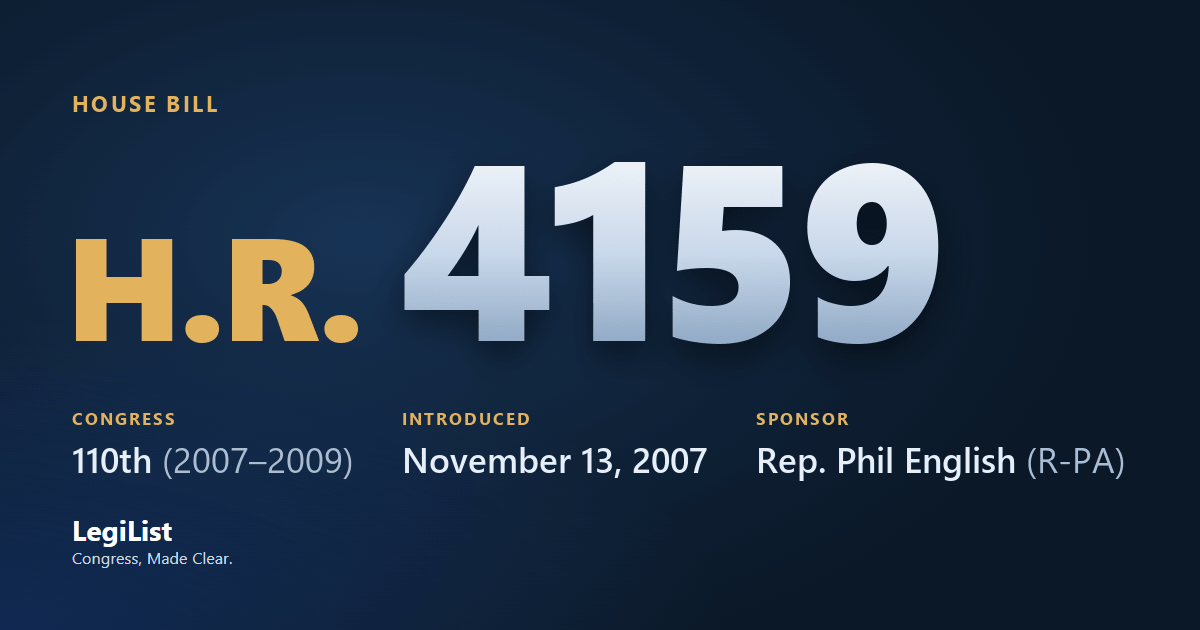
Simplified USA Tax Act of 2007
Latest action · Nov 13, 2007 Referred to the House Committee on Ways and Means.
Progress
Where this bill reached, and when. A stage with no date was not reached; one that failed a vote and later carried shows the date it carried.
- IntroducedNov 13, 2007
- Passed HouseNot reached
- Passed SenateNot reached
- To the PresidentNot reached
- Became lawNot reached
Summary
Simplified USA Tax Act of 2007 - Repeals, after 2006, income tax and estate and gift tax provisions of the Internal Revenue Code of 1986. Replaces such Code with a new tax system, to be known as the Simplified USA Tax.
Establishes three income tax brackets at 15, 25, and 30% for individual taxpayers. Redefines "gross income" and allows certain exclusions from gross income, including previously-taxed benefits, tax-exempt bond interest, compensation for injuries and sickness, and gain from the sale of a principal residence. Allows tax deductions for alimony and child support, home mortgage interest, certain higher education expenses, and charitable contributions. Allows a tax credit for employee social security payroll taxes.
Revises rules for Roth individual retirement accounts (Roth IRAs) to allow taxpayers to make contributions up to the amount of their adjusted gross income. Allows tax-free withdrawals from Roth IRA for any purpose after five years. Establishes new rules for deductible IRAs, annuities, and endowment and life insurance contracts.
Revises tax rules for business entities to: (1) establish an 8% tax rate for the first $150,000 of gross profit (12% for profit in excess of $150,000); (2) allow a tax credit for social security payroll taxes; (3) exempt from taxation all export sales income and other foreign-source income; and (4) establish new tax rules for tax-exempt organizations and certain financial institutions.
Cosponsors
Members who signed on, in the order they did.
Committees 1
Where it was sent and what each committee and subcommittee did with it, in order.
| Chamber | Committee | What it did |
|---|---|---|
| House | Ways and Means Committee | Referred Nov 13, 2007 |
Actions 2
Everything that happened, newest first.
- Nov 13, 2007Introduced in House
- Nov 13, 2007Referred to the House Committee on Ways and Means.
Titles 2
Every title it has carried, official and short, at each stage.
- Official Title as Introduced
- To amend the Internal Revenue Code of 1986 to restructure and replace the income tax system of the United States to meet national priorities, and for other purposes.
- Short Titles as Introduced
- Simplified USA Tax Act of 2007
Subjects
Assigned by the Library of Congress. Policy area: Taxation.
- Accounting
- Administrative procedure
- Agriculture and Food
- Aliens
- Alimony
- Americans in foreign countries
- Annuities
- Armed Forces and National Security
- Athletics
- Bank accounts
- Bonds
- Business travel
- Capital gains tax
- Cemeteries and funerals
- Charitable contributions
- Child support
- College costs
- College sports
- Colleges
- Commemorations
- Commerce
- Conservation of natural resources
- Contracts
- Cooperative societies
- Corporate governance
- Corporate mergers
- Corporation taxes
- Cost of living adjustments
- Crime and Law Enforcement
- Damages
- Debt
- Department of the Treasury
- Depreciation and amortization
- Disability insurance
- Disabled
- Dividends
- Divorce
- Economics and Public Finance
- Education
- Education savings accounts
- Employee ownership
- Employee training
- Environmental Protection
- Estate tax
- Expatriation
- Families
- Finance and Financial Sector
- Financial services
- Foreign corporations
- Foreign Trade and International Finance
- Foster home care
- Foundations
- Fringe benefits
- Gift tax
- Gifts
- Government corporations
- Government Operations and Politics
- Habitat conservation
- Health
- Health insurance
- Higher education
- Historic sites
- History
- Home ownership
- Housing and Community Development
- Housing finance
- Immigration
- Imports
- Income tax
- Indexing (Economic policy)
- Individual retirement accounts
- Insurance companies
- Insurance premiums
- Interest
- Intergovernmental tax relations
- International Affairs
- Labor and Employment
- Land use
- Law
- Leases
- Life insurance
- Loan defaults
- Lobbying
- Losses
- Marketing
- Married people
- Medical economics
- Medical research
- Medical savings accounts
- Medicare
- Military pay
- Military pensions
- Mortgages
- Officer personnel
- Old age, survivors and disability insurance
- Open space lands
- Outdoor recreation
- Partnerships
- Profit
- Public Lands and Natural Resources
- Railroad retirement plans
- Real estate business
- Real estate development
- Recreation areas
- Rent
- Salaries
- School personnel
- Science, Technology, Communications
- Single people
- Social security taxes
- Social Welfare
- Sports and Recreation
- Sports facilities
- Stocks
- Tax administration
- Tax credits
- Tax deductions
- Tax deferral
- Tax evasion
- Tax exclusion
- Tax exemption
- Tax penalties
- Tax rates
- Tax refunds
- Tax returns
- Tax simplification
- Tax treaties
- Tax-deferred compensation plans
- Tax-exempt organizations
- Taxation
- Taxation of foreign income
- Teachers
- Telecommunication industry
- Telephone
- Territories (U.S.)
- Terrorism
- Torts
- Transportation and Public Works
- Travel costs
- Trusts and trustees
- Unemployment
- Unrelated business income tax
- Vocational and technical education
- Wages
- Withholding tax
- Workers' compensation
Text 1
Each version as it was printed, newest first.
- Nov 13, 2007Introduced in House
Support LegiList
This page is free, carries no paywall, and is built and maintained by one person. If the record here is useful to you, a few dollars keeps it going.
Everything here is as published by Congress: the summary is the Congressional Research Service's, the action wording is the clerks', and the subjects are the Library of Congress's. How far it got is read from the actions themselves, taking the most recent one of each kind, so a bill that failed a vote and later passed is shown as having passed. Records come from this bill on Congress.gov and govinfo.gov; cost estimates are the Congressional Budget Office's, and the hearings are the printed hearings GovInfo publishes, which can appear months after the hearing.