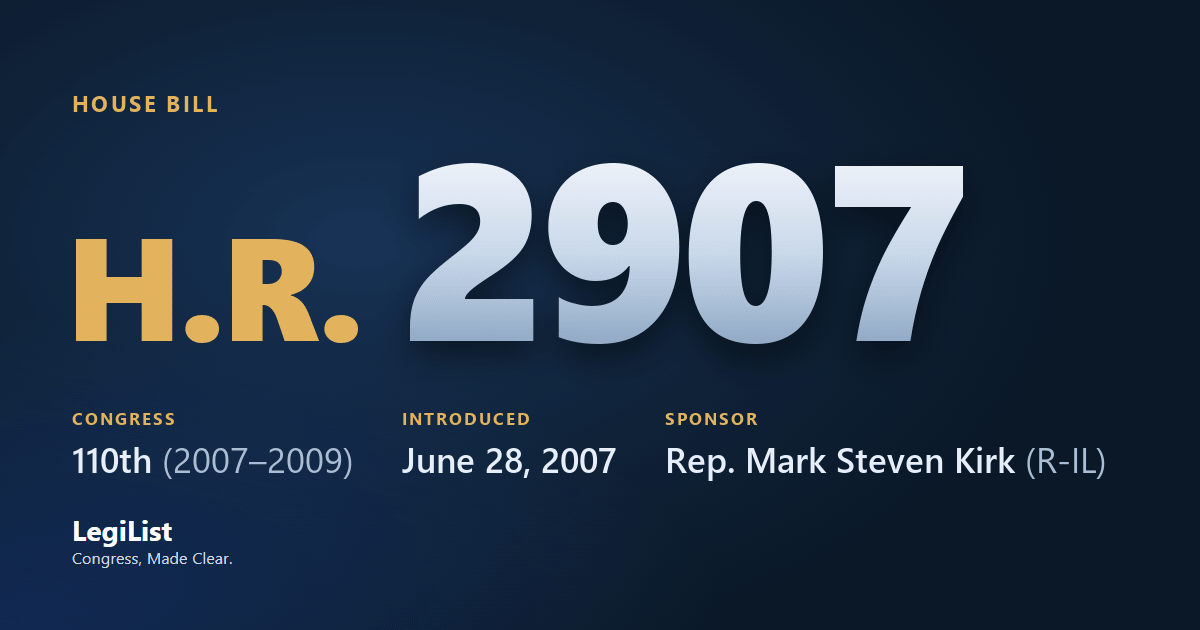
Great Lakes Water Protection Act
Latest action · Jun 29, 2007 Referred to the Subcommittee on Water Resources and Environment.
Progress
Where this bill reached, and when. A stage with no date was not reached; one that failed a vote and later carried shows the date it carried.
- IntroducedJun 28, 2007
- Passed HouseNot reached
- Passed SenateNot reached
- To the PresidentNot reached
- Became lawNot reached
Summary
Great Lakes Water Protection Act - Amends the Federal Water Pollution Control Act (popularly known as the Clean Water Act) to prohibit publicly owned treatment works (POTWs) from intentionally diverting waste streams to bypass any portion of the treatment facility if the diversion results in a discharge into the Great Lakes unless: (1) the bypass is unavoidable to prevent loss of life, personal injury, or severe property damage; (2) there is no feasible alternative; and (3) the treatment works provides notice; or (4) the bypass does not cause effluent limitations to be exceeded and is for essential maintenance to ensure efficient operation of the treatment facility.
Requires: (1) such notice to be provided to the Administrator of the Environmental Protection Agency (EPA) (or to a state with an approved permit program) prior to an anticipated bypass or within 24 hours of becoming aware of an unanticipated bypass; and (2) follow-up notice regarding the cause and duration of, volume of discharge resulting from, and public access areas affected by an unanticipated bypass.
Includes among prohibited bypasses those resulting in discharges from a POTW that consist of effluent routed around treatment units and blended with effluent from treatment units prior to discharge.
Directs the Administrator to establish procedures to ensure that permits issued to POTWs under the National Pollutant Discharge Elimination System include requirements to implement this Act.
Provides an increased maximum civil penalty for violations occurring on or after January 1, 2027.
Applies the prohibition on diverting waste streams to a bypass occurring after the last day of the one-year period beginning on the date of this Act's enactment.
Establishes the Great Lakes Cleanup Fund from which amounts shall be provided for improving wastewater discharges.
Cosponsors 1
Members who signed on, in the order they did. All signed on Jun 28, 2007.
| Seat | Cosponsor | Signed on | |
|---|---|---|---|
| D-IL | Daniel Lipinski | Original | Jun 28, 2007 |
Committees 1
Where it was sent and what each committee and subcommittee did with it, in order.
| Chamber | Committee | What it did |
|---|---|---|
| House | Transportation and Infrastructure Committee | Referred Jun 28, 2007 |
| Water Resources and Environment Subcommittee | Referred Jun 29, 2007 |
Actions 4
Everything that happened, newest first.
- Jun 29, 2007Referred to the Subcommittee on Water Resources and Environment.
- Jun 28, 2007Introduced in House
- Jun 28, 2007Sponsor introductory remarks on measure. (CR E1455)
- Jun 28, 2007Referred to the House Committee on Transportation and Infrastructure.
In the Congressional Record 2
Days the Record’s own index lists this bill, newest first, with the pages and the members it names. Pages starting H are the House, S the Senate, E Extensions of Remarks.
| Where | In the Record | Members | Date |
|---|---|---|---|
| House | Debate and remarks H8304 | Daniel Lipinski D-IL, Mark Kirk R-IL | Jul 24, 2007 |
| Extensions | Debate and remarks E1455 | Mark Kirk R-IL | Jun 29, 2007 |
Titles 2
Every title it has carried, official and short, at each stage.
- Official Title as Introduced
- To amend the Federal Water Pollution Control Act to establish a deadline for restricting sewage dumping into the Great Lakes and to fund programs and activities for improving wastewater discharges into the Great Lakes.
- Short Titles as Introduced
- Great Lakes Water Protection Act
Subjects
Assigned by the Library of Congress. Policy area: Environmental Protection.
- Animals
- Data banks
- Economics and Public Finance
- Environmental Protection
- Fines (Penalties)
- Government Operations and Politics
- Government paperwork
- Government publicity
- Government trust funds
- Great Lakes
- Habitat conservation
- Law
- Licenses
- Public Lands and Natural Resources
- Restoration ecology
- Science, Technology, Communications
- Sewage disposal
- Sewage treatment
- Waste disposal in rivers, lakes, etc.
- Water pollution control
- Water Resources Development
- Wetlands
Text 1
Each version as it was printed, newest first.
- Jun 28, 2007Introduced in House
Support LegiList
This page is free, carries no paywall, and is built and maintained by one person. If the record here is useful to you, a few dollars keeps it going.
Everything here is as published by Congress: the summary is the Congressional Research Service's, the action wording is the clerks', and the subjects are the Library of Congress's. How far it got is read from the actions themselves, taking the most recent one of each kind, so a bill that failed a vote and later passed is shown as having passed. Records come from this bill on Congress.gov and govinfo.gov; cost estimates are the Congressional Budget Office's, and the hearings are the printed hearings GovInfo publishes, which can appear months after the hearing.