California · Assembly Bill 2375 · 2025-2026 Regular Session

Alcoholic beverage control.

  1. Introduced Feb 19, 2026
  2. In committee Mar 9, 2026
  3. Passed the Assembly Apr 16, 2026
  4. Passed the Senate Aug 27, 2026
  5. To the governor Sep 8, 2026
  6. Became law Sep 20, 2026

What it does

The legislature's own summary of the bill, or its official long title.

Existing law, the Alcoholic Beverage Control Act, which is administered by the Department of Alcoholic Beverage Control, regulates the application, issuance, and suspension of alcoholic beverage licenses and generally makes a violation of the act a misdemeanor. Existing law defines “beer” for purposes of the Alcoholic Beverage Control Act as any alcoholic beverage obtained by the fermentation of any infusion or…

Read the full title (474 words)

Existing law, the Alcoholic Beverage Control Act, which is administered by the Department of Alcoholic Beverage Control, regulates the application, issuance, and suspension of alcoholic beverage licenses and generally makes a violation of the act a misdemeanor. Existing law defines “beer” for purposes of the Alcoholic Beverage Control Act as any alcoholic beverage obtained by the fermentation of any infusion or decoction of barley, malt, hops, or any other similar product, or any combination thereof in water, as specified. This bill would revise the definition of “beer” for purposes of the act to provide that beer may be produced using other grain and to specify that fermentation occurs in drinkable water. Existing law requires specified licensees who sold and delivered alcoholic beverages to a retailer and did not receive payment within 42 days of the date of delivery to charge 1% of the unpaid balance on the 43rd day and an additional 1% for each subsequent 30-day period. This bill would instead require the above-described licensees to charge 1% of the unpaid balance on the 32nd day after 30 days without payment and an additional 1% for each subsequent 30-day period. The bill would make other nonsubstantive and conforming changes. By expanding the scope of an existing crime, this bill would impose a state-mandated local program. Existing law requires a payment from a licensed retailer to a licensed wholesaler for the delivery of alcoholic beverages to be made by electronic funds transfer (EFT) pursuant to certain conditions, except as specified. Among other things, existing law requires the wholesaler to initiate the EFT and requires any service fees related to the EFT to be applied in an equitable manner. Existing law also provides for the selection of the third-party payment processor used to facilitate the EFT, including requiring the use of the processor used by the parties on July 1, 2025, if the parties cannot agree on a processor, and if no processor was used as of July 1, 2025, requiring the wholesaler to select the processor. This bill would revise and recast the above-described provisions to instead apply to the sale of alcoholic beverages. The bill would define “initiate” and “equitable manner” for these purposes. The bill would require the parties to either use the third-party payment processor used by the parties on July 1, 2025, or a payment processing service offered by a financial institution that held a deposit account of the licensed retailer on that date, and, if neither apply, would require the wholesaler to select the processor. The bill would make various other clarifying and nonsubstantive changes. The California Constitution requires the state to reimburse local agencies and school districts for certain costs mandated by the state. Statutory provisions establish procedures for making that reimbursement. This bill would provide that no reimbursement is required by this act for a specified reason.
Every action

27 steps, oldest first, as the legislature records them.

Show the 19 earlier steps
  1. AssemblyRead first time. To print.
  2. AssemblyFrom printer. May be heard in committee March 22.
  3. CommitteeReferred to Com. on G.O. · Assembly Governmental Organization
  4. CommitteeFrom committee: Do pass. To Consent Calendar. (Ayes 22. Noes 0.) (April 8). · Assembly Governmental Organization
  5. AssemblyRead second time. Ordered to Consent Calendar.
  6. AssemblyRead third time. Passed. Ordered to the Senate. (Ayes 68. Noes 0. Page 4683.)
  7. SenateIn Senate. Read first time. To Com. on RLS. for assignment.
  8. CommitteeReferred to Com. on G.O. · Senate Governmental Organization
  9. CommitteeFrom committee chair, with author's amendments: Amend, and re-refer to committee. Read second time, amended, and re-referred to Com. on G.O. · Senate Governmental Organization
  10. CommitteeFrom committee chair, with author's amendments: Amend, and re-refer to committee. Read second time, amended, and re-referred to Com. on G.O. · Senate Governmental Organization
  11. CommitteeFrom committee: Do pass and re-refer to Com. on APPR. with recommendation: To Consent Calendar. (Ayes 14. Noes 0.) (June 23). Re-referred to Com. on APPR. · Senate Governmental Organization
  12. CommitteeFrom committee: Be ordered to second reading file pursuant to Senate Rule 28.8 and ordered to Consent Calendar. · Senate Appropriations
  13. SenateRead second time. Ordered to Consent Calendar.
  14. SenateRead third time. Passed. Ordered to the Assembly. (Ayes 39. Noes 0. Page 5323.).
  15. AssemblyIn Assembly. Concurrence in Senate amendments pending.
  16. AssemblyOrdered to the Senate.
  17. SenateIn Senate. Held at Desk.
  18. SenateAction rescinded whereby the bill was read third time, passed, and to Assembly.
  19. SenateOrdered to third reading.
  1. SenateRead third time and amended. Ordered to second reading.
  2. SenateRead second time. Ordered to third reading.
  3. SenateRead third time. Passed. Ordered to the Assembly. (Ayes 40. Noes 0. Page 6033.).
  4. AssemblyIn Assembly. Concurrence in Senate amendments pending.
  5. AssemblySenate amendments concurred in. To Engrossing and Enrolling. (Ayes 78. Noes 0. Page 6812.).
  6. GovernorEnrolled and presented to the Governor at 3:30 p.m.
  7. GovernorApproved by the Governor.
  8. Secretary of StateChaptered by Secretary of State - Chapter 396, Statutes of 2026.

Roll calls

6 recorded votes: 4 on the floor, 2 in committee. Each shows how every member voted.

AB 2375 Blanca Rubio Consent Calendar Second Day Regular Session · Full Assembly

Passed 68–0
Apr 16, 2026 · journal entry
Yes 68 No 0 Not voting 12
Democrats: 51 yes, 0 no Republicans: 17 yes, 0 no
How each member voted

Yes · 68

Not voting · 12

Consent Calendar 2nd AB2375 Blanca Rubio · Full Senate

Passed 39–0
Aug 10, 2026 · journal entry
Yes 39 No 0 Not voting 1
Democrats: 30 yes, 0 no Republicans: 9 yes, 0 no
How each member voted

Yes · 39

Not voting · 1

Assembly 3rd Reading AB2375 Blanca Rubio By Rubio · Full Senate

Passed 40–0
Aug 27, 2026 · journal entry
Yes 40 No 0
Democrats: 30 yes, 0 no Republicans: 10 yes, 0 no
How each member voted

Yes · 40

AB 2375 Blanca Rubio Concurrence in Senate Amendments · Full Assembly

Passed 78–0
Aug 28, 2026 · journal entry
Yes 78 No 0 Not voting 1
Democrats: 59 yes, 0 no Republicans: 19 yes, 0 no
How each member voted

Yes · 78

Not voting · 1

Committee and other votes

DateWhereQuestionResult
Apr 8, 2026 Assembly Governmental Organization Do pass. To Consent Calendar.
Members

Yes · 22

Passed 22–0
Jun 23, 2026 Senate Governmental Organization Do pass, but first be re-referred to the Committee on [Appropriations] with the recommendation: To Consent Calendar
Members

Yes · 14

Not voting · 1

Passed 14–0

Sponsors

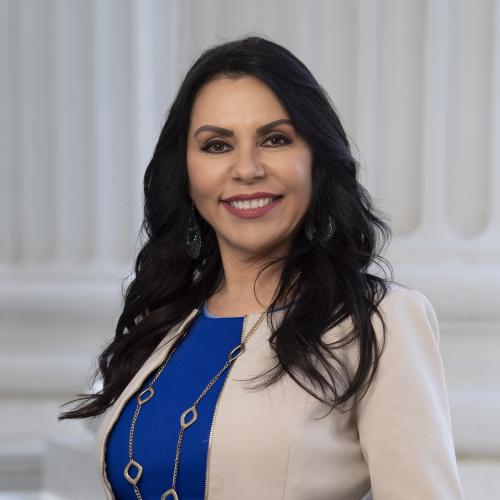
The member who introduced it.

Support LegiList

This page is free, carries no paywall, and is built and maintained by one person. If the record here is useful to you, a few dollars keeps it going.

Processed by Stripe in a separate window. LegiList never sees card details. Other amounts

From California's official records (downloads.leginfo.legislature.ca.gov), checked Nov 18, 2026. Text links go to the official versions; LegiList does not copy bill text.