Medi-Cal: enhanced care management: peer support specialists.
- Introduced Feb 18, 2026
- In committee Mar 2, 2026
- Passed the Assembly Next
- Passed the Senate
- To the governor
- Became law
What it does
The legislature's own summary of the bill, or its official long title.
Existing law establishes the Medi-Cal program, which is administered by the State Department of Health Care Services and under which qualified low-income individuals receive health care services. The Medi-Cal program is in part governed by, and funded pursuant to, federal Medicaid program provisions. Existing law requires the department to implement an enhanced care management (ECM) benefit designed to address the…
Read the full title (518 words)
Existing law establishes the Medi-Cal program, which is administered by the State Department of Health Care Services and under which qualified low-income individuals receive health care services. The Medi-Cal program is in part governed by, and funded pursuant to, federal Medicaid program provisions. Existing law requires the department to implement an enhanced care management (ECM) benefit designed to address the clinical and nonclinical needs on a whole-person-care basis for certain target populations of Medi-Cal beneficiaries enrolled in Medi-Cal managed care plans. Under existing law, target populations include, among others, high utilizers with frequent hospital admissions, short-term skilled nursing facility stays, or emergency room visits, and individuals experiencing homelessness. Existing law authorizes a county, or an agency representing a county, to develop a peer support specialist certification program, subject to departmental approval. Under existing law, these specialists are individuals, at least 18 years of age, who self-identify as having lived experience with the process of recovery from mental illness, substance use disorder, or both, as specified. Existing law requires the department to seek any federal waivers that it deems necessary to establish a demonstration or pilot project for the provision of peer support services in counties that agree to participate. This bill would require the department to require, as a condition of providing ECM, that any ECM provider, whose caseload of members meets certain criteria, maintain an interdisciplinary care team that includes at least one peer support specialist or trainee, as defined, who is integrated into ECM service delivery and available to support ECM members. The bill would set forth the functions of a peer support specialist or trainee for ECM purposes. The bill would require the department to allow an ECM provider to satisfy the requirement through any combination of staffing models, as specified. The bill would require the department to ensure that Medi-Cal managed care plan contracts, policies, and guidance reflect the requirement and to establish monitoring and compliance mechanisms to ensure that ECM providers implement the requirement. The bill would require the department to recognize virtual, telephonic, and technology-enabled peer support service delivery as meeting the integration requirement. Under the bill, an ECM provider subject to these provisions would have until January 1, 2028, to achieve full compliance, as specified. The bill would prohibit the department, a county, a Medi-Cal managed care plan, or a Medi-Cal provider, as applicable, from disqualifying a peer support specialist solely or primarily on the basis of a criminal background check, fingerprint-based background check, or similar screening that is a condition of employment, contracting, certification, credentialing, enrollment, or participation in providing peer support services. Under the bill, this restriction would be implemented to the extent not in conflict with federal law, and the restriction would not prohibit background checks under specified circumstances. The bill would also authorize consideration of an individual’s criminal record as part of their overall fitness for the position of peer support specialist if the criminal record has a nexus to that position or its duties. The bill would condition implementation of these provisions on receipt of any necessary federal approvals and the availability of federal financial participation.
Every action
11 steps, oldest first, as the legislature records them.
- AssemblyRead first time. To print.
- AssemblyFrom printer. May be heard in committee March 21.
- CommitteeReferred to Com. on HEALTH. · Assembly Health
- CommitteeFrom committee chair, with author's amendments: Amend, and re-refer to Com. on HEALTH. Read second time and amended. · Assembly Health
- CommitteeRe-referred to Com. on HEALTH. · Assembly Health
- CommitteeFrom committee: Amend, and do pass as amended and re-refer to Com. on APPR. (Ayes 15. Noes 1.) (April 21). · Assembly Health
- AssemblyRead second time and amended.
- CommitteeRe-referred to Com. on APPR. · Assembly Appropriations
- CommitteeIn committee: Set, first hearing. Referred to APPR. suspense file. · Assembly Appropriations
- CommitteeJoint Rule 62(a), file notice suspended. (Page 5030.) · Assembly Appropriations
- CommitteeIn committee: Held under submission. · Assembly Appropriations
Roll calls
1 recorded vote: 0 on the floor, 1 in committee. Each shows how every member voted.
Committee votes
| Date | Where | Question | Result |
|---|---|---|---|
| Apr 21, 2026 | Assembly Health | Do pass as amended and be re-referred to the Committee on [Appropriations] | Passed 15–1 |
Sponsors
The member who introduced it.
-
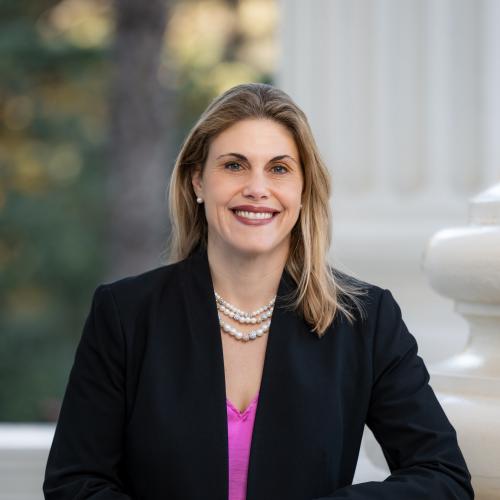 Maggy KrellD Primary sponsor · District 6
Support LegiList
This page is free, carries no paywall, and is built and maintained by one person. If the record here is useful to you, a few dollars keeps it going.
From California's official records (downloads.leginfo.legislature.ca.gov), checked Nov 18, 2026. Text links go to the official versions; LegiList does not copy bill text.