California · Assembly Bill 2039 · 2025-2026 Regular Session

Attorneys.

  1. Introduced Feb 17, 2026
  2. In committee Mar 9, 2026
  3. Passed the Assembly May 21, 2026
  4. Passed the Senate Aug 25, 2026
  5. To the governor Sep 3, 2026
  6. Became law Sep 27, 2026

What it does

The legislature's own summary of the bill, or its official long title.

The State Bar Act provides for the licensure and regulation of attorneys by the State Bar of California (State Bar), a public corporation governed by a board of trustees. Existing law authorizes the board of trustees, with the approval of the Supreme Court, to formulate and enforce rules of professional conduct for all licensees of the State Bar. Existing provisions of the Labor Code prohibit an employer from…

Read the full title (532 words)

The State Bar Act provides for the licensure and regulation of attorneys by the State Bar of California (State Bar), a public corporation governed by a board of trustees. Existing law authorizes the board of trustees, with the approval of the Supreme Court, to formulate and enforce rules of professional conduct for all licensees of the State Bar. Existing provisions of the Labor Code prohibit an employer from making, adopting, or enforcing any rule, regulation or policy preventing an employee from disclosing information to a government or law enforcement agency, to a person with authority over the employee, or to another employee who has authority to investigate, discover, or correct the violation or noncompliance, if the employee has reasonable cause to believe that the information discloses a violation of state or federal statute, or a violation of or noncompliance with a local, state, or federal rule or regulation. This bill would add provisions to the State Bar Act that would prohibit an employer, law firm, attorney, or any person acting on their behalf from retaliating against an individual for disclosing information in good faith, or because the employer, law firm, or attorney believes the individual disclosed or may disclose information in good faith, where the individual has reasonable cause to believe that the information reveals a violation of the State Bar Act, the California Rules of Professional Conduct, or any other state or federal statute, rule, or regulation governing the conduct of attorneys. Existing law requires certain contracts between an attorney and client to comply with specified requirements, including requiring contracts to represent a client on a contingency fee basis to be in writing and include the contingency fee rate and specified other information. This bill would require an attorney entering into a loan or financial assistance arrangement with a client to have a separate written contract that contains the total amount financed, repayment terms and contingencies, and all fees, costs, and charges. The bill would prohibit an attorney from charging the client interest on any loan or funds. The bill would make a violation of those requirements subject to a civil penalty of $15,000 per offense or injunctive relief, and subject to discipline by the State Bar. Existing law makes it unlawful for any person to act as a runner or capper for any attorneys or to solicit any business for attorneys, as specified. Existing law makes a violation of those provisions a misdemeanor or a felony, as specified, and also authorizes a person to bring a civil action for specified remedies for a violation of those provisions. Existing law authorizes the Supreme Court to disbar, including to summarily disbar, or suspend an attorney for specified acts, including conviction of a felony or misdemeanor involving moral turpitude. This bill would also make a violation of the provisions prohibiting capping or running subject to a civil penalty of $25,000 for each violation. The bill would require the State Bar to enact summarily disbarment procedures for any licensee for a felony conviction of the provisions prohibiting capping or running or a misdemeanor conviction under those provisions where the court finds, or the record establishes, that the licensee acted knowingly and for financial gain.
Every action

27 steps, oldest first, as the legislature records them.

Show the 19 earlier steps
  1. AssemblyRead first time. To print.
  2. AssemblyFrom printer. May be heard in committee March 20.
  3. CommitteeReferred to Com. on JUD. · Assembly Judiciary
  4. CommitteeFrom committee chair, with author's amendments: Amend, and re-refer to Com. on JUD. Read second time and amended. · Assembly Judiciary
  5. CommitteeRe-referred to Com. on JUD. · Assembly Judiciary
  6. CommitteeFrom committee: Amend, and do pass as amended. (Ayes 12. Noes 0.) (March 24). · Assembly Judiciary
  7. AssemblyRead second time and amended. Ordered returned to second reading.
  8. AssemblyRead second time. Ordered to third reading.
  9. CommitteeRe-referred to Com. on APPR. pursuant to Joint Rule 10.5. · Assembly Appropriations
  10. CommitteeIn committee: Set, first hearing. Referred to APPR. suspense file. · Assembly Appropriations
  11. CommitteeFrom committee: Do pass. (Ayes 15. Noes 0.) (May 14). · Assembly Appropriations
  12. AssemblyRead second time. Ordered to third reading.
  13. AssemblyRead third time. Passed. Ordered to the Senate. (Ayes 73. Noes 0. Page 5217.)
  14. SenateIn Senate. Read first time. To Com. on RLS. for assignment.
  15. CommitteeReferred to Com. on JUD. · Senate Judiciary
  16. CommitteeFrom committee: Amend, and do pass as amended and re-refer to Com. on APPR. (Ayes 13. Noes 0.) (June 23). · Senate Judiciary
  17. CommitteeRead second time and amended. Re-referred to Com. on APPR. · Senate Appropriations
  18. CommitteeIn committee: Referred to APPR. suspense file. · Senate Appropriations
  19. CommitteeFrom committee: Amend, and do pass as amended. (Ayes 7. Noes 0.) (August 13). · Senate Appropriations
  1. SenateRead second time and amended. Ordered returned to second reading.
  2. SenateRead second time. Ordered to third reading.
  3. SenateRead third time. Passed. Ordered to the Assembly. (Ayes 40. Noes 0. Page 5764.).
  4. AssemblyIn Assembly. Concurrence in Senate amendments pending.
  5. AssemblySenate amendments concurred in. To Engrossing and Enrolling. (Ayes 79. Noes 0. Page 6576.).
  6. GovernorEnrolled and presented to the Governor at 4 p.m.
  7. GovernorApproved by the Governor.
  8. Secretary of StateChaptered by Secretary of State - Chapter 574, Statutes of 2026.

Roll calls

8 recorded votes: 3 on the floor, 5 in committee. Each shows how every member voted.

AB 2039 Zbur Assembly Third Reading · Full Assembly

Passed 73–0
May 21, 2026 · journal entry
Yes 73 No 0 Not voting 7
Democrats: 56 yes, 0 no Republicans: 17 yes, 0 no
How each member voted

Yes · 73

Not voting · 7

Assembly 3rd Reading AB2039 Zbur et al. By Reyes · Full Senate

Passed 40–0
Aug 25, 2026 · journal entry
Yes 40 No 0
Democrats: 30 yes, 0 no Republicans: 10 yes, 0 no
How each member voted

Yes · 40

AB 2039 Zbur Concurrence in Senate Amendments · Full Assembly

Passed 79–0
Aug 26, 2026 · journal entry
Yes 79 No 0
Democrats: 60 yes, 0 no Republicans: 19 yes, 0 no
How each member voted

Yes · 79

Committee and other votes

DateWhereQuestionResult
Mar 24, 2026 Assembly Judiciary Do pass as amended.
Members

Yes · 12

Passed 12–0
May 14, 2026 Assembly Appropriations Do pass.
Members

Yes · 15

Passed 15–0
Jun 23, 2026 Senate Judiciary Do pass as amended, but first amend, and re-refer to the Committee on [Appropriations]
Members

Yes · 13

Passed 13–0
Aug 3, 2026 Senate Appropriations Placed on suspense file
Members

Yes · 7

Passed 7–0
Aug 13, 2026 Senate Appropriations Do pass as amended
Members

Yes · 7

Passed 7–0

Sponsors

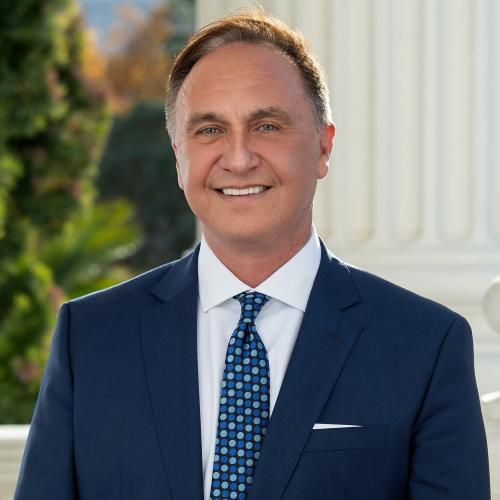
The member who introduced it, joined by 2 cosponsors: 1 Republican, 1 Democrat.

All 2 cosponsors

Support LegiList

This page is free, carries no paywall, and is built and maintained by one person. If the record here is useful to you, a few dollars keeps it going.

Processed by Stripe in a separate window. LegiList never sees card details. Other amounts

From California's official records (downloads.leginfo.legislature.ca.gov), checked Nov 18, 2026. Text links go to the official versions; LegiList does not copy bill text.