Executive Order
Establishing a Community Solutions Council
Document ID
doc_fe98b2b858ae2122
Number
2016-28203
Citation
81 FR 83619
Context
- TypeExecutive Order
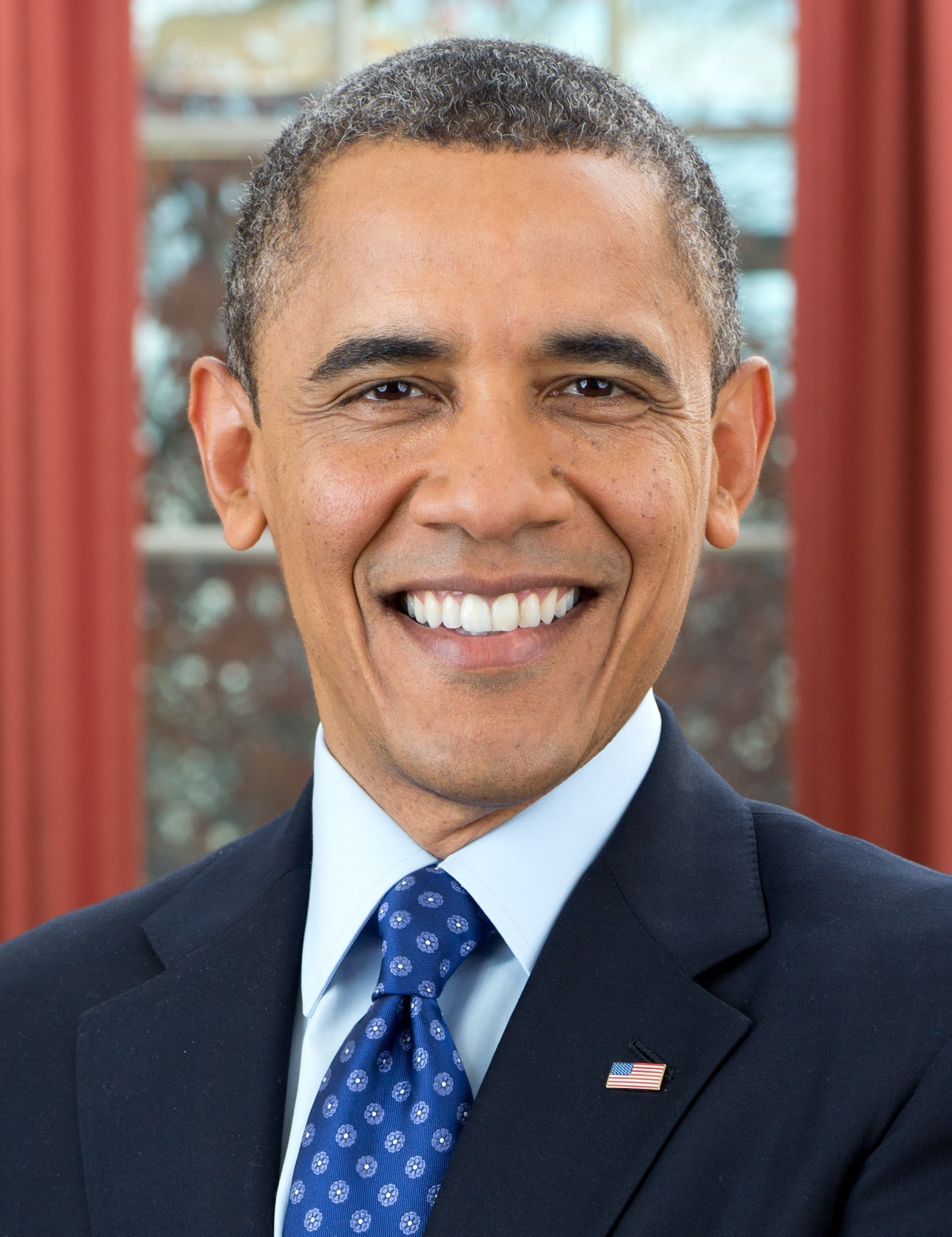
- President Barack Obama
- IssuedNovember 16, 2016
- PublishedNovember 21, 2016
Summary
Executive Order: Establishing a Community Solutions Council
Document Text
Executive Order 13748 of November 16, 2016

Establishing a Community Solutions Council

By the authority vested in me as President by the
Constitution and the laws of the United States of
America, it is hereby ordered as follows:

Section 1. Policy. Place is a strong determinant of
opportunity and well-being. Research shows that the
neighborhood in which a child grows up impacts his or
her odds of going to college, enjoying good health, and
obtaining a lifetime of economic opportunities. Even
after 73 consecutive months of total job growth since
2009, communities of persistent poverty remain and for
far too many, the odds are stacked against opportunity
and achieving the American dream. In addition, between
now and 2050, growing our economy, expected population
growth, climate change, and demographic shifts will
require major new investments in physical, social, and
technological infrastructure.

Specific challenges in communities--including crime,
access to care, opportunities to pursue quality
education, lack of housing options, unemployment, and
deteriorating infrastructure--can be met by leveraging
Federal assistance and resources. While the Federal
Government provides rural, suburban, urban, and tribal
communities with significant investments in aid
annually, coordinating these investments, as
appropriate, across agencies based on locally led
visions can more effectively reach communities of
greatest need to maximize impact. In recent years, the
Federal Government has deepened its engagement with
communities, recognizing the critical role of these
partnerships in enabling Americans to live healthier
and more prosperous lives. Since 2015, the Community
Solutions Task Force, comprising executive departments,
offices, and agencies (agencies) across the Federal
Government, has served as the primary interagency
coordinator of agency work to engage with communities
to deliver improved outcomes. This order builds on
recent work to facilitate inter-agency and community-
level collaboration to meet the unique needs of
communities in a way that reflects these communities'
local assets, economies, geography, size, history,
strengths, talent networks, and visions for the future.

Sec. 2. Principles. Our effort to modernize the Federal
Government's work with communities is rooted in the
following principles:

(a) A community-driven, locally led vision and
long-term plan for clear outcomes should guide
individual projects.
(b) The Federal Government should coordinate its
efforts at the Federal, regional, State, local, tribal,
and community level, and with cross-sector partners, to
offer a more seamless process for communities to access
needed support and ensure equitable investments.
(c) The Federal Government should help communities
identify, develop, and share local solutions, rely on
data to determine what does and does not work, and
harness technology and modern collaboration and
engagement methods to help share these solutions and
help communities meet their local goals.

Sec. 3. Community Solutions Council.

(a) Establishment. There is hereby established a
Council for Community Solutions (Council), led by two
Co-Chairs. One Co-Chair will be an Assistant to the
President or the Director of the Office of Management
and Budget, as designated by the President. The second
Co-Chair will be rotated every

4 years and designated by the President from among the
heads of the Departments of Justice, Agriculture,
Commerce, Labor, Health and Human Services, Housing and
Urban Development, Transportation, and Education, and
the Environmental Protection Agency (Agency Co-Chair).
(b) Membership. The Council shall consist of the
following members:

(i) the Secretary of State;

(ii) the Secretary of the Treasury;

(iii) the Secretary of Defense;

(iv) the Attorney General;

(v) the Secretary of the Interior;

(vi) the Secretary of Agriculture;

(vii) the Secretary of Commerce;

(viii) the Secretary of Labor;

(ix) the Secretary of Health and Human Services;

(x) the Secretary of Housing and Urban Development;

(xi) the Secretary of Transportation;

(xii) the Secretary of Energy;

(xiii) the Secretary of Education;

(xiv) the Secretary of Veterans Affairs;

(xv) the Secretary of Homeland Security;

(xvi) the Administrator of the Environmental Protection Agency;

(xvii) the Administrator of General Services;

(xviii) the Administrator of the Small Business Administration;

(xix) the Chief Executive Officer of the Corporation for National and
Community Service;

(xx) the Chairperson of the National Endowment for the Arts;

(xxi) the Director of the Institute for Museum and Library Services;

(xxii) the Federal Co-Chair of the Delta Regional Authority;

(xxiii) the Federal Co-Chair of the Appalachian Regional Commission;

(xxiv) the Director of the Office of Personnel Management;

(xxv) the Director of the Office of Management and Budget;

(xxvi) the Chair of the Council of Economic Advisers;

(xxvii) the Assistant to the President for Intergovernmental Affairs and
Public Engagement;

(xxviii) the Assistant to the President and Cabinet Secretary;

(xxix) the Assistant to the President for Economic Policy and Director of
the National Economic Council;

(xxx) the Chair of the Council on Environmental Quality;

(xxxi) the Director of the Office of Science and Technology Policy;

(xxxii) the Assistant to the President and Chief Technology Officer;

(xxxiii) the Administrator of the United States Digital Service; and

(xxxiv) other officials, as the Co-Chairs may designate or invite to
participate.

(c) Administration.

(i) The President will designate one of the Co-Chairs to appoint or
designate, as appropriate, an Executive Director, who shall coordinate the

Council's activities. The department, agency, or component within the
Executive Office of the President in which the Executive Director is
appointed or designated, as appropriate, (funding entity) shall provide
funding and administrative support for the Council to the extent permitted
by law and within existing appropriations as may be necessary for the
performance of its functions.

(ii) To the extent permitted by law, including the Economy Act, and within
existing appropriations, participating agencies may detail staff to the
funding entity to support the Council's coordination and implementation
efforts.

(iii) The Co-Chairs shall convene regular meetings of the Council,
determine its agenda, and direct its work. At the direction of the Co-
Chairs, the Council may establish subgroups consisting exclusively of
Council members or their designees, as appropriate.

(iv) A member of the Council may designate a senior-level official who is
part of the member's department, agency, or office to perform the Council
functions of the member.

Sec. 4. Mission and Priorities of the Council. (a) The
Council shall foster collaboration across agencies,
policy councils, and offices to coordinate actions,
identify working solutions to share broadly, and
develop and implement policy recommendations that put
the community-driven, locally led vision at the center
of policymaking. The Council shall:

(i) Work across agencies to coordinate investments in initiatives and
practices that align the work of the Federal Government to have the
greatest impact on the lives of individuals and communities.

(ii) Use evidence-based practices in policymaking, including identifying
existing solutions, scaling up practices that are working, and designing
solutions with regular input of the individuals and communities to be
served.

(iii) Invest in recruiting, training, and retaining talent to further the
effective delivery of services to individuals and communities and empower
them with best-practice community engagement options, open government
transparency methods, equitable policy approaches, technical assistance and
capacity building tools, and data-driven practice.

(b) Consistent with the principles set forth in
this order and in accordance with applicable law,
including the Federal Advisory Committee Act, the
Council should conduct outreach to representatives of
nonprofit organizations, civil rights organizations,
businesses, labor and professional organizations,
start-up and entrepreneurial communities, State, local,
and tribal government agencies, school districts,
youth, elected officials, seniors, faith and other
community-based organizations, philanthropies,
technologists, other institutions of local importance,
and other interested or affected persons with relevant
expertise in the expansion and improvement of efforts
to build local capacity, ensure equity, and address
economic, social, environmental, and other issues in
communities or regions.

Sec. 5. Executive Orders 13560 and 13602, and Building
Upon Other Efforts. This order supersedes Executive
Order 13560 of December 14, 2010 (White House Council
for Community Solutions), and Executive Order 13602 of
March 15, 2012 (Establishing a White House Council on
Strong Cities, Strong Communities), which are hereby
revoked.

This Council builds on existing efforts involving
Federal working groups, task forces, memoranda of
agreement, and initiatives, including the Community
Solutions Task Force, the Federal Working Groups
dedicated to supporting the needs and priorities of
local leadership in Detroit, Baltimore, and Pine Ridge;
the Interagency Working Group on Environmental Justice;
the Partnership for Sustainable Communities; Local
Foods, Local Places; Performance Partnership Pilots for
Disconnected Youth; Empowerment

Zones; StrikeForce; Partnerships for Opportunity and
Workforce and Economic Revitalization; the Neighborhood
Revitalization Initiative; Climate Action Champions;
Better Communities Alliance; Investing in Manufacturing
Communities Partnership; Promise Zones; and the 2016
Memorandum of Agreement on Interagency Technical
Assistance. The Council shall also coordinate with
existing Chief Officer Councils across the government
with oversight responsibility for human capital,
performance improvement, and financial assistance.

Sec. 6. General Provisions. (a) Nothing in this order
shall be construed to impair or otherwise affect:

(i) the authority granted by law to an executive department, agency, or the
head thereof, or the status of that department or agency within the Federal
Government; or

(ii) the functions of the Director of the Office of Management and Budget
relating to budgetary, administrative, or legislative proposals.

(b) This order shall be implemented consistent with
applicable law and subject to the availability of
appropriations.
(c) This order is not intended to, and does not,
create any right or benefit, substantive or procedural,
enforceable at law or in equity by any party against
the United States, its departments, agencies, or
entities, its officers, employees, or agents, or any
other person.

THE WHITE HOUSE,

November 16, 2016.