Executive Order
Safeguarding the Nation From the Impacts of Invasive Species
Document ID
doc_e89d0160109869f9
Number
2016-29519
Citation
81 FR 88609
Context
- TypeExecutive Order
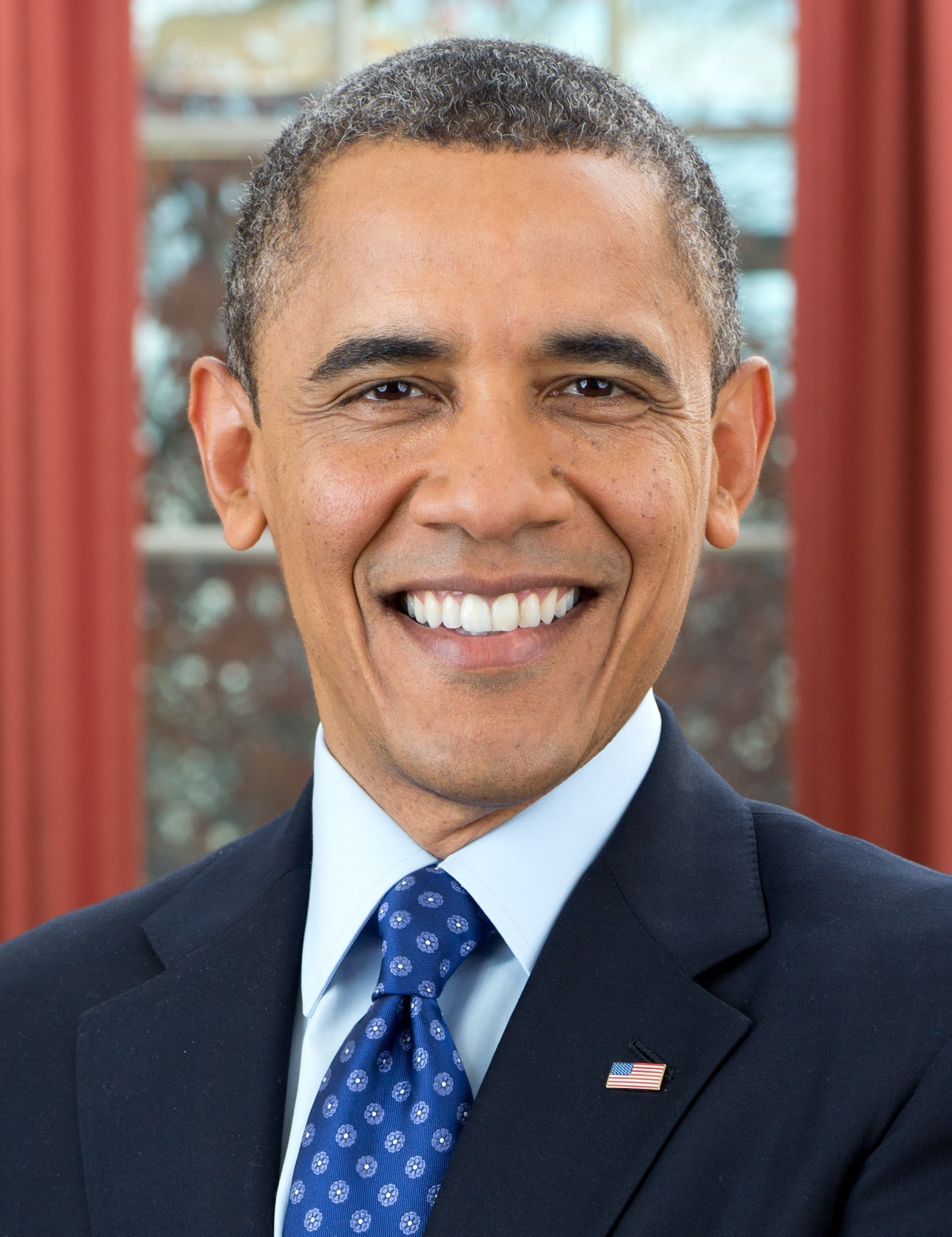
- President Barack Obama
- IssuedDecember 5, 2016
- PublishedDecember 8, 2016
Summary
Executive Order: Safeguarding the Nation From the Impacts of Invasive Species
Document Text
Executive Order 13751 of December 5, 2016

Safeguarding the Nation From the Impacts of
Invasive Species

By the authority vested in me as President by the
Constitution and to ensure the faithful execution of
the laws of the United States of America, including the
National Environmental Policy Act of 1969, as amended
(42 U.S.C. 4321 et seq.), the Nonindigenous Aquatic
Nuisance Prevention and Control Act of 1990, (16 U.S.C.
4701 et seq.), the Plant Protection Act (7 U.S.C. 7701
et seq.), the Lacey Act, as amended (18 U.S.C. 42, 16
U.S.C. 3371-3378 et seq.), the Endangered Species Act
of 1973, as amended (16 U.S.C. 1531 et seq.), the
Noxious Weed Control and Eradication Act of 2004 (7
U.S.C. 7781 et seq.), and other pertinent statutes, to
prevent the introduction of invasive species and
provide for their control, and to minimize the
economic, plant, animal, ecological, and human health
impacts that invasive species cause, it is hereby
ordered as follows:

Section 1. Policy. It is the policy of the United
States to prevent the introduction, establishment, and
spread of invasive species, as well as to eradicate and
control populations of invasive species that are
established. Invasive species pose threats to
prosperity, security, and quality of life. They have
negative impacts on the environment and natural
resources, agriculture and food production systems,
water resources, human, animal, and plant health,
infrastructure, the economy, energy, cultural
resources, and military readiness. Every year, invasive
species cost the United States billions of dollars in
economic losses and other damages.

Of substantial growing concern are invasive species
that are or may be vectors, reservoirs, and causative
agents of disease, which threaten human, animal, and
plant health. The introduction, establishment, and
spread of invasive species create the potential for
serious public health impacts, especially when
considered in the context of changing climate
conditions. Climate change influences the
establishment, spread, and impacts of invasive species.

Executive Order 13112 of February 3, 1999 (Invasive
Species), called upon executive departments and
agencies to take steps to prevent the introduction and
spread of invasive species, and to support efforts to
eradicate and control invasive species that are
established. Executive Order 13112 also created a
coordinating body--the Invasive Species Council, also
referred to as the National Invasive Species Council--
to oversee implementation of the order, encourage
proactive planning and action, develop recommendations
for international cooperation, and take other steps to
improve the Federal response to invasive species. Past
efforts at preventing, eradicating, and controlling
invasive species demonstrated that collaboration across
Federal, State, local, tribal, and territorial
government; stakeholders; and the private sector is
critical to minimizing the spread of invasive species
and that coordinated action is necessary to protect the
assets and security of the United States.

This order amends Executive Order 13112 and directs
actions to continue coordinated Federal prevention and
control efforts related to invasive species. This order
maintains the National Invasive Species Council
(Council) and the Invasive Species Advisory Committee;
expands the membership of the Council; clarifies the
operations of the Council; incorporates considerations

of human and environmental health, climate change,
technological innovation, and other emerging priorities
into Federal efforts to address invasive species; and
strengthens coordinated, cost-efficient Federal action.

Sec. 2. Definitions. Section 1 of Executive Order 13112
is amended to read as follows:

``Section 1. Definitions. (a) `Control' means
containing, suppressing, or reducing populations of
invasive species.
(b) `Eradication' means the removal or destruction
of an entire population of invasive species.
(c) `Federal agency' means an executive department
or agency, but does not include independent
establishments as defined by 5 U.S.C. 104.
(d) `Introduction' means, as a result of human
activity, the intentional or unintentional escape,
release, dissemination, or placement of an organism
into an ecosystem to which it is not native.
(e) `Invasive species' means, with regard to a
particular ecosystem, a non-native organism whose
introduction causes or is likely to cause economic or
environmental harm, or harm to human, animal, or plant
health.
(f) `Non-native species' or `alien species' means,
with respect to a particular ecosystem, an organism,
including its seeds, eggs, spores, or other biological
material capable of propagating that species, that
occurs outside of its natural range.
(g) `Pathway' means the mechanisms and processes by
which non-native species are moved, intentionally or
unintentionally, into a new ecosystem.
(h) `Prevention' means the action of stopping
invasive species from being introduced or spreading
into a new ecosystem.
(i) `United States' means the 50 States, the
District of Columbia, the Commonwealth of Puerto Rico,
Guam, American Samoa, the U.S. Virgin Islands, the
Commonwealth of the Northern Mariana Islands, all
possessions, and the territorial sea of the United
States as defined by Presidential Proclamation 5928 of
December 27, 1988.''

Sec. 3. Federal Agency Duties. Section 2 of Executive
Order 13112 is amended to read as follows:

``Sec. 2. Federal Agency Duties. (a) Each Federal
agency for which that agency's actions may affect the
introduction, establishment, or spread of invasive
species shall, to the extent practicable and permitted
by law,

(1) identify such agency actions;

(2) subject to the availability of appropriations, and
within administrative, budgetary, and jurisdictional
limits, use relevant agency programs and authorities
to:

(i) prevent the introduction, establishment, and spread of invasive
species;

(ii) detect and respond rapidly to eradicate or control populations of
invasive species in a manner that is cost-effective and minimizes human,
animal, plant, and environmental health risks;

(iii) monitor invasive species populations accurately and reliably;

(iv) provide for the restoration of native species, ecosystems, and other
assets that have been impacted by invasive species;

(v) conduct research on invasive species and develop and apply technologies
to prevent their introduction, and provide for environmentally sound
methods of eradication and control of invasive species;

(vi) promote public education and action on invasive species, their
pathways, and ways to address them, with an emphasis on prevention, and
early detection and rapid response;

(vii) assess and strengthen, as appropriate, policy and regulatory
frameworks pertaining to the prevention, eradication, and control of
invasive species and address regulatory gaps, inconsistencies, and
conflicts;

(viii) coordinate with and complement similar efforts of States,
territories, federally recognized American Indian tribes, Alaska Native
Corporations, Native Hawaiians, local governments, nongovernmental
organizations, and the private sector; and

(ix) in consultation with the Department of State and with other agencies
as appropriate, coordinate with foreign governments to prevent the movement
and minimize the impacts of invasive species; and

(3) refrain from authorizing, funding, or implementing
actions that are likely to cause or promote the
introduction, establishment, or spread of invasive
species in the United States unless, pursuant to
guidelines that it has prescribed, the agency has
determined and made public its determination that the
benefits of such actions clearly outweigh the potential
harm caused by invasive species; and that all feasible
and prudent measures to minimize risk of harm will be
taken in conjunction with the actions.

(c) Federal agencies shall pursue the duties set
forth in this section in coordination, to the extent
practicable, with other member agencies of the Council
and staff, consistent with the National Invasive
Species Council Management Plan, and in cooperation
with State, local, tribal, and territorial governments,
and stakeholders, as appropriate, and in consultation
with the Department of State when Federal agencies are
working with international organizations and foreign
nations.
(d) Federal agencies that are members of the
Council, and Federal interagency bodies working on
issues relevant to the prevention, eradication, and
control of invasive species, shall provide the Council
with annual information on actions taken that implement
these duties and identify barriers to advancing
priority actions.
(e) To the extent practicable, Federal agencies
shall also expand the use of new and existing
technologies and practices; develop, share, and utilize
similar metrics and standards, methodologies, and
databases and, where relevant, platforms for monitoring
invasive species; and, facilitate the interoperability
of information systems, open data, data analytics,
predictive modeling, and data reporting necessary to
inform timely, science-based decision making.

Sec. 4. Emerging Priorities. Federal agencies that are
members of the Council and Federal interagency bodies
working on issues relevant to the prevention,
eradication, and control of invasive species shall take
emerging priorities into consideration, including:

(a) Federal agencies shall consider the potential
public health and safety impacts of invasive species,
especially those species that are vectors, reservoirs,
and causative agents of disease. The Department of
Health and Human Services, in coordination and
consultation with relevant agencies as appropriate,
shall within 1 year of this order, and as requested by
the Council thereafter, provide the Office of Science
and Technology Policy and the Council a report on
public health impacts associated with invasive species.
That report shall describe the disease, injury,
immunologic, and safety impacts associated with
invasive species, including any direct and indirect
impacts on low-income, minority, and tribal
communities.
(b) Federal agencies shall consider the impacts of
climate change when working on issues relevant to the
prevention, eradication, and control of invasive
species, including in research and monitoring efforts,
and integrate invasive species into Federal climate
change coordinating frameworks and initiatives.
(c) Federal agencies shall consider opportunities
to apply innovative science and technology when
addressing the duties identified in section 2 of
Executive Order 13112, as amended, including, but not
limited to, promoting open data and data analytics;
harnessing technological advances in remote sensing
technologies, molecular tools, cloud computing, and
predictive analytics; and using tools such as challenge
prizes, citizen science, and crowdsourcing.

Sec. 5. National Invasive Species Council. Section 3 of
Executive Order 13112 is amended to read as follows:

``Sec. 3. National Invasive Species Council. (a) A
National Invasive Species Council (Council) is hereby
established. The mission of the Council is to provide
the vision and leadership to coordinate, sustain, and
expand Federal efforts to safeguard the interests of
the United States through the prevention, eradication,
and control of invasive species, and through the
restoration of ecosystems and other assets impacted by
invasive species.
(b) The Council's membership shall be composed of
the following officials, who may designate a senior-
level representative to perform the functions of the
member:

(i) Secretary of State;

(ii) Secretary of the Treasury;

(iii) Secretary of Defense;

(iv) Secretary of the Interior;

(v) Secretary of Agriculture;

(vi) Secretary of Commerce;

(vii) Secretary of Health and Human Services;

(viii) Secretary of Transportation;

(ix) Secretary of Homeland Security;

(x) Administrator of the National Aeronautics and Space Administration;

(xi) Administrator of the Environmental Protection Agency;

(xii) Administrator of the United States Agency for International
Development;

(xiii) United States Trade Representative;

(xiv) Director or Chair of the following components of the Executive Office
of the President: the Office of Science and Technology Policy, the Council
on Environmental Quality, and the Office of Management and Budget; and

(xv) Officials from such other departments, agencies, offices, or entities
as the agencies set forth above, by consensus, deem appropriate.

(c) The Council shall be co-chaired by the
Secretary of the Interior (Secretary), the Secretary of
Agriculture, and the Secretary of Commerce, who shall
meet quarterly or more frequently if needed, and who
may designate a senior-level representative to perform
the functions of the Co-Chair. The Council shall meet
no less than once each year. The Secretary of the
Interior shall, after consultation with the Co-Chairs,
appoint an Executive Director of the Council to oversee
a staff that supports the duties of the Council. Within
1 year of the date of this order, the Co-Chairs of the
Council shall, with consensus of its members, complete
a charter, which shall include any administrative
policies and processes necessary to ensure the Council
can satisfy the functions and responsibilities
described in this order.
(d) The Secretary of the Interior shall maintain
the current Invasive Species Advisory Committee
established under the Federal Advisory Committee Act, 5
U.S.C. App., to provide information and advice for
consideration by the Council. The Secretary shall,
after consultation with other members of the Council,
appoint members of the advisory committee who represent
diverse stakeholders and who have expertise to advise
the Council.
(e) Administration of the Council. The Department
of the Interior shall provide funding and
administrative support for the Council and the advisory
committee consistent with existing authorities. To the
extent permitted by law, including the Economy Act, and
within existing appropriations, participating agencies
may detail staff to the Department of the Interior to
support the Council's efforts.''

Sec. 6. Duties of the National Invasive Species
Council. Section 4 of Executive Order 13112 is amended
to read as follows:

``Sec. 4. Duties of the National Invasive Species
Council. The Council shall provide national leadership
regarding invasive species and shall:
(a) with regard to the implementation of this
order, work to ensure that the Federal agency and
interagency activities concerning invasive species are
coordinated, complementary, cost-efficient, and
effective;
(b) undertake a National Invasive Species
Assessment in coordination with the U.S. Global Change
Research Program's periodic national assessment, that
evaluates the impact of invasive species on major U.S.
assets, including food security, water resources,
infrastructure, the environment, human, animal, and
plant health, natural resources, cultural identity and
resources, and military readiness, from ecological,
social, and economic perspectives;
(c) advance national incident response, data
collection, and rapid reporting capacities that build
on existing frameworks and programs and strengthen
early detection of and rapid response to invasive
species, including those that are vectors, reservoirs,
or causative agents of disease;
(d) publish an assessment by 2020 that identifies
the most pressing scientific, technical, and
programmatic coordination challenges to the Federal
Government's capacity to prevent the introduction of
invasive species, and that incorporate recommendations
and priority actions to overcome these challenges into
the National Invasive Species Council Management Plan,
as appropriate;
(e) support and encourage the development of new
technologies and practices, and promote the use of
existing technologies and practices, to prevent,
eradicate, and control invasive species, including
those that are vectors, reservoirs, and causative
agents of disease;
(f) convene annually to discuss and coordinate
interagency priorities and report annually on
activities and budget requirements for programs that
contribute directly to the implementation of this
order; and
(g) publish a National Invasive Species Council
Management Plan as set forth in section 5 of this
order.''

Sec. 7. National Invasive Species Council Management
Plan. Section 5 of Executive Order 13112 is amended to
read as follows:

``Sec. 5. National Invasive Species Council
Management Plan. (a) By December 31, 2019, the Council
shall publish a National Invasive Species Council
Management Plan (Management Plan), which shall, among
other priorities identified by the Council, include
actions to further the implementation of the duties of
the National Invasive Species Council.
(b) The Management Plan shall recommend strategies
to:

(1) provide institutional leadership and priority setting;

(2) achieve effective interagency coordination and cost-efficiency;

(3) raise awareness and motivate action, including through the promotion of
appropriate transparency, community-level consultation, and stakeholder
outreach concerning the benefits and risks to human, animal, or plant
health when controlling or eradicating an invasive species;

(4) remove institutional and policy barriers;

(5) assess and strengthen capacities; and

(6) foster scientific, technical, and programmatic innovation.

(c) The Council shall evaluate the effectiveness of
the Management Plan implementation and update the Plan
every 3 years. The Council shall provide an annual
report of its achievements to the public.
(d) Council members may complement the Management
Plan with invasive species policies and plans specific
to their respective agency's roles, responsibilities,
and authorities.''

Sec. 8. Actions of the Department of State and
Department of Defense. Section 6(d) of Executive Order
13112 is amended to read as follows:

``(d) The duties of section 3(a)(2) and section
3(a)(3) of this order shall not apply to any action of
the Department of State if the Secretary of State finds
that exemption from such requirements is necessary for
foreign policy, readiness, or national security
reasons. The duties of section 3(a)(2) and section
3(a)(3) of this order shall not apply to any action of
the Department of Defense if the Secretary of Defense
finds that exemption from such requirements is
necessary for foreign policy, readiness, or national
security reasons.''

Sec. 9. Obligations of the Department of Health and
Human Services. A new section 6(e) of Executive Order
13112 is added to read as follows:

``(e) The requirements of this order do not affect
the obligations of the Department of Health and Human
Services under the Public Health Service Act or the
Federal Food, Drug, and Cosmetic Act.''

Sec. 10. General Provisions. (a) Nothing in this order
shall be construed to impair or otherwise affect:

(1) the authority granted by law to an executive department or agency, or
the head thereof; or

(2) the functions of the Director of the Office of Management and Budget
relating to budgetary, administrative, or legislative proposals.

(b) This order shall be implemented consistent with
applicable law and subject to the availability of
appropriations.
(c) This order is not intended to, and does not,
create any right or benefit, substantive or procedural,
enforceable at law or in equity by any party against
the United States, its departments, agencies, or
entities, its officers, employees, or agents, or any
other person.

THE WHITE HOUSE,

December 5, 2016.