Executive Order
Advancing the Goals of the Power Africa Initiative to Expand Access to Electricity in Sub- Saharan Africa Through the Establishment of the President's Power Africa Working Group
Document ID
doc_a7c16feeaea88a2c
Number
2016-27156
Citation
81 FR 78697
Context
- TypeExecutive Order
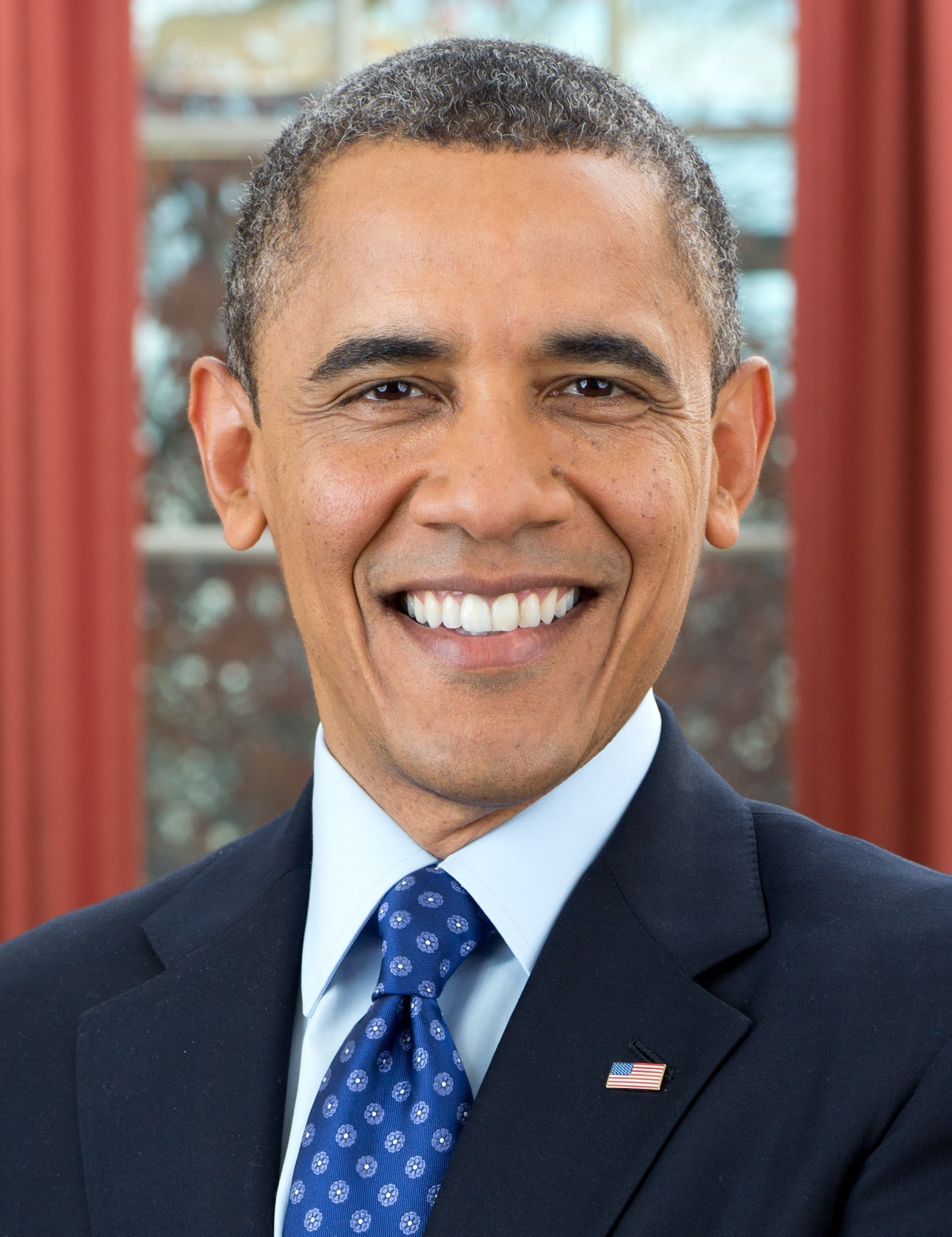
- President Barack Obama
- IssuedNovember 3, 2016
- PublishedNovember 8, 2016
Summary
Executive Order: Advancing the Goals of the Power Africa Initiative to Expand Access to Electricity in Sub- Saharan Africa Through the Establishment of the President's Power Africa Working Group
Document Text
Executive Order 13746 of November 3, 2016

Advancing the Goals of the Power Africa
Initiative to Expand Access to Electricity in Sub-
Saharan Africa Through the Establishment of the
President's Power Africa Working Group

By the authority vested in me as President by the
Constitution and the laws of the United States of
America, it is hereby ordered as follows:

Section 1. Policy. It is the policy of the United
States to partner, consult, and coordinate with African
governments, bilateral and multilateral partners, the
private sector, and civil society to expand access to
electricity and increase electricity generation in Sub-
Saharan Africa, in both urban and rural areas. Through
the Power Africa initiative (Power Africa), we aim to
double access to power in Sub-Saharan Africa by adding
30,000 megawatts (MW) of capacity and 60 million new
household and business connections by 2030, and in so
doing, leapfrog to cleaner forms of energy and foster
inclusive economic growth and opportunity across Sub-
Saharan Africa.

On June 30, 2013, my Administration launched Power
Africa, a new initiative to double access to power in
Sub-Saharan Africa, where more than two-thirds of the
population is without electricity, and more than 85
percent of those living in rural areas lack access to
electricity. In its initial phase, Power Africa aimed
to add more than 10,000 MW of cleaner, more efficient
electricity generation capacity and to increase
electricity access by at least 20 million new
households and commercial entities with on-grid, mini-
grid, and off-grid solutions. Power Africa builds on
Africa's enormous power potential, including extensive
clean geothermal, hydro, wind and solar energy
resources, as well as vast oil and gas reserves. Power
Africa works with countries to develop resources
responsibly, build out power generation, transmission,
and distribution, and expand the reach of mini-grid and
off-grid solutions. Power Africa brings to bear a wide
range of tools from across the Federal Government and
more than 130 public and private sector partners to
support investment in Africa's energy sector. Power
Africa provides coordinated support to help African
partners expand their power networks and access to
electricity, including through policy and regulatory
best practices, institutional capacity building, pre-
feasibility support, grants, long-term financing,
insurance, guarantees, credit enhancements, and
technical assistance.

On August 5, 2014, during the U.S.-Africa Leaders
Summit, my Administration affirmed that Power Africa is
intended to reach across Sub-Saharan Africa, and
tripled Power Africa's goals. Power Africa is now
working toward adding 30,000 MW of new, cleaner
electricity generation capacity and increasing
electricity access by at least 60 million new
connections. On January 28, 2016, my Administration, in
coordination with Power Africa partners, launched the
Power Africa Roadmap, which lays out a concrete plan
for Power Africa to meet its ambitious goals by 2030.

The Electrify Africa Act of 2015, enacted on February
8, 2016 (Public Law 114-121) (the ``Act''), calls for
the development of a strategy to add at least 20,000 MW
of electrical power and promote first-time access to
power and power services for at least 50 million people
in Sub-Saharan Africa by 2020 in both urban and rural
areas--an effort that directly supports and complements
Power Africa's goals. This order furthers the purposes
of the Act and the work that Power Africa has been
undertaking.

Sec. 2. Establishment of the Coordinator for Power
Africa. The United States Agency for International
Development (USAID) shall serve as the lead agency to
facilitate the implementation of Power Africa and
associated activities across the United States
Government. The Administrator of USAID shall establish
the position of Coordinator for Power Africa within
USAID.

Sec. 3. Power Africa Working Group. (a) There is hereby
established the Power Africa Working Group (Working
Group), co-chaired by the Coordinator for Power Africa
within USAID and a member of the National Security
Council (NSC) staff to be designated by the Assistant
to the President for National Security Affairs. The
Working Group shall serve as the multi-agency
coordinating and advisory body for the Federal
Government's efforts to identify, evaluate, prioritize,
and deliver assistance to energy projects across Sub-
Saharan Africa in order to advance the energy access
and electricity generation goals of Power Africa and
promote policy cohesion across the Federal Government.
Through the Working Group, participating departments
and agencies shall provide advice and promote coherence
of United States Government positions on and assistance
for priority energy projects and policy reforms in
support of Power Africa.

(b) The Working Group shall consist of
representatives of the following executive branch
departments and agencies (Participating Agencies):

(i) the Department of State;

(ii) the Department of the Treasury;

(iii) the Department of Agriculture;

(iv) the Department of Commerce;

(v) the Department of Energy;

(vi) the Export-Import Bank of the United States;

(vii) the United States Agency for International Development;

(viii) the Overseas Private Investment Corporation;

(ix) the United States Trade and Development Agency;

(x) the Millennium Challenge Corporation;

(xi) the United States Army Corps of Engineers;

(xii) the Office of Management and Budget; and

(xiii) such other agencies as the Co-Chairs may designate or invite to
participate, including the United States African Development Foundation.

(c) The Working Group may consult with non-United
States Government entities that participate in Power
Africa as bilateral, multilateral, private sector
partners and nongovernmental organizations to provide
input and advice to the United States Government, as
appropriate, regarding the implementation of Power
Africa.
(d) The Working Group may establish sub-groups
consisting exclusively of Working Group members or
their designees, as appropriate, such as one for each
of the three pillars of the Power Africa Roadmap: (1)
megawatts, (2) connections, and (3) unlocking energy
sector potential.
(e) The Working Group shall be supported by the
Office of the Coordinator for Power Africa within
USAID.

Sec. 4. Mission and Functions of the Working Group. The
Working Group, as may be necessary and appropriate to
carry out this order, shall:

(a) Ensure efficient and effective coordination of
energy access activities in Sub-Saharan Africa among
Participating Agencies.
(b) Identify, prioritize, and evaluate potential
Power Africa projects, regulatory and policy reforms,
and programmatic focus areas, including maximizing
deployment of and access to renewable energy.
(c) Identify country and project specific obstacles
to the development of the electricity sector, including
financial and technical assistance needs

and capacity building needs, and identify opportunities
for Participating Agencies to deploy their respective
tools and best practices to advance needed reforms and
accelerate the completion of Power Africa projects.
(d) Enhance coordination among Participating
Agencies to maximize the efficiency and effectiveness
of United States Government development assistance and
other development finance tools as related to Power
Africa priorities.
(e) Facilitate information sharing and coordination
of partnerships between Participating Agencies and
African governments, the private sector, development
partners, and bilateral and multilateral partners to
help advance Power Africa's goals.
(f) Identify appropriate courses of action to
liaise with host governments to advance regulatory and
policy reforms, as well as energy transactions, related
to Power Africa.
(g) Identify best practices for Participating
Agencies to coordinate their engagement with
development partners, including bilateral donors,
development finance institutions, and multilateral
development banks on energy access issues, to ensure
that Power Africa's tools are deployed in a way that is
complementary to and leverages the impact of United
States Government resources.
(h) Meet with private sector partners, as
appropriate, to review Power Africa projects and
activities, and to solicit input regarding technical,
policy, financial or political, obstacles that partners
are encountering in the energy sector across Sub-
Saharan Africa.
(i) Meet with bilateral and multilateral
development partners, as appropriate, to coordinate
country-specific and regional energy access policy
agendas, coordinate deployment of financial resources
and technical expertise to identify and accelerate
Power Africa projects and activities, and review
project pipelines.
(j) Monitor and periodically evaluate Power Africa
projects and activities to measure the effectiveness of
United States Government assistance and other
development finance tools in achieving Power Africa's
electricity generation and access goals, and to share
lessons learned. These evaluations may recommend
reforms to facilitate support for future projects and
activities, and to increase the Working Group's
effectiveness.

Sec. 5. Partnering with African Private Sector
Companies. I hereby direct Participating Agencies to
facilitate as appropriate, to the maximum extent
possible under the law, the participation of local and
regional companies in power, renewable energy, and
climate change projects in low-income countries in
Africa, including through the use of financing and risk
insurance, where appropriate.

Sec. 6. Reporting. The Administrator of USAID, in
coordination with the Participating Agencies, shall
lead in the development of a report, to be transmitted
to the Congress pursuant to section 7 of the Act and
the Presidential Memorandum of August 3, 2016,
``Delegation of Authority Pursuant to Section 4 and
Section 7 of the Electrify Africa Act of 2015,'' on
progress made toward achieving the comprehensive,
integrated, multiyear strategy that was transmitted to
the Congress on August 6, 2016, pursuant to section 4
of the Act, to encourage the efforts of countries in
Sub-Saharan Africa to implement national power
strategies and develop an appropriate mix of power
solutions to provide access to sufficient, reliable,
affordable, and sustainable power in order to reduce
poverty and drive economic growth and job creation.

Sec. 7. General Provisions. (a) Nothing in this order
shall be construed to impair or otherwise affect:

(i) the authority granted by law to an executive department, agency, or the
head thereof, or the status of that department or agency within the Federal
Government; or

(ii) the functions of the Director of the Office of Management and Budget
relating to budgetary, administrative, or legislative proposals.

(b) This order shall be implemented consistent with
applicable law and subject to the availability of
appropriations.
(c) This order is not intended to, and does not,
create any right or benefit, substantive or procedural,
enforceable at law or in equity by any party against
the United States, its departments, agencies, or
entities, its officers, employees, or agents, or any
other person.

THE WHITE HOUSE,

November 3, 2016.