Executive Order
White House Council on Supply Chain Resilience
Document ID
doc_8b9ab4d59df438b6
Number
2024-13810
Citation
89 FR 51949
Context
- TypeExecutive Order
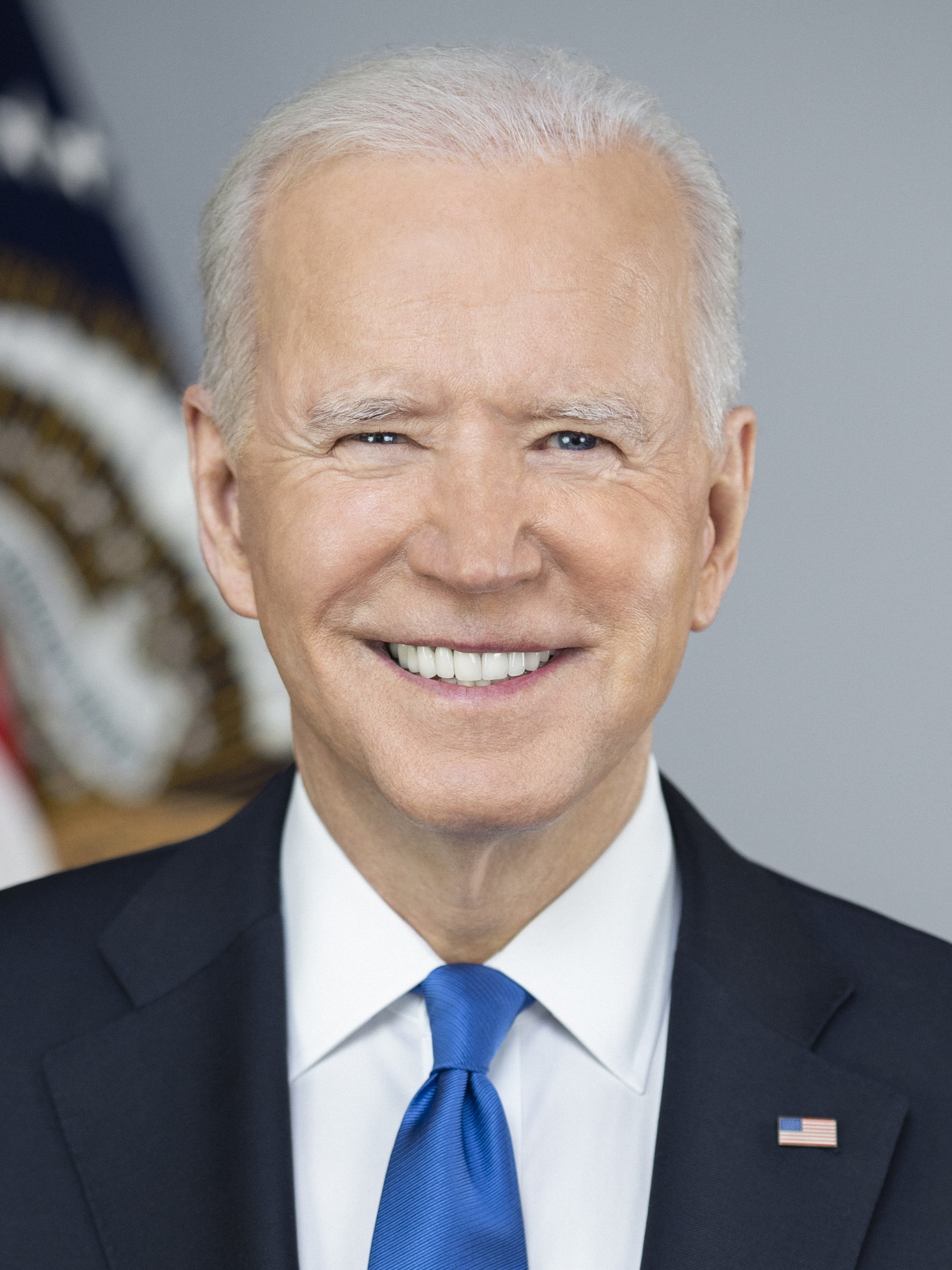
- President Joseph R. Biden Jr.
- IssuedJune 14, 2024
- PublishedJune 21, 2024
Summary
Executive Order: White House Council on Supply Chain Resilience
Document Text
Executive Order 14123 of June 14, 2024

White House Council on Supply Chain Resilience

By the authority vested in me as President by the
Constitution and the laws of the United States of
America, it is hereby ordered as follows:

Section 1. Policy. As described in Executive Order
14017 of February 24, 2021 (America's Supply Chains),
it is the policy of my Administration to strengthen the
enduring resilience of America's supply chains. The
United States needs resilient, diverse, and secure
supply chains to ensure our economic prosperity, public
health, and national security. Pandemics and other
biological threats, cyber attacks, climate stressors
and extreme weather events, transnational corruption,
terrorist attacks, geopolitical disputes, unfair
economic competition, and other disruptive conditions
can reduce critical infrastructure, manufacturing, and
processing capacity and the availability of critical
goods, materials, and services. Building resilient
American supply chains will necessitate enhancing
domestic manufacturing capacity, supporting America's
competitive edge in research and development,
encouraging innovation, reinforcing critical
infrastructure, and creating well-paying jobs. Building
resilient American supply chains will also provide a
foundation to strengthen prosperity, advance the fight
against climate change, enhance national emergency
preparedness, and encourage economic growth across the
Nation.

More resilient supply chains are secure and diverse.
Characteristics of resilient supply chains include
greater domestic production; a diverse and agile
supplier base; built-in redundancies; a reliable
transportation system; secure critical infrastructure;
adequate stockpiles; safe and secure data networks;
reliable food systems; and a world-class, globally
competitive American manufacturing base and workforce.
Close cooperation on building global supply chain
resilience with allies and partners who share our
values will foster collective economic and national
security, encourage innovation, and strengthen the
capacity to respond to and recover from international
disasters and emergencies.

Sec. 2. Definitions. For purposes of this order:

(a) ``Agency'' has the meaning given to that term
in Executive Order 14017.
(b) ``Critical goods and materials'' has the
meaning given to that term in Executive Order 14017.
(c) ``Other essential goods, materials, and
services'' means goods, materials, and services that
are essential to national and economic security,
emergency preparedness, or to advance the policy set
forth in section 1 of this order, but not included
within the definition of ``critical goods and
materials.''
(d) ``Critical infrastructure'' means assets,
systems, and networks, whether physical or virtual,
that are so vital to the United States that their
incapacitation or destruction would have a debilitating
effect on national security, economic security,
national public health or safety, or any combination
thereof.

Sec. 3. Coordination. (a) This order supplements and
reaffirms the principles governing America's supply
chains established in Executive Order 14017. Any
provisions of Executive Order 14017 not amended in this
order shall remain in effect.

(b) Notwithstanding section 2 of Executive Order
14017, the Assistant to the President for National
Security Affairs (APNSA) and the Assistant to the
President for Economic Policy (APEP) shall coordinate,
as appropriate, the executive branch actions necessary
to implement this order through the White House Council
on Supply Chain Resilience (Council) established on
November 27, 2023, and further described in section 4
of this order. In coordinating the work of the Council
on issues related to national security, and on other
issues as they deem appropriate, the APNSA and the APEP
shall work with the Council in conformance with the
interagency process identified in National Security
Memorandum 2 of February 4, 2021 (Renewing the National
Security Council System).

Sec. 4. White House Council on Supply Chain Resilience.
(a) The White House Council on Supply Chain Resilience
residing within the Executive Office of the President
is led by the APNSA and the APEP, who serve as Co-
Chairs of the Council. In addition to the Co-Chairs,
the membership of the Council consists of the following
members:

(i) the Secretary of State;

(ii) the Secretary of the Treasury;

(iii) the Secretary of Defense;

(iv) the Attorney General;

(v) the Secretary of the Interior;

(vi) the Secretary of Agriculture;

(vii) the Secretary of Commerce;

(viii) the Secretary of Labor;

(ix) the Secretary of Health and Human Services;

(x) the Secretary of Housing and Urban Development;

(xi) the Secretary of Transportation;

(xii) the Secretary of Energy;

(xiii) the Secretary of Veterans Affairs;

(xiv) the Secretary of Homeland Security;

(xv) the Administrator of the Environmental Protection Agency;

(xvi) the Director of the Office of Management and Budget;

(xvii) the Director of National Intelligence;

(xviii) the United States Trade Representative;

(xix) the Chair of the Council of Economic Advisers;

(xx) the Administrator of the Small Business Administration;

(xxi) the Director of the Office of Science and Technology Policy;

(xxii) the Assistant to the President and Homeland Security Advisor;

(xxiii) the Assistant to the President and National Climate Advisor;

(xxiv) the National Cyber Director;

(xxv) the Senior Advisor to the President for International Climate Policy;

(xxvi) the Chair of the Council on Environmental Quality;

(xxvii) the Administrator of the National Aeronautics and Space
Administration;

(xxviii) the Administrator of the United States Agency for International
Development;

(xxix) the Director of the Office of Pandemic Preparedness and Response
Policy;

(xxx) the President of the Export-Import Bank of the United States; and

(xxxi) the heads of such other agencies and offices as the Co-Chairs may
from time to time invite to participate.

(b) The Co-Chairs shall invite participation of the
Chairman of the Federal Maritime Commission and the
Chairman of the Surface Transportation Board to the
extent consistent with their statutory authorities and
obligations.
(c) The Council shall coordinate and promote
Federal Government efforts to strengthen long-term
supply chain resilience and American industrial
competitiveness; identify and provide a coordinated
response to address supply chain insecurities, threats,
and vulnerabilities, including excessive geographic or
supplier concentration; and facilitate collaboration by
agencies with allies and partners to foster greater
global supply chain resilience. To serve these
purposes, the Council shall:

(i) recommend to agencies procedures and best practices for agency
cooperation and coordination on data collection and analysis, especially to
the extent that agency missions may overlap or intersect, and help
facilitate such cooperation and coordination;

(ii) identify budgetary and any other resources needed to support supply
chain resilience, including resources to build strong and enduring agency
capabilities to identify, address, mitigate, and prevent supply chain
risks, shocks, and disruptions;

(iii) recommend administrative actions that would further the policy
objectives set forth in section 1 of Executive Order 14017 and in section 1
of this order;

(iv) coordinate with other interagency bodies managing policy areas that
affect the integrity of supply chains; and

(v) coordinate with agencies, to the extent appropriate and consistent with
applicable law, to ensure that agency operations related to building
critical supply chain resilience are conducted in a manner that promotes a
fair, open, and competitive marketplace and empowers workers to advocate
for their rights and quality jobs.

(d) The Council shall, as appropriate and
consistent with applicable law, consult outside
stakeholders--such as private industry; academic and
educational institutions; non-governmental
organizations; labor unions; and State, local, Tribal,
and territorial governments--on an individual basis to
help accomplish the policy objectives identified in
section 1 of this order and in section 1 of Executive
Order 14017. Any member of the Council that receives a
recommendation from a Federal Advisory Committee, as
that term is defined in 5 U.S.C. 1001(2), regarding
industrial resilience and competitiveness or supply
chain risks, resilience, diversity, or sustainability
shall, as appropriate and consistent with applicable
law, share that recommendation with the Council.
(e) The Council shall conduct a quadrennial supply
chain review of industries critical to national or
economic security. The review shall address the
processes in place to monitor supply chains and the
timeliness of the associated data. At the conclusion of
each review, the Council shall submit a report to the
President, with the first report submitted no later
than December 31, 2024, and subsequent reports
submitted every 4 years thereafter. Where practicable
and as appropriate, the report shall make
recommendations concerning:

(i) Federal incentives and any potential amendments to Federal procurement
regulations that may be necessary to attract and retain private sector
investments in the supply chains for critical goods and materials and other
essential goods, materials, and services as defined in section 2 of this
order, including any new programs that could encourage both domestic and
foreign investment in the supply chains for critical goods and materials
and other essential goods, materials, and services;

(ii) a strategic plan that includes diplomatic, economic, security,
international development, trade, and other policy actions to guide United
States engagement with allies and partners, including through regional

economic frameworks or partnerships supported by the United States, to
strengthen global supply chain resilience in critical sectors;

(iii) actions for the insulation of Federal supply chain analyses and
actions from conflicts of interest, corruption, or the appearance of
impropriety to ensure continued integrity and public confidence in supply
chain analyses and actions;

(iv) potential legislative changes that would promote the policy objectives
set forth in section 1 of Executive Order 14017 and in section 1 of this
order;

(v) reforms to domestic and international trade rules and agreements that
could be pursued to support supply chain resilience, security, diversity,
sustainability, and strength;

(vi) education and workforce reforms needed to strengthen the domestic
industrial base for critical goods and materials and other essential goods,
materials, and services; and

(vii) steps to ensure that the Federal Government's supply chain policies
support small businesses and family-owned small- and mid-sized farming
operations, prevent monopolization, strengthen critical infrastructure,
empower workers to advocate for their rights and quality jobs, consider
climate and other health and environmental effects, encourage economic
growth in underserved communities and economically distressed areas, and
promote the geographic dispersal of economic activity across all regions of
the United States.

(f) Subsection (e) of this section supersedes
section 5(c) of Executive Order 14017.
(g) Each member of the Council shall designate,
within 30 days of the date of this order, a senior
official within their respective agency or office who
shall coordinate with the Council and who shall be
responsible for overseeing the agency's or office's
efforts to address supply chain resilience. The Co-
Chairs may designate Council subgroups consisting of
Council members or their designees, as appropriate.
(h) The Council shall meet on a semiannual basis
unless the Co-Chairs determine that a meeting is
unnecessary or that additional meetings are needed.

(i) Each agency or office shall bear its own expenses for participating in
the Council.

Sec. 5. General Provisions. (a) Nothing in this order
shall be construed to impair or otherwise affect:

(i) the authority granted by law to an executive department or agency, or
the head thereof; or

(ii) the functions of the Director of the Office of Management and Budget
relating to budgetary, administrative, or legislative proposals.

(b) This order shall be implemented consistent with
applicable law and subject to the availability of
appropriations.

(c) This order is not intended to, and does not,
create any right or benefit, substantive or procedural,
enforceable at law or in equity by any party against
the United States, its departments, agencies, or
entities, its officers, employees, or agents, or any
other person.

THE WHITE HOUSE,

June 14, 2024.