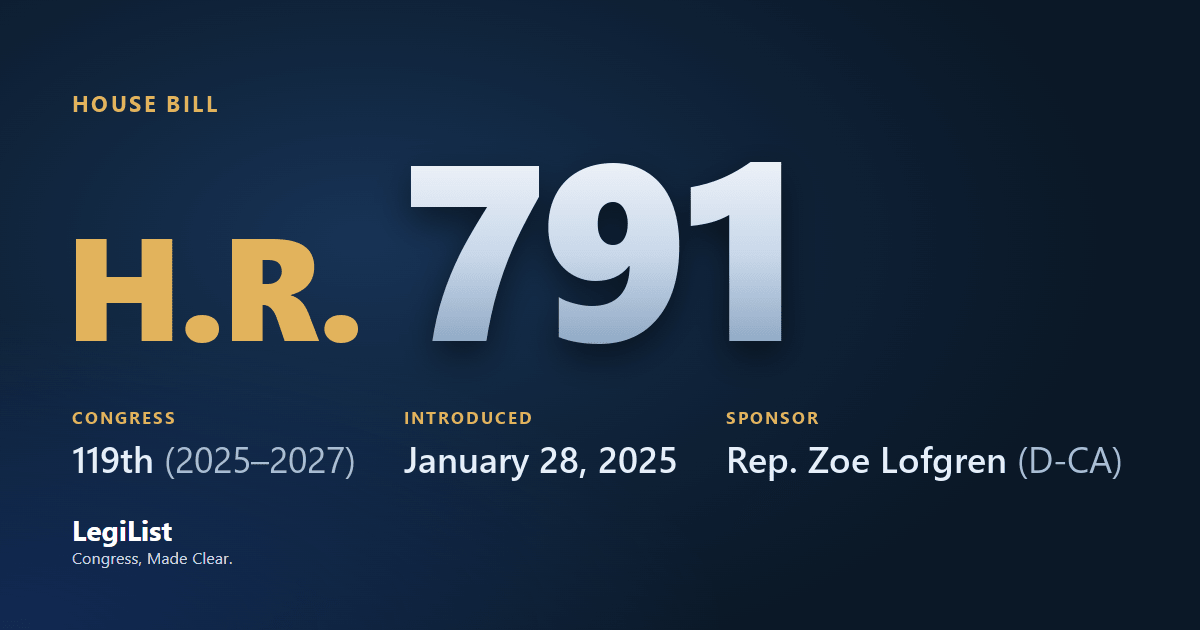
Foreign Anti-Digital Piracy Act
Latest action · Jan 28, 2025 Referred to the House Committee on the Judiciary.
Progress
Where this bill reached, and when. A stage with no date was not reached; one that failed a vote and later carried shows the date it carried.
- IntroducedJan 28, 2025
- Passed HouseNot reached
- Passed SenateNot reached
- To the PresidentNot reached
- Became lawNot reached
Summary
Foreign Anti-Digital Piracy Act or FADPA
This bill establishes a process for copyright owners and exclusive licensees to petition U.S. district courts to block access to foreign websites or online services that engage in copyright infringement.
Specifically, the bill allows a copyright owner or an exclusive licensee of a copyright owner to file a petition in a U.S. district court for the issuance of a preliminary order declaring that a foreign website or online service is engaging in copyright infringement. The petition must show that (1) the transmission through a foreign website or online service of a copyrighted work or live event likely infringes on the exclusive right of the owner or licensee to reproduce, distribute, publicly perform, or publicly display such work; and (2) the owner or licensee is likely to suffer irreparable harm as a result of the infringement.
The bill outlines the process and the time frame for the court to issue a preliminary order.
After obtaining a preliminary order, the copyright owner or licensee may request for the court to issue a blocking order that requires certain broadband service providers to take measures to prevent their users from accessing the foreign website or online service identified in the order. The bill outlines the terms and conditions of such an order.
The court may require the copyright owner or licensee to pay the reasonable costs and expenses directly incurred by the service provider to comply with the order.
The bill includes liability protections for service providers.
Cosponsors
Members who signed on, in the order they did.
Committees 1
Where it was sent and what each committee and subcommittee did with it, in order.
| Chamber | Committee | What it did |
|---|---|---|
| House | Judiciary Committee | Referred Jan 28, 2025 |
Actions 2
Everything that happened, newest first.
- Jan 28, 2025Introduced in House
- Jan 28, 2025Referred to the House Committee on the Judiciary.
Research
What has been written about this bill: committee reports, cost estimates, the sponsor’s authority statement, printed hearings and the Congressional Research Service’s work.
Constitutional authority
The sponsor’s statement, as printed in the Congressional Record, vol. 171, no. 18, January 28, 2025, page H407.
CRS reports 1
Congressional Research Service work that CRS links to this bill or the law it became, newest first.
Cite it 1
Products on other subjects that cite it, usually among other measures.
| Product | Title | Kind | Published |
|---|---|---|---|
| R48902 | Internet Architecture: A Layer-Based Analysis of Selected Internet Policy Issues | Report | Apr 10, 2026 |
Titles 2
Every title it has carried, official and short, at each stage.
- Official Title as Introduced
- To amend title 17, United States Code, to provide for blocking orders relating to specifically identified infringing foreign websites or online services, and for other purposes.
- Short Title(s) as Introduced
- Foreign Anti-Digital Piracy Act
Subjects
Assigned by the Library of Congress. Policy area: Commerce.
Text 1
Each version as it was printed, newest first.
- Jan 28, 2025Introduced in House
Support LegiList
This page is free, carries no paywall, and is built and maintained by one person. If the record here is useful to you, a few dollars keeps it going.
Everything here is as published by Congress: the summary is the Congressional Research Service's, the action wording is the clerks', and the subjects are the Library of Congress's. How far it got is read from the actions themselves, taking the most recent one of each kind, so a bill that failed a vote and later passed is shown as having passed. Records come from this bill on Congress.gov and govinfo.gov; cost estimates are the Congressional Budget Office's, and the hearings are the printed hearings GovInfo publishes, which can appear months after the hearing.