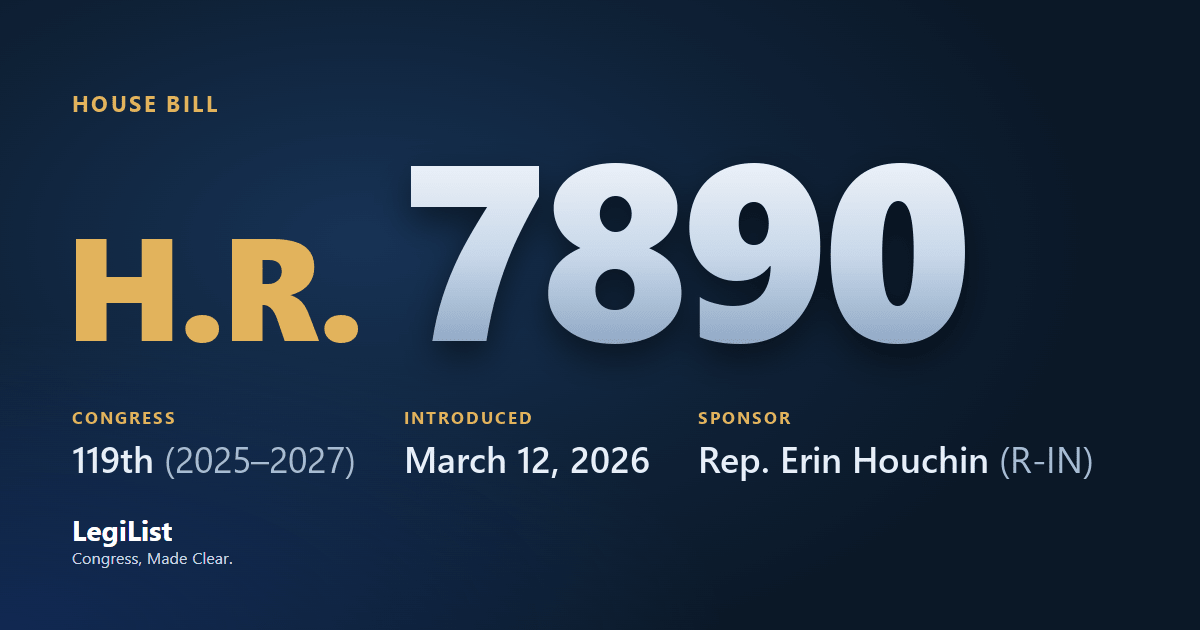
Science of Reading Act of 2026
Latest action · Sep 17, 2026 Received in the Senate and Read twice and referred to the Committee on Health, Education, Labor, and Pensions.
Progress
Where this bill reached, and when. A stage with no date was not reached; one that failed a vote and later carried shows the date it carried.
- IntroducedMar 12, 2026
- Passed HouseSep 16, 2026
- Passed SenateNot reached
- To the PresidentNot reached
- Became lawNot reached
Summary
Science of Reading Act of 2026
This bill revises the Comprehensive Literacy State Development (CLSD) grant program to prioritize literacy instruction that is aligned to the science of reading.
Under the bill, science of reading is defined as an interdisciplinary body of evidence-based research about reading and issues related to reading and writing that (1) identifies instruction in phonemic awareness, phonics, vocabulary, fluency, comprehension, and writing as essential components to skilled reading; (2) demonstrates the importance of background knowledge, oral language, the connection between reading and writing, and strong writing instruction; (3) explains why some students have difficulty with reading and writing; and (4) does not use a three-cueing model. Three-cueing model means an instructional approach or model that (1) uses meaning drawn from context, pictures, or syntax as the primary basis for teaching word recognition; or (2) teaches visual memory as the primary basis for word recognition.
Current law authorizes competitive CLSD grants to state educational agencies (SEAs) and, through them, competitive subgrants to local educational agencies for the development and implementation of a comprehensive literacy instruction plan, professional development, and other activities. Eligible early childhood education programs may also receive subgrants for early literacy services.
The bill (1) specifies that comprehensive literacy instruction for CLSD grants does not include the use of a three-cueing model, and (2) requires the Department of Education and SEAs to prioritize awarding CLSD grants and subgrants for evidence-based activities that are aligned to the science of reading.
Cosponsors 3
Members who signed on, in the order they did. Signatures ran from Mar 12, 2026 to Mar 18, 2026; 2 are original cosponsors, there from the day it was introduced.
| Seat | Cosponsor | Signed on | |
|---|---|---|---|
| D-NY | John W. Mannion | Original | Mar 12, 2026 |
| R-CA | Kevin Kiley | Original | Mar 12, 2026 |
| R-NC | Virginia Foxx | Mar 18, 2026 |
Committees 2
Where it was sent and what each committee and subcommittee did with it, in order.
| Chamber | Committee | What it did |
|---|---|---|
| House | Education and Workforce Committee | Referred Mar 12, 2026Markup Mar 17, 2026Reported Jun 29, 2026 |
| Senate | Health, Education, Labor, and Pensions Committee | Referred Sep 17, 2026 |
Actions 12
Everything that happened, newest first.
- Sep 17, 2026Received in the Senate and Read twice and referred to the Committee on Health, Education, Labor, and Pensions.
- Sep 16, 2026Considered under suspension of the rules. (consideration: CR H5911-5913)
- Sep 16, 2026Mr. Walberg moved to suspend the rules and pass the bill, as amended.
- Sep 16, 2026DEBATE - The House proceeded with forty minutes of debate on H.R. 7890.
- Sep 16, 2026Passed/agreed to in House: On motion to suspend the rules and pass the bill, as amended Agreed to by voice vote. (text: CR H5911)
- Sep 16, 2026Motion to reconsider laid on the table Agreed to without objection.
- Jun 29, 2026Reported (Amended) by the Committee on Education and Workforce. H. Rept. 119-717.
- Jun 29, 2026Placed on the Union Calendar, Calendar No. 623.
- Mar 17, 2026Committee Consideration and Mark-up Session Held
- Mar 17, 2026Ordered to be Reported (Amended) by the Yeas and Nays: 33 - 0.
- Mar 12, 2026Introduced in House
- Mar 12, 2026Referred to the House Committee on Education and Workforce.
In the Congressional Record 3
Days the Record’s own index lists this bill, newest first, with the pages and the members it names. Pages starting H are the House, S the Senate, E Extensions of Remarks.
| Where | In the Record | Members | Date |
|---|---|---|---|
| House | Debate and remarks H5911–H5913Text printed H5911 | Erin Houchin R-IN, John W. Mannion D-NY, Robert C. "Bobby" Scott D-VA, Tim Walberg R-MI | Sep 16, 2026 |
| House | Debate and remarks H2616 | Kevin Kiley R-CA | Mar 19, 2026 |
| House | Lists H2483H.R. 7890–7933 | — | Mar 12, 2026 |
Research
What has been written about this bill: committee reports, cost estimates, the sponsor’s authority statement, printed hearings and the Congressional Research Service’s work.
Committee report
Titles 6
Every title it has carried, official and short, at each stage.
- Official Title as Introduced
- To amend the Elementary and Secondary Education Act of 1965 to exclude certain instructional approaches from comprehensive literacy instruction, to prioritize certain funds to promote the use of evidence-based literacy instruction and supports aligned to the science of reading, and for other purposes.
- Short Title(s) as Introduced
- Science of Reading Act of 2026
- Short Title(s) as Reported to House
- Science of Reading Act of 2026
- Short Title(s) as Passed House
- Science of Reading Act of 2026
- Short Titles from RFS (Referred to Senate) bill text
- Science of Reading Act of 2026
- Official Title from EH (Engrossed in House) bill text
- To amend the Elementary and Secondary Education Act of 1965 to exclude certain instructional approaches from comprehensive literacy instruction, to prioritize certain funds to promote the use of evidence-based literacy instruction and supports aligned to the science of reading, and for other purposes.
Subjects
Assigned by the Library of Congress. Policy area: Education.
Text 4
Each version as it was printed, newest first.
- Sep 17, 2026Referred in Senate
- Sep 16, 2026Engrossed in House
- Jun 29, 2026Reported in House
- Mar 12, 2026Introduced in House
Everything here is as published by Congress: the summary is the Congressional Research Service's, the action wording is the clerks', and the subjects are the Library of Congress's. How far it got is read from the actions themselves, taking the most recent one of each kind, so a bill that failed a vote and later passed is shown as having passed. Records come from this bill on Congress.gov and govinfo.gov; cost estimates are the Congressional Budget Office's, and the hearings are the printed hearings GovInfo publishes, which can appear months after the hearing.