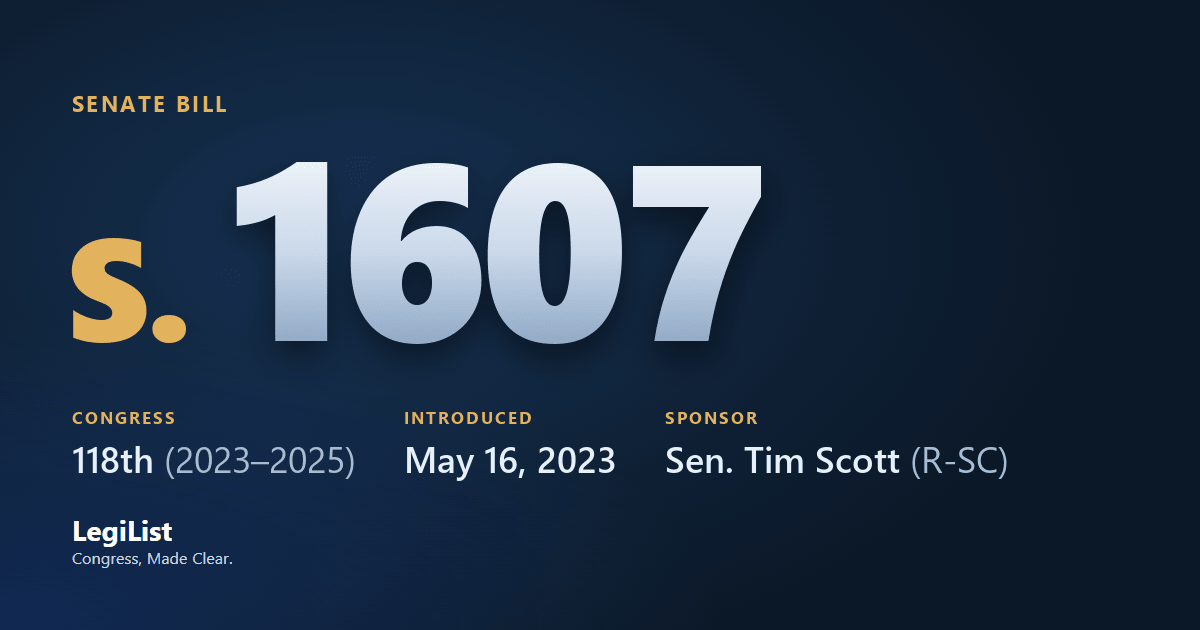
Repair Abuses of MSP Payments (RAMP) Act
Latest action · May 16, 2023 Read twice and referred to the Committee on Finance.
Progress
Where this bill reached, and when. A stage with no date was not reached; one that failed a vote and later carried shows the date it carried.
- IntroducedMay 16, 2023
- Passed SenateNot reached
- Passed HouseNot reached
- To the PresidentNot reached
- Became lawNot reached
Summary
Repair Abuses of MSP Payments (RAMP) Act
This bill restricts the private right of action against insurance plans that do not provide appropriate primary payment in cases in which Medicare is a secondary payer.
Current law allows for a private right of action against primary plans that do not provide appropriate primary payment in cases in which Medicare is a secondary payer; this provision applies to group health plans, workers' compensation plans, automobile or liability insurance plans, and no-fault insurance plans. The bill limits this provision to group health plans.
Cosponsors 1
Members who signed on, in the order they did. All signed on May 16, 2023.
| Seat | Cosponsor | Signed on | |
|---|---|---|---|
| D-NH | Margaret Wood Hassan | Original | May 16, 2023 |
Actions 2
Everything that happened, newest first.
- May 16, 2023Introduced in Senate
- May 16, 2023Read twice and referred to the Committee on Finance.
Related bills 1
Companion bills and other measures the record links to this one.
| Bill | Title | Relationship | Latest action |
|---|---|---|---|
| HR 3388 | RAMP Act | Related bill | May 19, 2023 |
Subjects
Assigned by the Library of Congress. Policy area: Health.
Text 1
Each version as it was printed, newest first.
- May 16, 2023Introduced in Senate
Everything here is as published by Congress: the summary is the Congressional Research Service's, the action wording is the clerks', and the subjects are the Library of Congress's. How far it got is read from the actions themselves, taking the most recent one of each kind, so a bill that failed a vote and later passed is shown as having passed. Records come from this bill on Congress.gov and govinfo.gov.