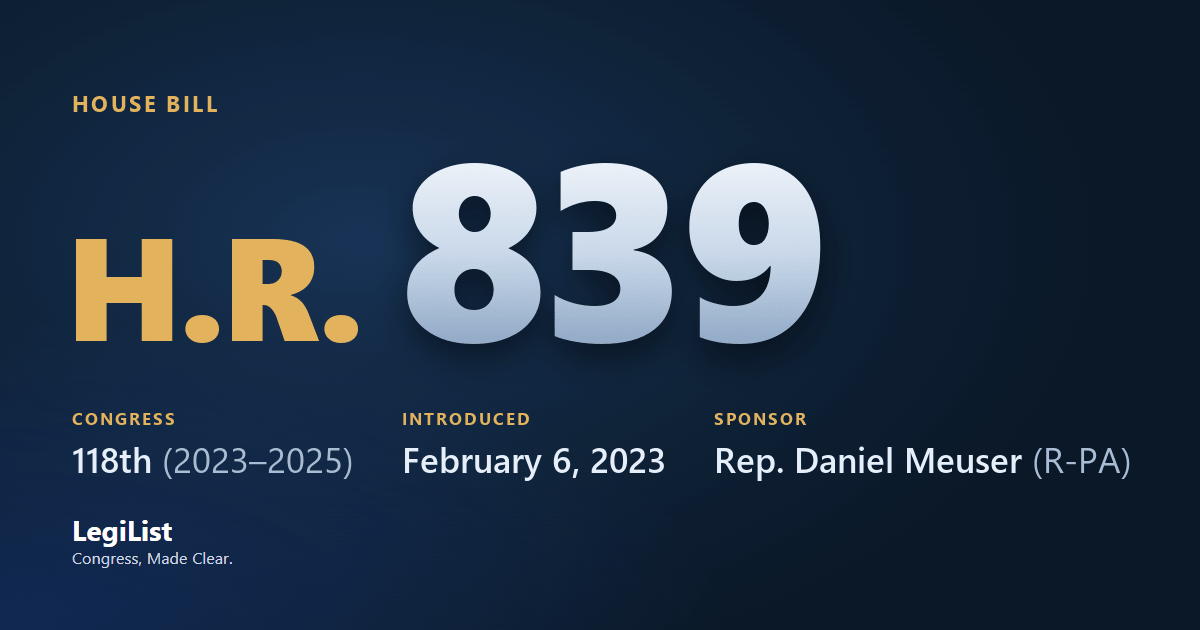
China Exchange Rate Transparency Act of 2023
Latest action · Jan 16, 2024 Received in the Senate and Read twice and referred to the Committee on Foreign Relations.
Progress
Where this bill reached, and when. A stage with no date was not reached; one that failed a vote and later carried shows the date it carried.
- IntroducedFeb 6, 2023
- Passed HouseJan 12, 2024
- Passed SenateNot reached
- To the PresidentNot reached
- Became lawNot reached
Summary
China Exchange Rate Transparency Act of 2023
This bill requires the U.S. Executive Director at the International Monetary Fund (IMF) to use the voice and vote of the United States to advocate for increased exchange rate transparency from China.
Some areas of focus for this advocacy are (1) Chinese exchange rate arrangements, including any indirect foreign exchange market intervention through Chinese financial institutions or state-owned enterprises; (2) enhanced multilateral and bilateral surveillance by the IMF; and (3) stronger consideration of China's performance as a responsible stakeholder in the international monetary system when evaluating quota and voting shares at the IMF.
The requirements of the bill expire seven years and 30 days after the date of the bill's enactment or earlier if China meets certain conditions regarding its exchange rate policies.
Recorded votes 1
Newest first. Open one to see how every member voted.
| Roll call | Question | Result | Date |
|---|---|---|---|
| House 9 | On Motion to Suspend the Rules and Pass, as Amended | Passed379–1 | Jan 12, 2024 |
Cosponsors 6
Members who signed on, in the order they did. Signatures ran from Feb 6, 2023 to Jun 15, 2023; 2 are original cosponsors, there from the day it was introduced.
| Seat | Cosponsor | Signed on | |
|---|---|---|---|
| R-GA | Barry Loudermilk | Original | Feb 6, 2023 |
| R-FL | Byron Donalds | Original | Feb 6, 2023 |
| R-NY | Michael Lawler | Feb 28, 2023 | |
| D-NC | Wiley Nickel | Feb 28, 2023 | |
| D-NV | Susie Lee | Mar 10, 2023 | |
| R-TX | Monica De La Cruz | Jun 15, 2023 |
Committees 2
Where it was sent and what each committee and subcommittee did with it, in order.
| Chamber | Committee | What it did |
|---|---|---|
| House | Financial Services Committee | Referred Feb 6, 2023Markup Feb 28, 2023Reported Dec 1, 2023 |
| Senate | Foreign Relations Committee | Referred Jan 16, 2024 |
Actions 14
Everything that happened, newest first.
- Jan 16, 2024Received in the Senate and Read twice and referred to the Committee on Foreign Relations.
- Jan 12, 2024Considered as unfinished business. (consideration: CR H124)
- Jan 12, 2024Passed/agreed to in House: On motion to suspend the rules and pass the bill, as amended Agreed to by the Yeas and Nays: (2/3 required): 379 - 1 (Roll no. 9). (text: 1/10/2024 CR H35)
- Jan 12, 2024Motion to reconsider laid on the table Agreed to without objection.
- Jan 10, 2024Mr. McHenry moved to suspend the rules and pass the bill, as amended.
In the Congressional Record 3
Days the Record’s own index lists this bill, newest first, with the pages and the members it names. Pages starting H are the House, S the Senate, E Extensions of Remarks.
| Where | In the Record | Members | Date |
|---|---|---|---|
| House | Recorded votes H124enact | — | Jan 12, 2024 |
| House | Debate and remarks H35–H37Text printed H35 | Daniel Meuser R-PA, Joyce Beatty D-OH, Patrick T. McHenry R-NC | Jan 10, 2024 |
| House | Debate and remarks H2971 | Wiley Nickel D-NC | Jun 20, 2023 |
Research
What has been written about this bill: committee reports, cost estimates, the sponsor’s authority statement, printed hearings and the Congressional Research Service’s work.
Committee report
Congressional Budget Office cost estimate
- Mar 10, 2023H.R. 839, China Exchange Rate Transparency Act of 2023As ordered reported by the House Committee on Financial Services on February 28, 2023
Constitutional authority
The sponsor’s statement, as printed in the Congressional Record, vol. 169, no. 24, February 6, 2023, page H710.
Printed hearings 1
Hearings whose printed record names this bill, newest first: hearings on it, and wider hearings where it came up.
| Number | Hearing | Committee | Held |
|---|---|---|---|
| Serial No. 118-1 | COMBATTING THE ECONOMIC THREAT FROM CHINA143 pages | Financial Services Committee | Feb 7, 2023 |
CRS reports 1
Congressional Research Service work that CRS links to this bill or the law it became, newest first.
Cite it 1
Products on other subjects that cite it, usually among other measures.
| Product | Title | Kind | Published |
|---|---|---|---|
| IF10049 | Exchange Rates and Currency Manipulation | Resource | Jan 10, 2025 |
Related bills 1
Companion bills and other measures the record links to this one.
| Bill | Title | Relationship | Latest action |
|---|---|---|---|
| S 4418 | China Exchange Rate Transparency Act of 2024 | Related bill | May 23, 2024 |
Titles 5
Every title it has carried, official and short, at each stage.
- Official Title as Introduced
- To require the United States Executive Director at the International Monetary Fund to advocate for increased transparency with respect to exchange rate policies of the People's Republic of China, and for other purposes.
- Short Title(s) as Introduced
- China Exchange Rate Transparency Act of 2023
- Short Title(s) as Reported to House
- China Exchange Rate Transparency Act of 2023
- Short Title(s) as Passed House
- China Exchange Rate Transparency Act of 2023
- Short Titles from RFS (Referred to Senate) bill text
- China Exchange Rate Transparency Act of 2023
Subjects
Assigned by the Library of Congress. Policy area: International Affairs.
Text 4
Each version as it was printed, newest first.
- Jan 16, 2024Referred in Senate
- Jan 12, 2024Engrossed in House
- Dec 1, 2023Reported in House
- Feb 6, 2023Introduced in House
Support LegiList
This page is free, carries no paywall, and is built and maintained by one person. If the record here is useful to you, a few dollars keeps it going.
Everything here is as published by Congress: the summary is the Congressional Research Service's, the action wording is the clerks', and the subjects are the Library of Congress's. How far it got is read from the actions themselves, taking the most recent one of each kind, so a bill that failed a vote and later passed is shown as having passed. Records come from this bill on Congress.gov and govinfo.gov; cost estimates are the Congressional Budget Office's, and the hearings are the printed hearings GovInfo publishes, which can appear months after the hearing.