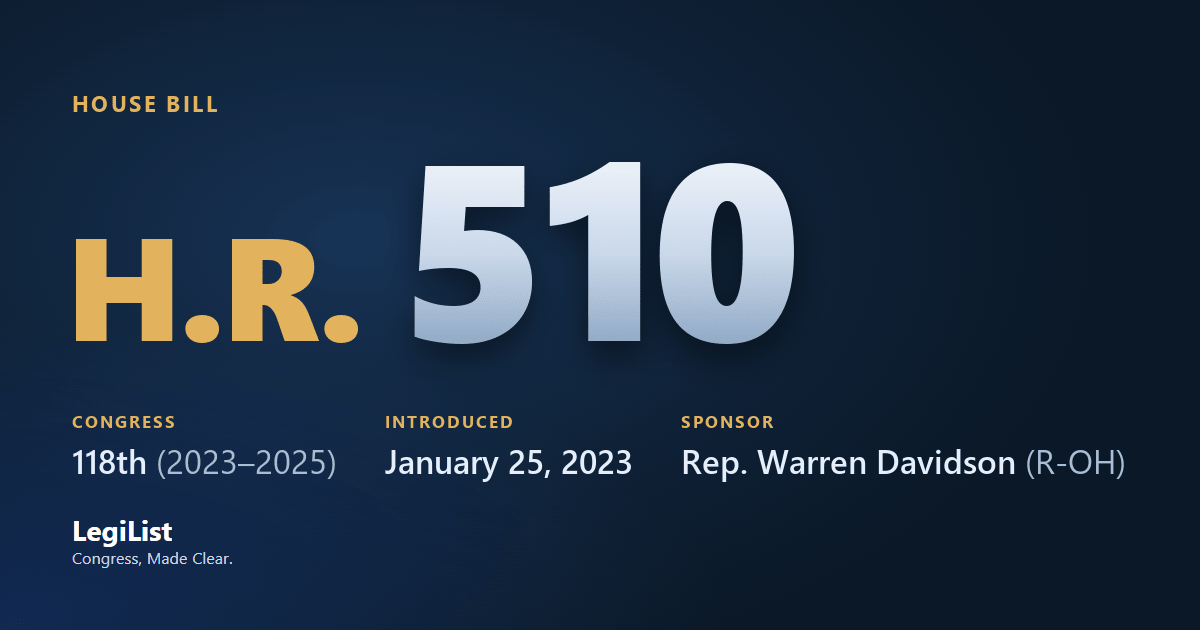
Chinese Currency Accountability Act of 2023
Latest action · Sep 10, 2024 Received in the Senate and Read twice and referred to the Committee on Foreign Relations.
Progress
Where this bill reached, and when. A stage with no date was not reached; one that failed a vote and later carried shows the date it carried.
- IntroducedJan 25, 2023
- Passed HouseSep 9, 2024
- Passed SenateNot reached
- To the PresidentNot reached
- Became lawNot reached
Summary
Chinese Currency Accountability Act of 2023
This bill requires the United States to oppose, absent specified conditions, any increase in the weight of Chinese currency (i.e., the renminbi) in the basket of currencies (currently, a set of five currencies, each with different weightings) used to determine the value of Special Drawing Rights. Special Drawing Rights are a currency support tool available to members of the International Monetary Fund (IMF).
Specifically, the Department of the Treasury must instruct certain U.S. officials at the IMF to oppose any such increase unless Treasury has certified that China is in compliance with certain standards and international agreements, including that (1) China is in compliance with all general obligations of members of the IMF, and (2) China has not been found to have manipulated its currency in the preceding 12 months.
Cosponsors 2
Members who signed on, in the order they did. Signatures ran from Feb 27, 2023 to Mar 9, 2023.
| Seat | Cosponsor | Signed on | |
|---|---|---|---|
| R-NY | Michael Lawler | Feb 27, 2023 | |
| D-NV | Susie Lee | Mar 9, 2023 |
Committees 2
Where it was sent and what each committee and subcommittee did with it, in order.
| Chamber | Committee | What it did |
|---|---|---|
| House | Financial Services Committee | Referred Jan 25, 2023Markup Feb 28, 2023Reported Dec 1, 2023 |
| Senate | Foreign Relations Committee | Referred Sep 10, 2024 |
Actions 12
Everything that happened, newest first.
- Sep 10, 2024Received in the Senate and Read twice and referred to the Committee on Foreign Relations.
- Sep 9, 2024Mrs. Kim (CA) moved to suspend the rules and pass the bill, as amended.
- Sep 9, 2024Considered under suspension of the rules. (consideration: CR H5041-5042)
- Sep 9, 2024DEBATE - The House proceeded with forty minutes of debate on H.R. 510.
- Sep 9, 2024Passed/agreed to in House: On motion to suspend the rules and pass the bill, as amended Agreed to by voice vote. (text: CR H5041)
- Sep 9, 2024Motion to reconsider laid on the table Agreed to without objection.
- Dec 1, 2023Reported (Amended) by the Committee on Financial Services. H. Rept. 118-294.
- Dec 1, 2023Placed on the Union Calendar, Calendar No. 238.
- Feb 28, 2023Committee Consideration and Mark-up Session Held.
- Feb 28, 2023Ordered to be Reported in the Nature of a Substitute (Amended) by the Yeas and Nays: 40 - 0.
- Jan 25, 2023Introduced in House
- Jan 25, 2023Referred to the House Committee on Financial Services.
In the Congressional Record 1
Days the Record’s own index lists this bill, newest first, with the pages and the members it names. Pages starting H are the House, S the Senate, E Extensions of Remarks.
| Where | In the Record | Members | Date |
|---|---|---|---|
| House | Debate and remarks H5041, H5042Text printed H5041 | Brad Sherman D-CA, Warren Davidson R-OH, Young Kim R-CA | Sep 9, 2024 |
Research
What has been written about this bill: committee reports, cost estimates, the sponsor’s authority statement, printed hearings and the Congressional Research Service’s work.
Committee report
Congressional Budget Office cost estimate
- Mar 16, 2023H.R. 510, Chinese Currency Accountability Act of 2023As ordered reported by the House Committee on Financial Services on February 28, 2023
Constitutional authority
The sponsor’s statement, as printed in the Congressional Record, vol. 169, no. 16, January 25, 2023, page H325.
Printed hearings 1
Hearings whose printed record names this bill, newest first: hearings on it, and wider hearings where it came up.
| Number | Hearing | Committee | Held |
|---|---|---|---|
| Serial No. 118-1 | COMBATTING THE ECONOMIC THREAT FROM CHINA143 pages | Financial Services Committee | Feb 7, 2023 |
Related bills 3
Companion bills and other measures the record links to this one.
| Bill | Title | Relationship | Latest action |
|---|---|---|---|
| S 1919 | Chinese Currency Accountability Act of 2023 | Identical bill | Jun 8, 2023 |
| HR 3866 | Chinese Currency Accountability Act of 2021 | Reintroduction of | Jun 14, 2021 |
| HR 7476 | Countering Communist China Act | Related bill | Dec 17, 2024 |
Titles 5
Every title it has carried, official and short, at each stage.
- Official Title as Introduced
- To require the United States Governor of, and the United States Executive Director at, the International Monetary Fund to oppose an increase in the weight of the Chinese renminbi in the Special Drawing Rights basket of the Fund, and for other purposes.
- Short Title(s) as Introduced
- Chinese Currency Accountability Act of 2023
- Short Title(s) as Reported to House
- Chinese Currency Accountability Act of 2023
- Short Title(s) as Passed House
- Chinese Currency Accountability Act of 2023
- Short Titles from RFS (Referred to Senate) bill text
- Chinese Currency Accountability Act of 2023
Subjects
Assigned by the Library of Congress. Policy area: Foreign Trade and International Finance.
Text 4
Each version as it was printed, newest first.
- Sep 10, 2024Referred in Senate
- Sep 9, 2024Engrossed in House
- Dec 1, 2023Reported in House
- Jan 25, 2023Introduced in House
Support LegiList
This page is free, carries no paywall, and is built and maintained by one person. If the record here is useful to you, a few dollars keeps it going.
Everything here is as published by Congress: the summary is the Congressional Research Service's, the action wording is the clerks', and the subjects are the Library of Congress's. How far it got is read from the actions themselves, taking the most recent one of each kind, so a bill that failed a vote and later passed is shown as having passed. Records come from this bill on Congress.gov and govinfo.gov; cost estimates are the Congressional Budget Office's, and the hearings are the printed hearings GovInfo publishes, which can appear months after the hearing.