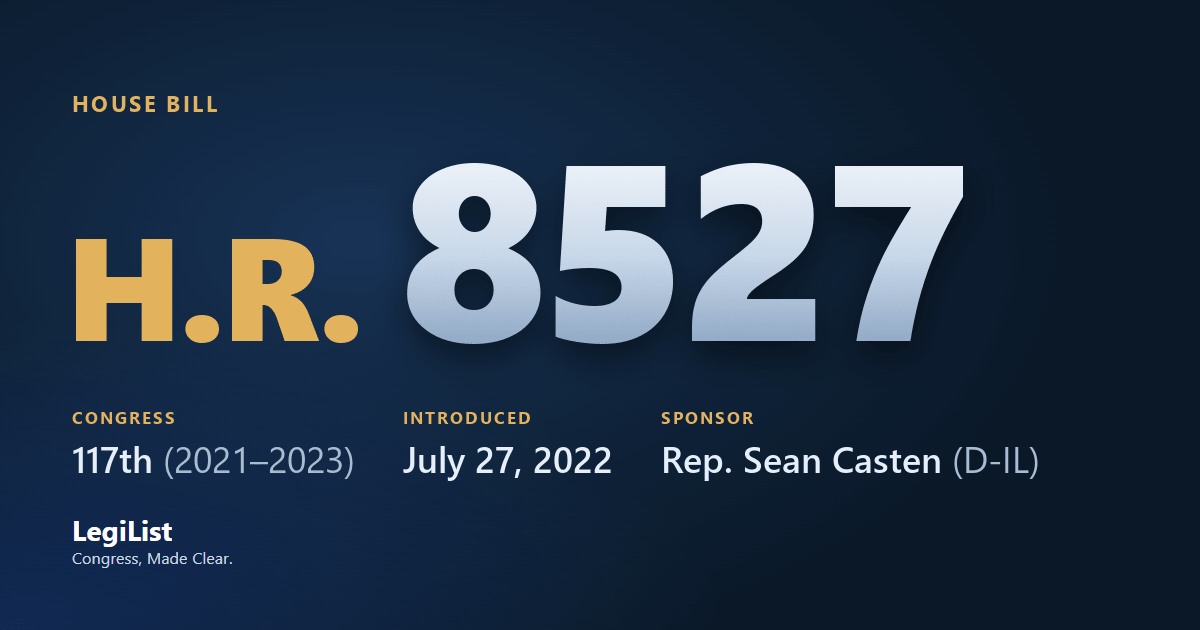
Conservation Opportunity and Voluntary Environment Resilience Program Act
Latest action · Oct 4, 2022 Referred to the Subcommittee on General Farm Commodities and Risk Management.
Progress
Where this bill reached, and when. A stage with no date was not reached; one that failed a vote and later carried shows the date it carried.
- IntroducedJul 27, 2022
- Passed HouseNot reached
- Passed SenateNot reached
- To the PresidentNot reached
- Became lawNot reached
Summary
Conservation Opportunity and Voluntary Environment Resilience Program Act or the COVER Act
This bill directs the Department of Agriculture to establish a Good Steward Cover Crop Program to provide producers additional premium subsidies when they plant cover crops.
Additionally, the Federal Crop Insurance Corporation must carry out a pilot program under which a producer who uses innovative soil health practices may receive additional premium subsidies on multi-peril crop insurance.
Cosponsors 1
Members who signed on, in the order they did. All signed on Jul 27, 2022.
| Seat | Cosponsor | Signed on | |
|---|---|---|---|
| D-IA | Cynthia Axne | Original | Jul 27, 2022 |
Actions 3
Everything that happened, newest first.
- Oct 4, 2022Referred to the Subcommittee on General Farm Commodities and Risk Management.
- Jul 27, 2022Introduced in House
- Jul 27, 2022Referred to the House Committee on Agriculture.
Subjects
Assigned by the Library of Congress. Policy area: Agriculture and Food.
Text 1
Each version as it was printed, newest first.
- Jul 27, 2022Introduced in House
Everything here is as published by Congress: the summary is the Congressional Research Service's, the action wording is the clerks', and the subjects are the Library of Congress's. How far it got is read from the actions themselves, taking the most recent one of each kind, so a bill that failed a vote and later passed is shown as having passed. Records come from this bill on Congress.gov and govinfo.gov.