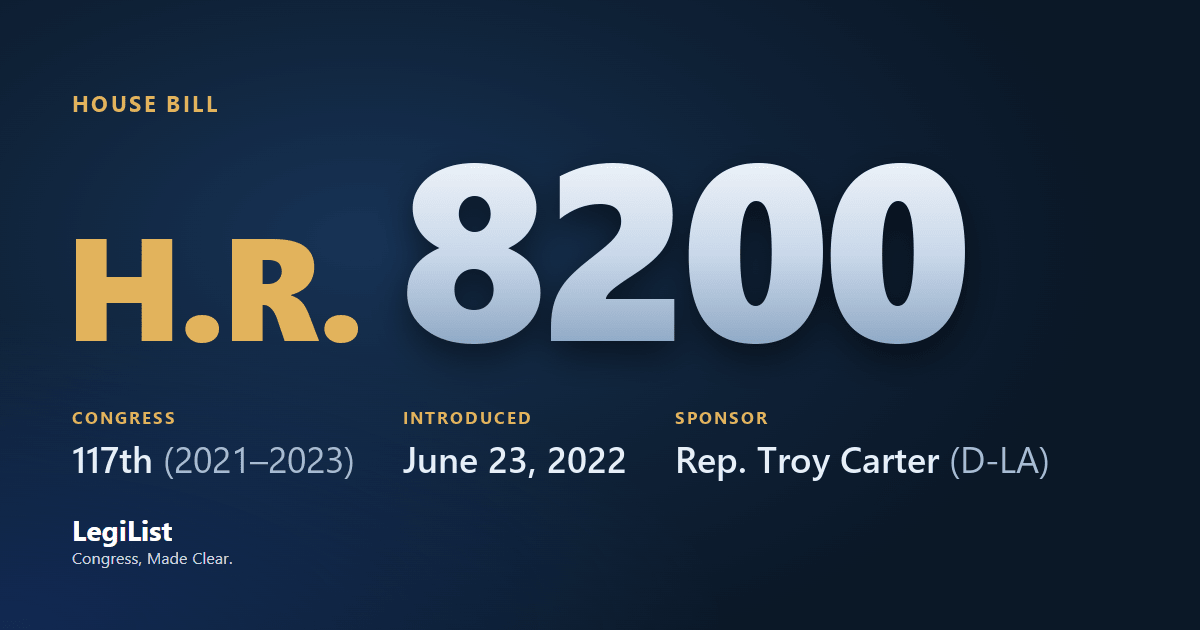
CLIMB Act
Latest action · Jun 23, 2022 Referred to the House Committee on Financial Services.
Progress
Where this bill reached, and when. A stage with no date was not reached; one that failed a vote and later carried shows the date it carried.
- IntroducedJun 23, 2022
- Passed HouseNot reached
- Passed SenateNot reached
- To the PresidentNot reached
- Became lawNot reached
Summary
Capital Lending and Investment for Marijuana Businesses Act or the CLIMB Act
This bill allows national stock exchanges to list state-licensed cannabis-related businesses on their exchanges. It also prohibits a federal agency from bringing certain civil, criminal, regulatory, or administrative actions against a business or person because they provide assistance or services to a state-licensed cannabis-related business.
Cosponsors 4
Members who signed on, in the order they did. Signatures ran from Jun 23, 2022 to Sep 28, 2022; 1 is an original cosponsor, there from the day it was introduced.
| Seat | Cosponsor | Signed on | |
|---|---|---|---|
| R-PA | Guy Reschenthaler | Original | Jun 23, 2022 |
| R-OH | David P. Joyce | Jul 28, 2022 | |
| D-PA | Dwight Evans | Jul 28, 2022 | |
| D-NY | Patrick Ryan | Sep 28, 2022 |
Committees 1
Where it was sent and what each committee and subcommittee did with it, in order.
| Chamber | Committee | What it did |
|---|---|---|
| House | Financial Services Committee | Referred Jun 23, 2022 |
Actions 2
Everything that happened, newest first.
- Jun 23, 2022Introduced in House
- Jun 23, 2022Referred to the House Committee on Financial Services.
Research
What has been written about this bill: committee reports, cost estimates, the sponsor’s authority statement, printed hearings and the Congressional Research Service’s work.
Constitutional authority
The sponsor’s statement, as printed in the Congressional Record, vol. 168, no. 107, June 23, 2022, page H5878.
CRS reports 1
Congressional Research Service work that CRS links to this bill or the law it became, newest first.
Cite it 1
Products on other subjects that cite it, usually among other measures.
| Product | Title | Kind | Published |
|---|---|---|---|
| R45948 | The Controlled Substances Act (CSA): A Legal Overview for the 119th Congress | Report | Jan 22, 2025 |
Titles 3
Every title it has carried, official and short, at each stage.
- Official Title as Introduced
- To amend any applicable Federal law to permit access to community development, small business, minority development, and any other public or private financial capital sources for investment in and financing of cannabis-related legitimate businesses, and to amend the Securities Exchange Act of 1934 to create a safe harbor for national securities exchanges to list the securities of issuers that are cannabis-related legitimate businesses.
- Short Title(s) as Introduced
- CLIMB Act
- Capital Lending and Investment for Marijuana Businesses Act
Subjects
Assigned by the Library of Congress. Policy area: Finance and Financial Sector.
Text 1
Each version as it was printed, newest first.
- Jun 23, 2022Introduced in House
Everything here is as published by Congress: the summary is the Congressional Research Service's, the action wording is the clerks', and the subjects are the Library of Congress's. How far it got is read from the actions themselves, taking the most recent one of each kind, so a bill that failed a vote and later passed is shown as having passed. Records come from this bill on Congress.gov and govinfo.gov; cost estimates are the Congressional Budget Office's, and the hearings are the printed hearings GovInfo publishes, which can appear months after the hearing.