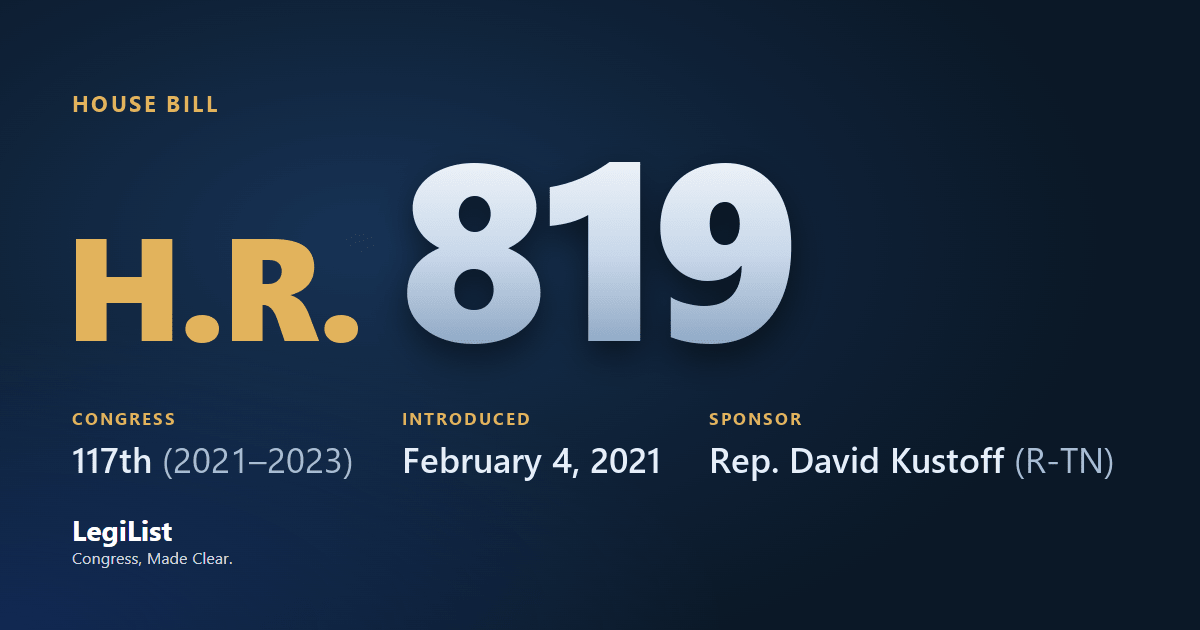
Stop Corrupt Iranian Oligarchs and Entities Act
Latest action · Feb 4, 2021 Referred to the Committee on Foreign Affairs, and in addition to the Committee on Financial Services, for a period to be subsequently determined by the Speaker, in each case for consideration of such provisions as fall within the jurisdiction of the committee concerned.
Progress
Where this bill reached, and when. A stage with no date was not reached; one that failed a vote and later carried shows the date it carried.
- IntroducedFeb 4, 2021
- Passed HouseNot reached
- Passed SenateNot reached
- To the PresidentNot reached
- Became lawNot reached
Summary
Stop Corrupt Iranian Oligarchs and Entities Act
This bill directs the Department of the Treasury to report to Congress on Iranian individuals and parastatal groups that have close relationships with the Iranian government, including information regarding (1) their known sources of income, (2) their indices of corruption, (3) their involvement in key U.S. economic sectors, (4) the structures and ownership of the parastatal groups, and (5) the potential effects of imposing sanctions on these entities and individuals.
Cosponsors 11
Members who signed on, in the order they did. Signatures ran from Feb 4, 2021 to Sep 6, 2022; 1 is an original cosponsor, there from the day it was introduced.
| Seat | Cosponsor | Signed on | |
|---|---|---|---|
| D-NJ | Josh Gottheimer | Original | Feb 4, 2021 |
| R-TX | Dan Crenshaw | Feb 18, 2021 | |
| R-NY | Lee M. Zeldin | Feb 18, 2021 | |
| R-OH | Steve Chabot | Feb 18, 2021 | |
| R-GA | Barry Loudermilk | Feb 24, 2021 | |
| R-AZ | Debbie Lesko | Feb 24, 2021 | |
| R-TN | Charles J. "Chuck" Fleischmann | Feb 26, 2021 | |
| R-TN | Scott DesJarlais | Feb 26, 2021 | |
| R-TN | John W. Rose | Mar 16, 2021 | |
| R-TX | Pat Fallon | Mar 26, 2021 | |
| R-TX | Lance Gooden | Sep 6, 2022 |
Committees 2
Where it was sent and what each committee and subcommittee did with it, in order.
| Chamber | Committee | What it did |
|---|---|---|
| House | Foreign Affairs Committee | Referred Feb 4, 2021 |
| House | Financial Services Committee | Referred Feb 4, 2021 |
Actions 2
Everything that happened, newest first.
- Feb 4, 2021Introduced in House
- Feb 4, 2021Referred to the Committee on Foreign Affairs, and in addition to the Committee on Financial Services, for a period to be subsequently determined by the Speaker, in each case for consideration of such provisions as fall within the jurisdiction of the committee concerned.
Research
What has been written about this bill: committee reports, cost estimates, the sponsor’s authority statement, printed hearings and the Congressional Research Service’s work.
Constitutional authority
The sponsor’s statement, as printed in the Congressional Record, vol. 167, no. 21, February 4, 2021, page H387.
Related bills 2
Companion bills and other measures the record links to this one.
| Bill | Title | Relationship | Latest action |
|---|---|---|---|
| HR 931 | Stop Corrupt Iranian Oligarchs and Entities Act | Reintroduced Bill | Feb 9, 2023 |
| HR 1441 | Stop Corrupt Iranian Oligarchs and Entities Act | Reintroduction of | Feb 28, 2019 |
Titles 2
Every title it has carried, official and short, at each stage.
- Official Title as Introduced
- To require a report on oligarchs and parastatal entities of Iran, and for other purposes.
- Short Title(s) as Introduced
- Stop Corrupt Iranian Oligarchs and Entities Act
Subjects
Assigned by the Library of Congress. Policy area: International Affairs.
- Alliances
- Congressional oversight
- Corporate finance and management
- Diplomacy, foreign officials, Americans abroad
- Economic performance and conditions
- Foreign and international corporations
- Foreign loans and debt
- Government ethics and transparency, public corruption
- International Affairs
- Iran
- Middle East
- Sanctions
- Trade restrictions
- U.S. and foreign investments
Text 1
Each version as it was printed, newest first.
- Feb 4, 2021Introduced in House
Support LegiList
This page is free, carries no paywall, and is built and maintained by one person. If the record here is useful to you, a few dollars keeps it going.
Everything here is as published by Congress: the summary is the Congressional Research Service's, the action wording is the clerks', and the subjects are the Library of Congress's. How far it got is read from the actions themselves, taking the most recent one of each kind, so a bill that failed a vote and later passed is shown as having passed. Records come from this bill on Congress.gov and govinfo.gov; cost estimates are the Congressional Budget Office's, and the hearings are the printed hearings GovInfo publishes, which can appear months after the hearing.