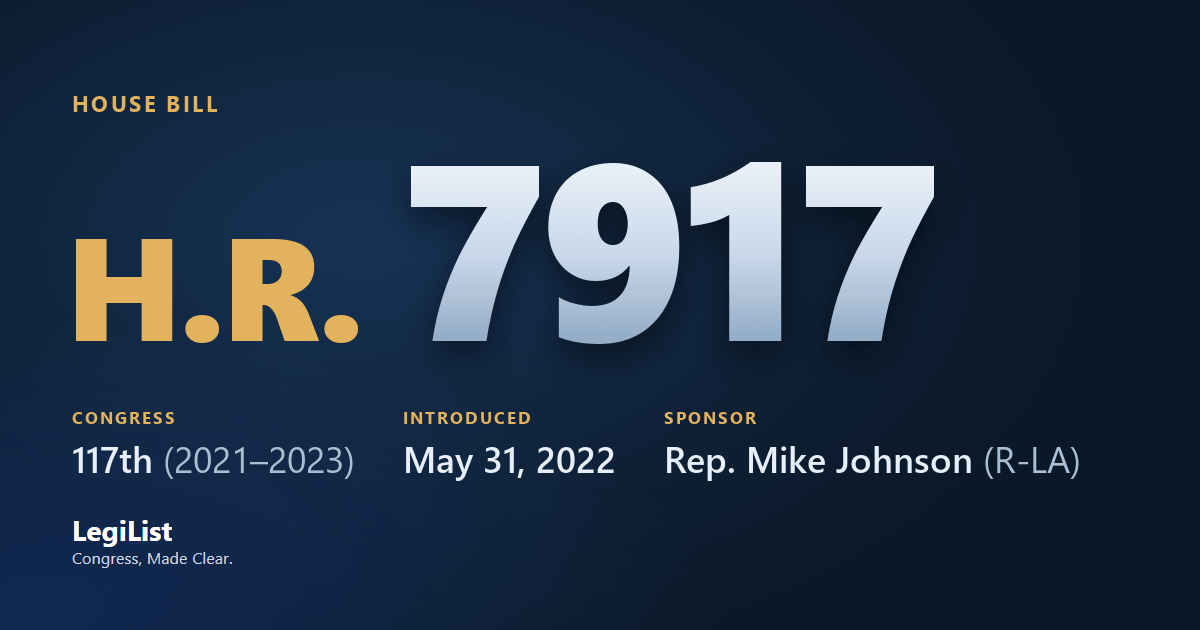
Leaker Accountability Act of 2022
Latest action · Nov 1, 2022 Referred to the Subcommittee on Crime, Terrorism, and Homeland Security.
Progress
Where this bill reached, and when. A stage with no date was not reached; one that failed a vote and later carried shows the date it carried.
- IntroducedMay 31, 2022
- Passed HouseNot reached
- Passed SenateNot reached
- To the PresidentNot reached
- Became lawNot reached
Summary
Leaker Accountability Act of 2022
This bill establishes a new federal crime for the unauthorized disclosure of confidential information by officers or employees of the Supreme Court.
Specifically, the bill prohibits an officer or employee of the Supreme Court from knowingly publishing, divulging, disclosing, or making known in any manner or to any extent not authorized by law any confidential information coming to that officer or employee in the course of the employment or official duties of that officer or employee.
A violation is subject to criminal penalties—a fine, a prison term of up to five years, or both.
Cosponsors 12
Members who signed on, in the order they did. Signatures ran from May 31, 2022 to Jun 15, 2022; 11 are original cosponsors, there from the day it was introduced.
| Seat | Cosponsor | Signed on | |
|---|---|---|---|
| R-VA | Bob Good | Original | May 31, 2022 |
| R-UT | Burgess Owens | Original | May 31, 2022 |
| R-NC | Dan Bishop | Original | May 31, 2022 |
| R-WV | David B. McKinley | Original | May 31, 2022 |
| R-NY | Elise M. Stefanik | Original | May 31, 2022 |
| R-TX | Louie Gohmert | Original | May 31, 2022 |
| R-OK | Markwayne Mullin | Original | May 31, 2022 |
| R-IL | Mary E. Miller | Original | May 31, 2022 |
| R-WI | Scott Fitzgerald | Original | May 31, 2022 |
| R-WI | Thomas P. Tiffany | Original | May 31, 2022 |
| R-IN | Victoria Spartz | Original | May 31, 2022 |
| R-NE | Adrian Smith | Jun 15, 2022 |
Committees 1
Where it was sent and what each committee and subcommittee did with it, in order.
| Chamber | Committee | What it did |
|---|---|---|
| House | Judiciary Committee | Referred May 31, 2022 |
| Courts, Intellectual Property, Artificial Intelligence, and the Internet Subcommittee | Referred Nov 1, 2022 | |
| Crime and Federal Government Surveillance Subcommittee | Referred Nov 1, 2022 |
Actions 4
Everything that happened, newest first.
- Nov 1, 2022Referred to the Subcommittee on Courts, Intellectual Property, and the Internet.
- Nov 1, 2022Referred to the Subcommittee on Crime, Terrorism, and Homeland Security.
- May 31, 2022Introduced in House
- May 31, 2022Referred to the House Committee on the Judiciary.
In the Congressional Record 1
Days the Record’s own index lists this bill, newest first, with the pages and the members it names. Pages starting H are the House, S the Senate, E Extensions of Remarks.
| Where | In the Record | Members | Date |
|---|---|---|---|
| House | Debate and remarks H5603 | Mike Johnson R-LA | Jun 15, 2022 |
Research
What has been written about this bill: committee reports, cost estimates, the sponsor’s authority statement, printed hearings and the Congressional Research Service’s work.
Constitutional authority
The sponsor’s statement, as printed in the Congressional Record, vol. 168, no. 94, May 31, 2022, page H5228.
Related bills 1
Companion bills and other measures the record links to this one.
| Bill | Title | Relationship | Latest action |
|---|---|---|---|
| HR 424 | Leaker Accountability Act of 2023 | Reintroduced Bill | Jan 20, 2023 |
Titles 2
Every title it has carried, official and short, at each stage.
- Official Title as Introduced
- To amend title 18, United States Code, to provide for penalties for the unauthorized disclosure of confidential information by officers or employees of the Supreme Court, and for other purposes.
- Short Title(s) as Introduced
- Leaker Accountability Act of 2022
Subjects
Assigned by the Library of Congress. Policy area: Law.
Text 1
Each version as it was printed, newest first.
- May 31, 2022Introduced in House
Everything here is as published by Congress: the summary is the Congressional Research Service's, the action wording is the clerks', and the subjects are the Library of Congress's. How far it got is read from the actions themselves, taking the most recent one of each kind, so a bill that failed a vote and later passed is shown as having passed. Records come from this bill on Congress.gov and govinfo.gov; cost estimates are the Congressional Budget Office's, and the hearings are the printed hearings GovInfo publishes, which can appear months after the hearing.